
Potluck Etiquette: Rules for Guests and Hosts (Work, Church and Home)
Potluck etiquette made simple: what and how much to bring, store-bought vs homemade, labeling allergens, serving utensils, leftovers, and how hosts can organize a potluck at home, work or church without stress.
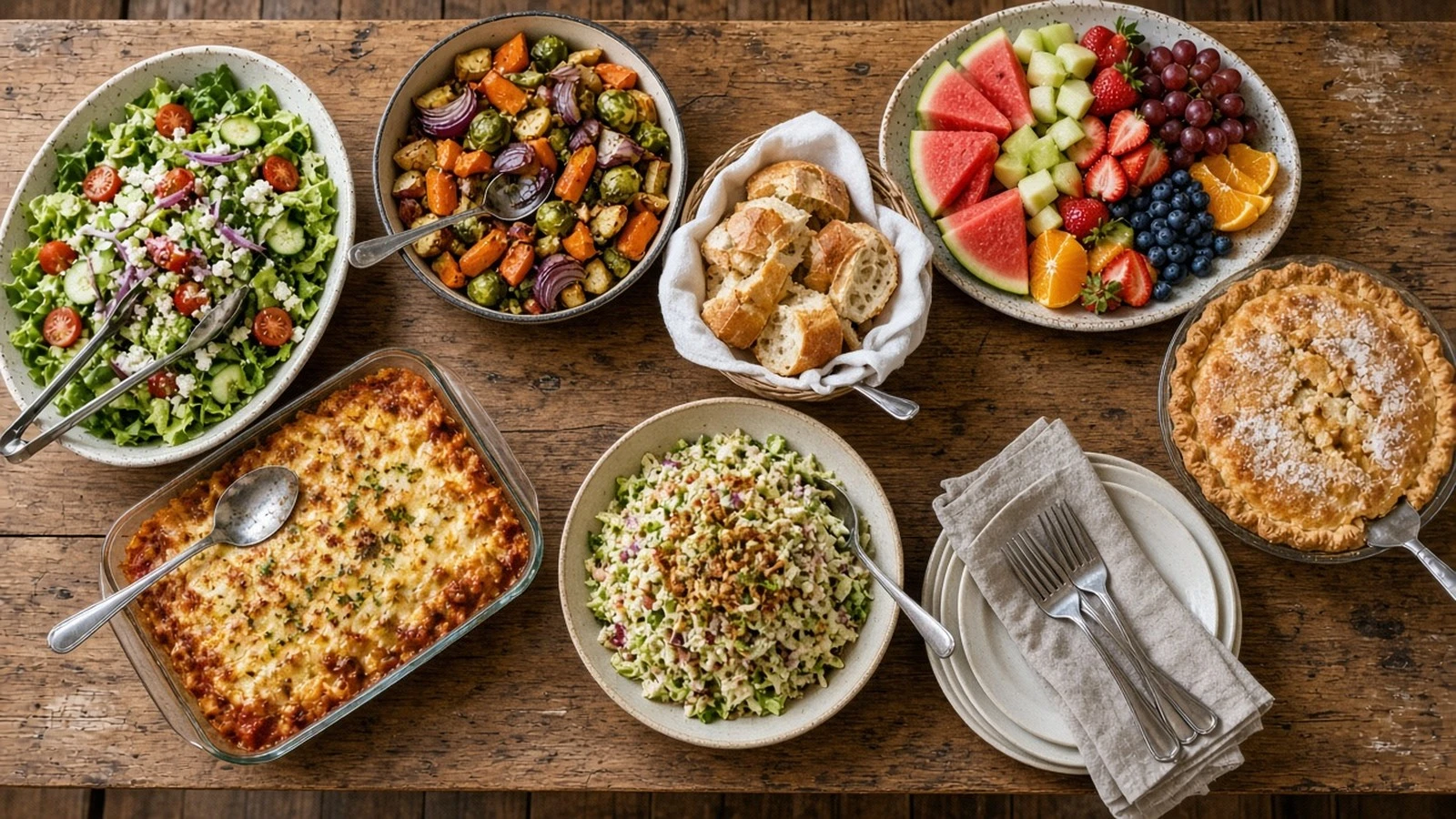
Potlucks are one of the most comforting, joyous ways to gather. At its heart, potluck etiquette is simple: guests RSVP on time and state what dish they are bringing, bring enough food to share, arrive with their contribution ready to serve alongside a utensil, clearly label common allergens, arrive on time, offer to help the host, and follow the host's lead on leftovers. Meanwhile, hosts take care of the main dish or foundational basics, coordinate dish categories so there is a balanced spread, and make every single guest feel welcome regardless of what they bring.
What is a Potluck and What is Expected?
A potluck is a shared meal where every guest or family contributes a dish, drink, or essential supplies to create a complete feast together. Unlike a traditional dinner party where one person cooks everything, a potluck spreads the effort, cost, and creativity across the entire group. Because everyone plays a role in building the menu, a successful gathering relies on communication, thoughtfulness, and cooperation.
When you accept a potluck invitation, you are stepping into a team effort. The overall goal is to make sure there is plenty of food for everyone, a balanced mix of flavors and options, and minimal stress for the host. Understanding basic potluck rules of etiquette ensures that everyone spends less time worrying about logistics and more time enjoying good company and delicious food.
Potluck Etiquette for Guests
Being a great guest involves a little bit of planning before you leave your kitchen. Following these thoughtful steps will make you a highlight of any gathering.
RSVP and Tell the Host What You Are Bringing
The first rule of potluck etiquette for guests is to reply promptly to the invitation. Never show up unannounced with a dish, and avoid leaving your host guessing about whether you are coming. When you reply, clearly communicate the specific dish or item you plan to bring.
Coordinating ahead of time prevents duplicate dishes and keeps the menu balanced. If you are still deciding between a savory side or a sweet treat, check in with the host to see which category needs more coverage.
How Much Food to Bring
A common question is potluck etiquette how much to bring. The golden rule is to bring enough of your dish to feed your own household, plus a little bit extra for the group.
You do not need to cook enough of your single dish to serve the entire guest count a full meal. Because everyone is bringing something, guests take smaller portions of each dish to sample the spread. Aim for an amount that lets a good share of the crowd take a comfortable serving. If you are bringing a main dish, bring a larger batch; if you are bringing a side dish or dessert, aim for a medium-to-large dish that spans the table easily.
Homemade vs. Store-Bought Dishes
Whether you cook from scratch or buy something from a market, both choices are entirely fine. Not everyone has the time, skill, or kitchen space to make homemade recipes, and a store-bought item can be just as delicious.
If you are bringing store-bought food, a little presentation goes a long way. Transfer items like dips, bakery pies, or deli salads into your own serving bowls or platters before serving. If you bring heat-and-serve items, warm them up ahead of time so they are ready to eat. Adding a fresh garnish, such as chopped herbs over a dip or fresh berries on a store-bought cake, makes your contribution feel extra thoughtful.
Bring Your Dish Ready to Serve
Host kitchens can get crowded very quickly during a party. To keep things smooth, bring your dish completely assembled, cooked, and ready to go onto the buffet table.
Bring your own serving utensil: Pack a serving spoon, tongs, or ladle that fits your dish so the host does not have to hunt for extra silverware.
Use the right dish: Serve your food in a container you do not mind leaving behind, or clearly label your personal glassware with your name on the bottom using tape.
Maintain food safety: Keep hot food hot and cold food cold during transit. Transport hot items in insulated bags or wrapped tightly in towels, and keep cold items on ice or chilled in a cooler.
Label Ingredients and Common Allergens
With so many different kitchens contributing to one table, ingredient safety is essential. Place a small card next to your dish listing its name and any common allergens.
Explicitly note if your dish contains gluten, nuts, dairy, eggs, soy, or shellfish. If your dish fits specific dietary preferences, such as vegetarian, vegan, or gluten-free, note that as well. This simple gesture allows guests with food restrictions or allergies to fill their plates with confidence.
Arrive On Time
Punctuality matters at a potluck because the meal is served as a shared buffet. If you arrive late, the table may already be set, or guests might be waiting on your main dish or side before eating.
If an unexpected delay happens, send a quick message to the host so they can start the meal without waiting. If you arrive early, be prepared to help set up or stay out of the host's way while they finish preparations.
Don't Take the First and Biggest Portion
When the host announces that the buffet is open, line up politely and practice portion restraint. Take modest helpings of dishes on your first pass through the line so that every guest gets a chance to try everything.
It is always fine to go back for seconds once everyone has made their way through the serving line. Saving room for second helpings ensures late arrivals or slow walkers still find a full spread waiting for them.
Don't Rely on the Host's Oven or Prep Space Without Asking
Never assume you can use the host's oven, stove, or counter space upon arrival. Kitchen space and oven temperatures are usually reserved for the host's primary dish or warming setup.
If your dish absolutely must be heated or baked on-site, ask the host well before the day of the event. Otherwise, heat your dish thoroughly at home and use an insulated carrier or slow cooker to maintain its temperature once you arrive.
Help Clean Up
A great potluck guest does not leave as soon as the food is cleared. Offer to help clean up the serving area, wipe down tables, wash serving tools, or take out trash bags.
Helping the host restore order to their space is one of the kindest ways to show appreciation for their hospitality. Even a few minutes spent wrapping leftover dishes makes a huge difference to a host who has been hosting all day.
Thank the Host
Before you head home, take a moment to thank your host personally for opening their home or coordinating the venue. Hosting requires planning, space preparation, and effort. Expressing your gratitude ends the gathering on a warm, delightful note.
What to Bring to a Potluck
If you are wondering what to bring to a potluck, choosing the right item depends on your schedule, cooking comfort, and transport options. Here are practical ideas across several categories.
Easy Homemade Dishes
Baked pasta dishes or macaroni and cheese
Grain salads like quinoa or pasta salad with seasonal vegetables
Hearty chili or soup kept warm in a slow cooker
Meatballs or pulled pork sliders
Potato salad or classic coleslaw
Sheet-pan brownies or bar cookies
What to Bring to a Potluck Without Cooking
Fresh fruit platters or skewers with a simple yogurt dip
Caprese salad skewers with cherry tomatoes, mozzarella, and fresh basil
Layered Mediterranean dip with pita chips
Assorted cheese and charcuterie boards with crackers and dried fruit
Fresh veggie platters with hummus or ranch dressing
Store-Bought Ideas That Everyone Loves
Fresh bakery pies, tarts, or assorted cupcakes
Artisanal breads, dinner rolls, or rotisserie chicken from the deli
Premade gourmet salads from the grocery store deli counter
Dips like salsa, guacamole, or spinach dip paired with sturdy tortilla chips
Frozen appetizers baked at home just before leaving
Non-Food Contributions
Bags of ice for drink tubs and coolers
Sparkling water, lemonade, iced tea, or sodas
Paper plates, sturdy napkins, and compostable eating utensils
Disposable take-home containers for leftovers
Tablecloths or flowers for the buffet display
Potluck Host Etiquette
Knowing how to host a potluck well means setting the stage for a smooth, relaxed event where guests know exactly what to expect.
Decide What the Host Provides
As the host, you establish the foundation of the meal. Traditionally, the host supplies the main entree, heavy serving equipment, trash bins, water, and basic paper goods or dinnerware.
Providing the main dish guarantees there is a central focal point for the meal. If you prefer not to cook a main dish, provide the essential table place settings, ice, cups, and beverages while asking guests to cover the food categories.
Coordinate Dishes to Avoid Duplicates
Nothing spoils a potluck faster than ending up with a table full of chips and no real sides. Actively coordinate your menu by assigning or suggesting categories to your guests.
You can ask guests to sign up by dish type, such as appetizers, green salads, warm sides, bread, or desserts. Using a structured dish sign-up keeps the buffet balanced and variety high.
Share Dietary Needs Early
If any of your attending guests have severe food allergies or strict dietary habits, share that information with the group during planning.
You do not need to reveal personal details, but a simple note asking guests to include a vegetarian option or avoid peanut ingredients helps keep the table safe and welcoming for everybody.
Set Up the Serving Space in Advance
Before guests arrive with armfuls of food, arrange your buffet area. Clear off counters or dining tables to create a logical flow for line movement.
Place plates, napkins, and utensils at the beginning of the line.
Arrange food in logical order: appetizers and salads first, main dishes and warm sides next, and desserts on a separate table if space permits.
Set up trivets, hot pads, and power strips for slow cookers near electrical outlets.
Food Safety Basics for Hosts
Keeping food at safe temperatures is crucial when food sits out during social gatherings. Keep hot dishes on warmers or in slow cookers, and place cold bowls over larger bowls filled with ice.
As a general rule, perishable food should not sit out at room temperature for more than two hours. Keep extra ice on hand, refresh bowls as needed, and pack food away promptly once everyone finishes eating.
Welcome Guests Who Can't Cook or Have Budget Constraints
Hospitality comes before culinary standards. Never make a guest feel self-conscious if they cannot bring a homemade meal or spend money on expensive ingredients.
If someone mentions they are busy, short on funds, or uncomfortable in the kitchen, warmly suggest they bring paper towels, ice, or bottled beverages. Their presence at your gathering is far more valuable than what is on their dish.
Handle No-Shows and Missing Dishes Calmly
Even with great planning, someone might forget their dish or face a last-minute emergency that keeps them away.
As a host, handle missing items with grace. Keep a few staple supplies in your kitchen, such as extra bread, a simple green salad, or frozen snacks, so you can fill unexpected menu gaps without stress or fuss.
Leftovers Etiquette
Managing remaining food at the end of the party requires a bit of care from both sides.
Asking Before Taking Leftovers
Guests should never automatically pack up leftovers from the main buffet table to take home. Unless the host invites guests to take plates home, leave the buffet food for the host to sort out.
Always wait for the host to announce that leftovers are open for packing before loading up a container.
Hosts Offering Take-Home Containers
Hosts can make leftover distribution effortless by setting out paper boxes, food bags, or plastic containers near the end of the event.
Encourage guests to take extra portions of their favorite dishes home. This keeps delicious food from going to waste and sends your guests off with an extra treat.
Taking Your Dish Home
At the end of the gathering, guests should collect their original serving dishes, bowls, and utensils.
Before packing up your container, check with the host to see if they would like to keep a portion of what you brought. Clean up your dish area, pack your items, and make sure you leave nothing behind in the host's sink.
Office or Work Potluck Etiquette
Workplace gatherings bring unique dynamics into play. Practicing proper office party RSVP etiquette maintains a positive, inclusive environment for all coworkers.
Keep participation optional: Never pressure colleagues to participate or make people feel uncomfortable if they choose to sit out.
Be inclusive of dietary and cultural needs: Respect different dietary restrictions, religious observances, and cultural food practices when organizing the team meal.
No pressure to cook: Allow busy employees to buy store-bought contributions or supply paper products without judgment.
Time and workspace boundaries: Keep food prep from interfering with work duties, and make sure smell-heavy dishes do not disrupt shared office areas.
Label shared items clearly: Label serving utensils and platters clearly so office items do not get mixed up with personal kitchen items. Clean shared breakroom counters as soon as the event wraps up.
Church or Community Potluck Etiquette
Large gatherings like church suppers or neighborhood block parties involve larger crowds and communal coordination. Following a clear church event RSVP guide makes managing big groups much easier.
Bring generous portions: Larger crowds require larger dish portions. Bring enough food to feed your own party plus extra to accommodate unexpected visitors.
Label everything thoroughly: Mark your name clearly on the bottom of dishes and serving spoons with masking tape to prevent mix-ups in large venue kitchens.
Set up and cleanup assistance: Community potlucks rely on volunteer support. Arrive early to set up tables or stay late to wash trays, sweep floors, and dump trash.
Welcome newcomers: Direct new visitors to the front of the food line and invite them to sit with your group so they feel instantly included.
Holiday and Friendsgiving Potlucks
Gathering for seasonal celebrations like Friendsgiving or holiday parties brings extra warmth to the table. Because these events center around traditional menus, host coordination is even more essential.
Hosts usually handle signature items like roasted turkeys or holiday mains, while guests supply classic sides, stuffings, rolls, and holiday desserts. Planning early keeps the menu balanced and celebratory. For a full game plan, see our guide on how to host Friendsgiving, and if you are hosting a seasonal get-together, a holiday party RSVP website keeps replies in one place.
Potluck Invitation and RSVP Wording Examples
Clear invitation wording helps guests know exactly what to bring and expect. If you would rather not juggle replies by text, a SnapRSVP RSVP website lets a host share the potluck details by link and QR code, collect replies from unlimited guests, add custom RSVP questions (for example which dish category someone is bringing, or dietary needs), and see who is attending or not in a guest list dashboard with PDF and CSV export. It is a one-time payment per RSVP website with no subscription: $19.99 for a website with a banner or portrait image at the top, or $29.99 for a video website with a looping video at the top (see SnapRSVP pricing).
Here are practical potluck party invitation wording ideas you can adapt for your next event.
Casual Home Potluck Wording
Join us for a Casual Backyard Potluck!
Date & Time: [date] at [time]
Place: [name]'s House, [address]
What we're providing: We will supply the grilled mains, ice-cold lemonade, and place settings.
What to bring: Please bring your favorite side dish, salad, or dessert to share!
RSVP Note: Let us know if you can make it and tell us what dish you plan to bring by [date]. Include any dietary notes with your response!
Office Luncheon Wording
Team Appreciation Potluck Lunch
Date & Time: [date] at [time]
Place: Main Breakroom
What we're providing: The company is supplying sandwiches, cold beverages, and paper goods.
What to bring: Bring a side dish, snack, or bakery dessert to complete our feast!
RSVP Note: Please submit your reply by [date] and select your dish category so we have a great variety.
Neighborhood or Housewarming Potluck Wording
Welcome to the Block! Neighborhood Potluck Party
Date & Time: [date] at [time]
Place: Community Center, [address]
What we're providing: Table setups, drinks, and pulled pork main dishes.
What to bring: Bring a family-sized dish or dessert along with a serving utensil.
RSVP Note: Please RSVP by [date] and let us know your head count and dish idea! Learn more about neighborhood gatherings in our guide to housewarming party etiquette.
For more on balancing the menu, see our guide to a potluck party RSVP with dish signup.
Common Potluck Mistakes to Avoid
Even seasoned hosts and guests can fall into easy traps. Steer clear of these common potluck missteps to keep your meal enjoyable for everyone:
Forgetting serving utensils: Arriving with a bowl of pasta salad but no tongs leaves your host searching through drawers.
Unannounced dishes: Bringing an uncoordinated dish without telling the host can lead to excessive duplicates.
Arriving with unheated food: Bringing a cold casserole that needs a long stretch in the host's busy oven slows down the entire meal.
Ignoring dietary labels: Failing to label common allergens like nuts or dairy makes dining stressful for guests with restrictions. Read our full guide on how to ask for dietary restrictions politely to make everyone feel safe.
Leaving dirty dishes behind: Leaving your unwashed glass baking dish in the host's sink puts an unnecessary chore on their shoulders.
Disregarding host leftover cues: Packing up buffet leftovers before the host offers them violates host hospitality standards.
Potluck Guest Checklist
Before heading out the door, run through this quick checklist to ensure you are completely ready for the party.
RSVP on time and confirm your dish selection with the host.
Prepare enough food to feed your party plus extra for sharing.
Pack a dedicated serving utensil that fits your dish.
Label your personal glassware or container with your name using tape on the bottom.
Include a small ingredient card highlighting common allergens or dietary notes.
Transport hot foods in insulated carriers and keep cold foods chilled on ice.
Arrive on time so the buffet opens smoothly.
Offer to help clean up the table or kitchen before heading home.
Potluck Host Checklist
Use this simple host checklist to make sure your venue and timeline are organized from start to finish.
Send out invitations early with clear details on provided mains and dish categories.
Track guest replies, dish sign-ups, and dietary needs.
Clear off counter or table space to establish an organized buffet line.
Set out plates, napkins, and eating utensils at the start of the line.
Provide electrical extension cords or trivets for hot crockpots and warmers.
Set out ice buckets and beverage stations away from the main food line to prevent congestion.
Keep extra takeaway boxes or containers ready for distributing leftovers at the end.
Welcome every guest warmly, regardless of whether they cooked, bought food, or brought supplies.
Frequently Asked Questions
How much food should you bring to a potluck?
You should bring enough of your specific dish to feed your own party, plus a little extra for the rest of the group. You do not need to bring enough of your dish to feed the total headcount a full meal on its own, because guests will take smaller portions of each item to sample the entire table.
Is it rude to bring store-bought food to a potluck?
No, bringing store-bought food is not rude. High-quality bakery items, deli salads, fresh fruit platters, or artisan breads are wonderful contributions. Transfer store-bought items into your own serving dish and add a simple garnish to make your contribution feel thoughtful and ready to serve.
Can you take leftovers home from a potluck?
You should only take leftovers home if the host explicitly offers them or invites guests to pack containers. However, you should always take home any remaining portion of the specific dish you originally brought, along with your personal serving utensils and glassware.
What should the host provide at a potluck?
The host typically provides the main entree, foundational drinks like water, serving space, paper plates, napkins, and eating utensils. The host also prepares the layout, manages electrical outlets for hot dishes, and keeps basic trash facilities accessible for guests.
Do you have to bring something to a potluck?
Yes, standard etiquette expects every attending household or guest to contribute something to the gathering. If you cannot cook or are short on time, ask the host if you can bring non-food essentials like ice, beverages, paper products, or disposable cups.
What do you bring to a potluck if you can't cook?
If you do not cook, bring store-bought items like fresh bakery bread, gourmet chips and dip, fresh fruit, or deli platters. You can also volunteer to bring non-food items such as bags of ice, sparkling water, juice, sturdy paper plates, or napkins.
Gathering around a shared table with friends, family, or colleagues is one of life's simplest pleasures, so bring your favorite dish, enjoy the company, and have a wonderful time!