
Neighborhood Block Party RSVP Website: Street Closure, Shared Food, and Household Counts
A neighborhood block party RSVP has to count households on a closed street, because the city form, the shared grills, and the parking plan all fail on a guess.
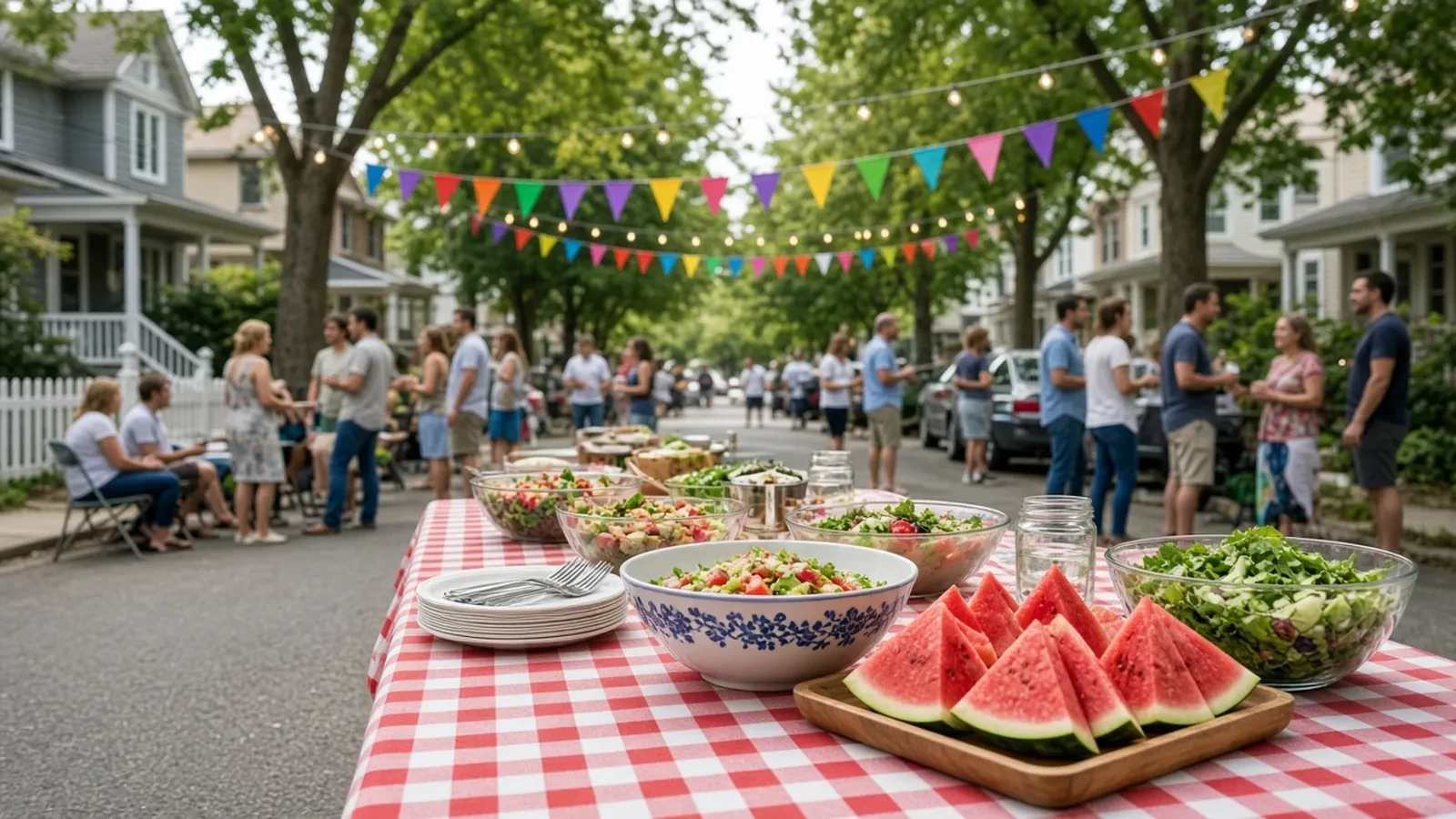
A neighborhood block party RSVP fails when “the whole street is invited†never becomes a number. The form that lets you close the block asks for an estimate. Shared grills only cook so much at once. Guests from off the block still need a place to put a car that is not in the closed street. A text to the neighbors you already like is not a headcount, and a flyer with no replies is how you either feed a crowd you did not plan or throw a party half the block did not know was real.
You can create a neighborhood block party RSVP that asks each household for a yes, a headcount, and what they are bringing. A wave from the porch is not a number you can write on a permit line.
Get a number the closure can survive
Write down who the party is for before you send a link. This block only is a different event from this block plus the next two streets plus anyone who sees the barricades. If your city wants a permit, a barricade request, or signatures from affected addresses, the RSVP has to match that map. Inviting a household whose driveway you are about to block, with no way for them to say they will be gone or that they object, is how a flyer becomes a complaint.
Ask for a household reply. One form should name the address, how many people are coming outside, and how many are staying in so you do not feed them by accident. Five people at a known address is useful. Whoever is around is not. Cap off-block guests if the street width or the permission requires it. A cousin from across town counts toward food, chairs, and parking you will not have on the closed asphalt. Give each household a small guest allowance, and say that more than that needs a note you can decline.
Neighbors are the guests and the hosts at the same time. This is not a company picnic on a private lawn. If the party also depends on a few people to place barricades, watch a grill, and stay until the street is clear, ask for those shifts by name and time instead of hoping every yes turns into an eight-in-the-morning setup crew.
Shared food works only when someone claimed it
Block parties fail by duplicate chips and no real meal. If every household brings something, you will get desserts. Decide what the street is serving. A couple of grills can be the main only if those neighbors have replied and named the grill. Everyone else should claim a side, drinks, ice, plates, or a dessert. A potluck bring list keeps the first eight households from buying the same tray.
Grill host — they are cooking a protein they named, and their grate is in the plan
Side or drinks — they claimed a category that is not already full
Tables and chairs — they are lending folding furniture, with a count
Just attending — they are eating, and you already planned food for that household
Say whether food needs to survive two hours outside. A mayonnaise-heavy salad in July is a bad default. If kids are a large share of the street, ask households to mark how many children are inside their number so the hot dogs and the burgers are not one guess. Allergies should be a short note to the grill hosts, not a public argument. If a neighbor cannot eat what the grills are producing, they need the menu before they skip lunch at home.
If you are collecting a few dollars per household for charcoal, ice, or barricades, say the amount and who is holding it. If you are not collecting money, say that too. Do not turn the page into a fundraiser unless the block agreed to cover a specific extra, such as a rental. A surprise payment request the day before is how neighbors stop replying.
The street is closed, so say where everything else goes
Parking is the detail people get wrong. Residents need to know by what time a car must be off the asphalt, and where you expect them to move it. Guests from off the block need a different sentence: which side streets to use, do not block driveways, and do not use a lot that tows. Put that on the page with a parking note that matches a closure. There is no guest lot. There is curb you are about to lose.
Alcohol, tents, and amplified sound are often named on the same permission that asked for a headcount. If drinks stay on private porches, or if they are not allowed in the closed street, say so before a household rolls a keg onto the center line. If a canopy cannot be staked into asphalt, the household bringing it needs to know about weights before they leave the garage. Write the music end time next to the start time, and match it to the permission you were given. Neighbors who work early are part of the audience for that clock.
Pets and kids need one line each. If dogs are welcome on a leash at the edges and not near the grills, say so. If the street is too crowded for dogs, say that before someone arrives with an animal that hates sudden noise. A closed street reads as a playground. The people cooking still need a lane that is not a race. Say whether bikes and scooters walk through the food tables.
Weather does not move the barricades for you
You cannot relocate a street closure into a living room. The page needs a weather line that explains what still on means. Light rain might mean tents and the same start. Lightning or high wind might mean you cancel by a clock time you publish, because barricades should not go up for an empty street and should not stay up if you were told to clear them. A weather contingency written in advance beats thirty people asking the same question while someone is already carrying a table out.
Decide who stores borrowed tables if you cancel after setup starts, and who holds the city’s phone number. Those names can live in the host notes. The public page needs the decision time and where you will post it. If half the block is not in the group thread, the confirmation should say you will email that address by a named hour if the party is off.
Close the list before the city number is due
Work backward from the date the permit, the barricade drop, or the charcoal buyer needs. Set the household deadline a day earlier. After that, extra guests are a manual yes only if you still have food and the estimate can stretch. Knock on doors that never replied if those addresses sit inside the closure. Silence from a driveway you are blocking is not a yes, and it should not surface when the barrels arrive.
Export the street by address: people coming, kids inside that number, grill or dish or tables, off-block guests, and setup help. That sheet is what you shop from and what you hand the person on the barricades. A neighborhood block party RSVP is finished when you can say how many people will be in the street, which households are cooking, where the cars go, and what time the asphalt opens again. The playlist is optional. The count on the closure is not.