
Spoon Carving Workshop RSVP Website: Blank Counts, a Bench Cap, and a Finish Line
A spoon carving workshop RSVP has to lock a blank and a bench place before the first cut, because a maybe does not hold a shaped blank or a hook knife.
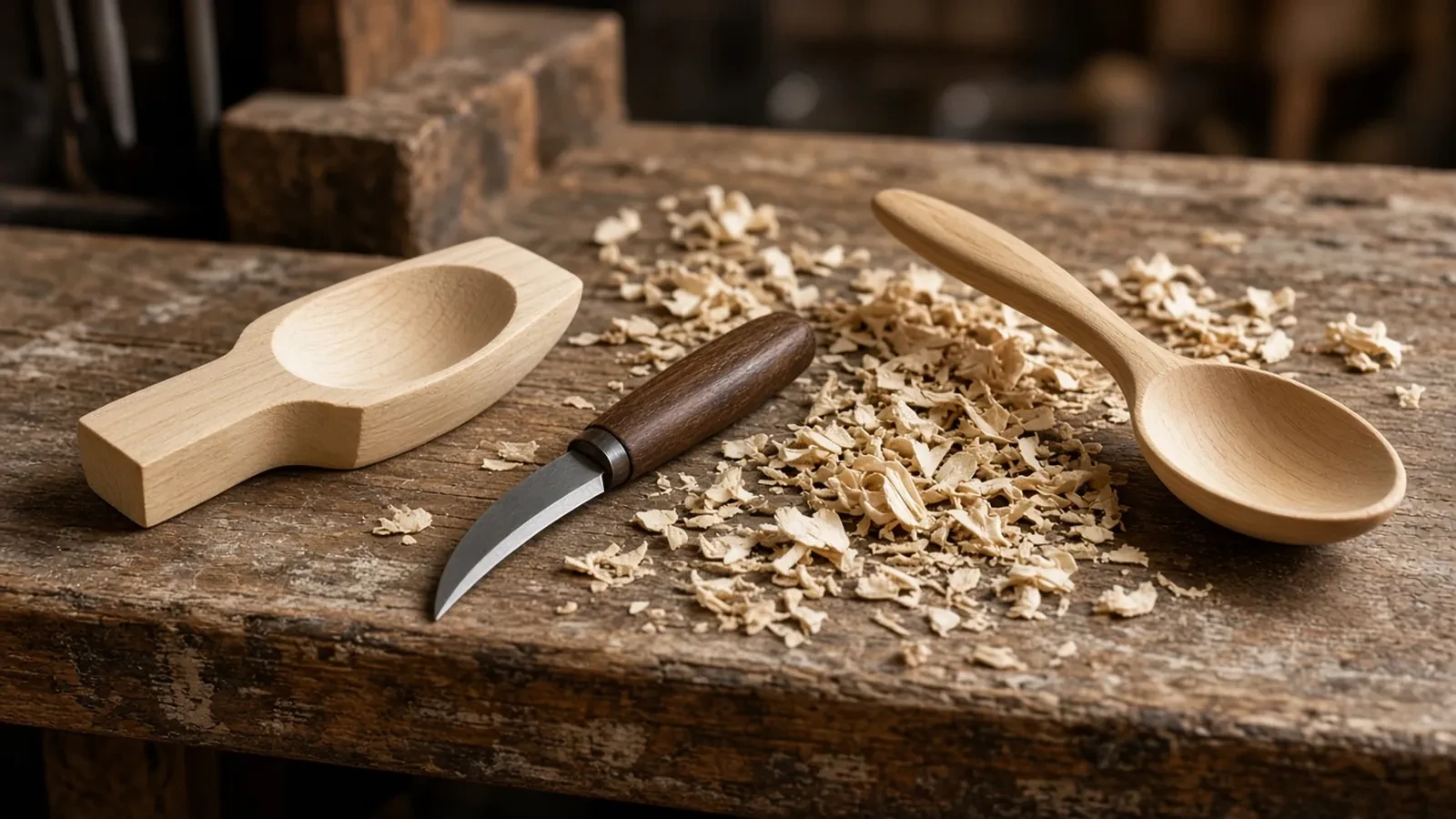
A spoon carving workshop breaks when the host axed twelve greenwood blanks, set six benches, and twenty people answer yes after the knives are already on the bench. Blanks, hook knives, and a seat with room to cut away from the body are decided before the first chip falls. The host does not start a second pile of wood or promise a spoon that has no bench time left because a friend decided to come after the list closed. This is knife work on a blank at a bench, not a lathe, not a burning pen, and not a bar of soap. A maybe does not hold a blank.
You can create a spoon carving workshop RSVP that counts blanks, records access needs, and closes when the bench cap is reached.
Count blanks, knives, and bench time
Count the blanks before you send the invitation. A greenwood blank becomes a spoon only after it is axed to a rough shape, carved with a straight knife, and hollowed with a hook knife. A log in the corner is not a spare seat. Wet wood does not wait all afternoon in perfect condition if it was split for a named list, and a dry scrap is not a second spoon you can hand to a walk-in during the last hour. If one eating spoon takes one blank and about three hours of bench time, eight labeled blanks is the material count. A student who wants “a bigger spoon if there is wood left†is asking you to spend someone else’s blank.
Count the tools that touch the cut. Straight knives, hook knives, a stump or clamp for roughing, sharpening strops, and a stop cut block for every carver are the limit. Two axes do not create fourteen stations. People can share a sharpening station, but each person still needs a named blank that is not mixed into the next pile, and a knife that is not passed down the bench every few minutes. A spoon with no hook knife left becomes a flat paddle and a guest who thinks the class failed.
Blank count by spoon size, and how many you can actually rough before the start
Straight knives and hook knives that are sharp enough to finish a bowl
Benches, horses, or clamps with space to cut away from the body
Strops and a plan for a dull edge, because a dull knife is the unsafe one
Floor room so chips fall at one station and not into the next carver’s lap
A spoon carving place is one named carver with a blank, a knife, and a seat. A guest who wants to watch the first cuts is not a student. Someone who expects to leave with a spoon needs a place on the bench. Ask who is carving, who is only accompanying, and whether a late student will accept a smaller spoon if a blank opens. Students stay inside the wood you can rough and finish. They do not pull another blank because the log still looks long.
The bench cap and the finish line
Six benches and eight blanks is a cap only if the session length, the knives, and the elbow room agree. If the room seats five people who can carve without crossing blades, the cap is five, not eight. The smallest real constraint wins. Set a capacity limit for carvers, not for every person who might stand near the chips. When the last blank is claimed, the form should say the spoon carving workshop is full. If the blanks are already axed and the knives are laid out, a late guest is not an unplanned carver.
The finish line is the end of the workshop. Name it: the last cut is done, the edge is stropped, the spoon is oiled or left to dry with a name on it, and every knife is sheathed. A clear finish line stops the class from becoming an extra hour of open blades and unfinished bowls. A blank left on the bench is not a promise to a guest who arrives during cleanup. It is still a sharp-tool station, and it is not a new seat.
Access and arrival fit a sharp bench
Carving a spoon means sitting or bracing for a long time, gripping a knife, and controlling a cut that moves away from the body. That is a real barrier, not a detail for the day of class. Collect accessibility needs on the RSVP before you assign benches. Ask whether someone needs a seated setup they can already use, a hook knife for the left hand, a clamp instead of a between-the-knees hold, or extra time because a tight grip is hard on the hands. If you can set one station with a raised clamp and a chair that pulls out fully, say how many of those stations exist. If you cannot, say that too, so a guest can decline instead of discovering the horse height at the door. Do not assign a blank that looks open on paper if that person cannot hold the work and still finish before the finish line.
Use arrival time windows on the RSVP because blanks are roughed for the people who are coming, not held flexible for an hour. The first window is names on blanks, a short look at the knife, and a check that the cut direction is clear. The start window is when the shaping begins. A student who misses the start can keep a later pace only if their blank is still on the bench and still green enough to carve. They do not get a fresh log. Put the host’s phone on the page so a delay is a message, not a guess.
The moment the blank list is locked
Tie the deadline to the roughing. If the blanks have to be axed the night before a Saturday workshop, Friday is your lock. After that, a late yes is a call about a cancellation, not a promise of a knife. Standbys can wait, and you tell them they do not have a blank until you write back. A maybe does not hold a shaped piece of wood.
The meeting point is the shop door, the check-in time, and the bench row you named, not “come by anytime and we will be carving.†You match names to carvers, spoon size, bench, access notes, the bench cap, the finish line, and a phone. Export the list the morning you lock: attending or not, blank, bench, access note, arrival window, and phone.
A spoon carving workshop RSVP is finished when every blank on the bench has a named seat, the finish line is the last sheathed knife rather than an open log, and a late guest knows whether they are carving, watching from a clear corner, or waiting for a cancellation.