
Soap Making Class RSVP Website: Mold Seats, a Lye Line, and a Cure Pickup
A soap making class RSVP has to lock a mold before the oils are weighed, because a maybe does not hold a mold.
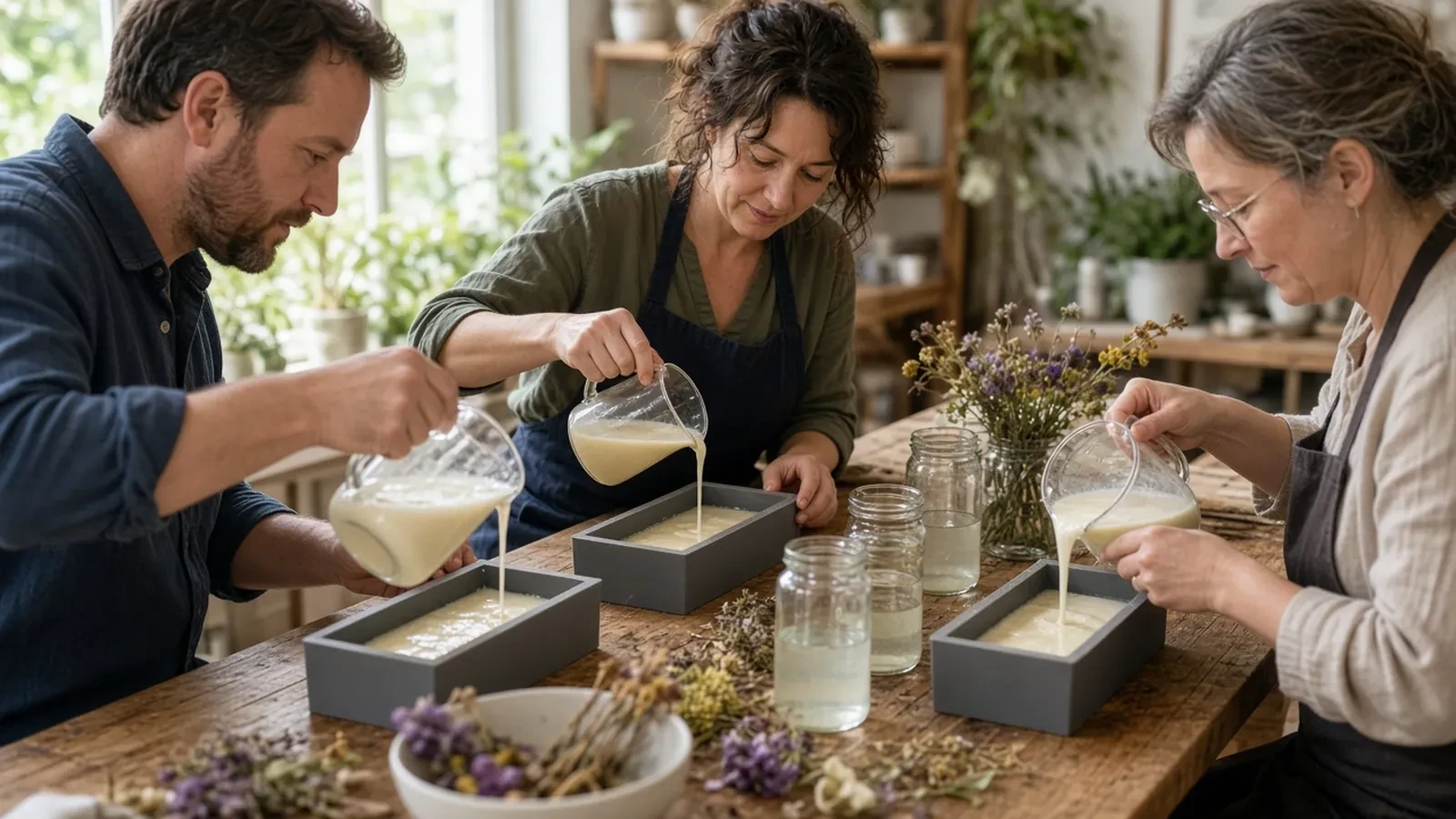
A soap class breaks when the studio set ten molds and fourteen people expect a bar, or when the oils and lye were weighed for a counted list and two extra people want to pour. Molds, the lye line, and the day a cured bar can leave are set before the batch is mixed. The instructor does not weigh another pot because a friend decided to come after the recipe was calculated. A maybe does not hold a mold.
You can create a soap making class RSVP that fills the molds the studio can pour, records who is allowed at the lye table, and names the window when cured soap is picked up.
Ask what this class can pour
Call the studio before you send the link. Write down how many molds they set, whether this class is cold process with lye or melt-and-pour with a premade base, how many bars each person makes, the oil or base weight per person, how long the class runs, and whether soap leaves the same day or cures and is picked up later. Those numbers are your cap. Do not guess from a photo of an empty work table.
A mold is one person and the bars you listed. A friend who wants to watch does not take a mold, and a friend who will pour does. Ask whether the studio charges per pourer, and the last time you can change the headcount without paying for oils and lye that were already measured. If they charge for a no-show after that time, print that rule on the page.
Ask which additives are in the batch: fragrance, color, a milk or honey additive, or none. If the studio caps a scent or an additive at a set number of molds, put that cap on the form. A fragrance measured for six bars is gone at six even if the room still has empty molds. If they will not split one mold between two people, say that one mold is one person.
Set a capacity limit on people who will pour. When the last mold is taken, the form should say the class is full. A friend who might come still needs a mold, a share of the weighed batch, and a place at the table. If the recipe is already calculated, they are not in this class.
Lye is a safety line, not a preference
Cold-process soap uses sodium hydroxide. It burns skin and eyes if it is handled wrong. Ask the studio for the age rule, whether goggles and gloves are required, and whether a child may be in the room at all. If children are not allowed at the lye table, say that on the page. Write the closed-toe shoe rule and whether long sleeves are required. If this class is melt-and-pour and has no lye, say that too, so people are not guessing.
Each person confirms they can stand at a table where lye solution is mixed, or they do not take a mold. You do not need a medical history. You need a yes or a no before the instructor opens the lye container. Collect an emergency contact for every pourer: a name and a phone that works during the class. The studio uses it if someone is hurt. A blank line is not a contact.
Arrival, cure, and who may pick up a bar
People who walk in after the safety talk miss the only time the instructor covers lye, heat, and what not to touch. Collect arrival windows only if the studio staggers check-in. If everyone must be there at one time for the briefing, say that time and say a late pourer does not get a second batch. Put the number of minutes after start when a mold is released.
Cold-process bars often cure for weeks before they can be used. If the soap cannot leave the same day, the RSVP needs a pickup window: date, hours, and what happens to a bar that is not picked up. A mold is not finished when the class ends if the bar is still on their shelf. Write who may pick up for someone else, and that a name not on your list does not get a bar.
The minute the batch is weighed
The meeting point is the studio door, with the suite number if there is one. Put the start time on the page. Say what people must bring only if the studio named it, such as a box for a later pickup or closed-toe shoes.
If you allow a guest, that person needs their own mold, their own lye-line answer, and their own emergency contact. One form that hides an extra pourer will put twelve people on ten molds and throw off a recipe that was weighed to the gram. Say that a yes is one pourer.
Tie your RSVP deadline to the studio's order for oils, lye or base, and molds. After that, a late yes is a call about a cancellation, not a promise of another pot. If you want names ready when someone drops, keep them as standbys and tell them they do not have a mold until you write back. A maybe does not hold a mold.
Export the list the day you lock: attending or not, cold process or melt-and-pour if you offered both, emergency contact, arrival or the single start time, pickup window, and phone. A soap making class RSVP is finished when every mold has one pourer, the lye line is a yes from each of them, and the instructor can weigh the batch without rebuilding your list at the table.