
Quilling Workshop RSVP Website: Strip Counts, a Desk Cap, and a Coil Line
A quilling workshop RSVP has to lock a strip pack and a desk before the first coil, because a maybe does not hold a strip pack.
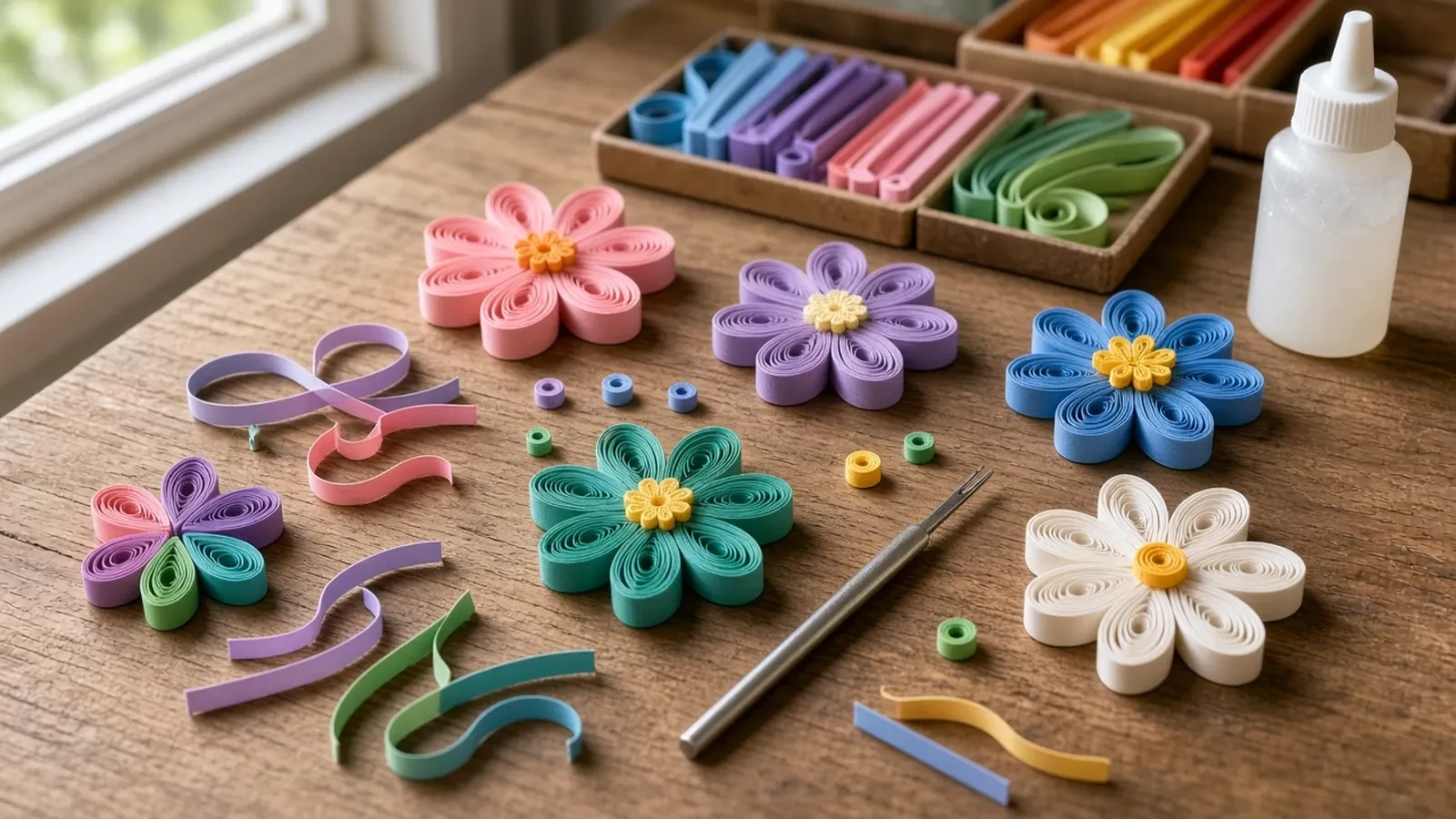
A quilling workshop breaks when ten desks are set and sixteen people arrive expecting a strip pack, or when the paper order was built for ten and three of those names were still a maybe on Friday. Strip packs, the desk each quiller uses, and the coil stage you will actually stop at are set before the first roll. The host does not open an eleventh pack because a neighbor decided to quill after the sheet closed. This is quilling, narrow paper strips coiled and glued into shapes, not origami folding and not paper marbling. A maybe does not hold a strip pack.
You can create a quilling workshop RSVP that fills the desks you will actually set, records who is coiling and who is only watching, and stops when those seats are full.
Count the quillers the desks can hold
Walk the room before you send the link. Write down how many desks have a slotted tool, a glue bottle, and a cork board or foam pad, how many pre-cut strip packs you ordered, and whether a spare pack is a replacement for a ruined coil or an eleventh project. If ten desks can each take one quiller, that number is your cap: ten quillers, not a crowd sharing one tool.
A quilling station is one strip pack, one desk, and one slotted tool. You roll a tight coil, shape it into a teardrop or petal, and glue it down. There is no folded crane, no floating pigment bath, and no shared scrap bin that becomes someone else's project. Ask whether a person who will not quill can watch from a chair away from the glue, and whether that person still counts toward the number the room can hold. Pick one rule and write it on the page. Watchers stay off the strip pack. They do not take a turn with someone else's tool or start a second flower "just to try."
Ask the last time you can change the paper order without paying for packs you cannot return. If the supplier locks the order on Monday for a Saturday class, that Monday is your lock. Write the finish too: one pack, one named quiller, tools wiped when the piece has reached the stage you named. An eleventh desk "if a cork board frees up" is not a plan.
Set a capacity limit on quilling seats, not on everyone who was invited to watch. When the tenth seat is taken, the form should say the workshop is full. If the packs are already ordered, a late quiller is not at these desks.
The coil line is a stage, not a vibe
Name the piece you will finish and stop there. A clear line is one small floral motif, a set number of coils, and a stop at "glued to the card and dry enough to carry," not a framed gallery panel. Rolling every strip in the pack into a full landscape is a different workshop, and you will not finish it in this block of time. Origami, with a single square folded into a model, is a different class. So is paper marbling, with trays and floating color.
Put that stage on the form as the point you will stop, not a vague "until it looks finished." If the class ends when the motif is glued and dry, that is the line. People who want to "keep coiling until the pack is gone" will still be gluing when the room has to close. You need a yes to this pack, this desk, and this coil line before you hand out strips.
Who can work the desk, and who sits where
Workshops go wrong when the desk is a surprise. Quilling means sitting for a long stretch, rolling fine paper, and working under bright light. Ask whether someone needs a taller chair, a left-handed tool, or a desk closer to the window. A guest who cannot sit through the block does not get assigned a pack they will abandon halfway.
Collect seating preferences so you know who needs an end desk and who wants quieter light. Ask about accessibility needs before you assign desks: a chair with arms, a larger-grip tool, and a path that is not blocked by a paper cart. Write what happens if someone misses the start: their pack goes to a standby already in the room, or it stays on the shelf and the late guest does not begin a second motif.
The moment the packs are locked
The meeting point is the room you named, not "the craft space" with no desk marked. Put your phone on the page. A message in the group chat is not a desk assignment. You match names to packs.
Tie the deadline to the paper order, the day the quiller count cannot change. After that, a late yes is a call about a cancellation, not a promise of another pack. If you want names ready when a quiller drops, keep them as standbys and tell them they do not have strips until you write back. A maybe does not hold a strip pack.
Export the list the morning you lock: attending or not, which desk, seating note, accessibility note, and phone. A quilling RSVP is finished when every desk has one named quiller, the coil line is the stage you will actually stop at, and a late guest knows whether they are coiling or watching from the chair.