
Poetry Reading RSVP Website: Chair Counts, Reader Slots, and a Piece Length
A poetry reading RSVP has to lock a chair and a piece length before the room opens, because a maybe does not hold a chair.
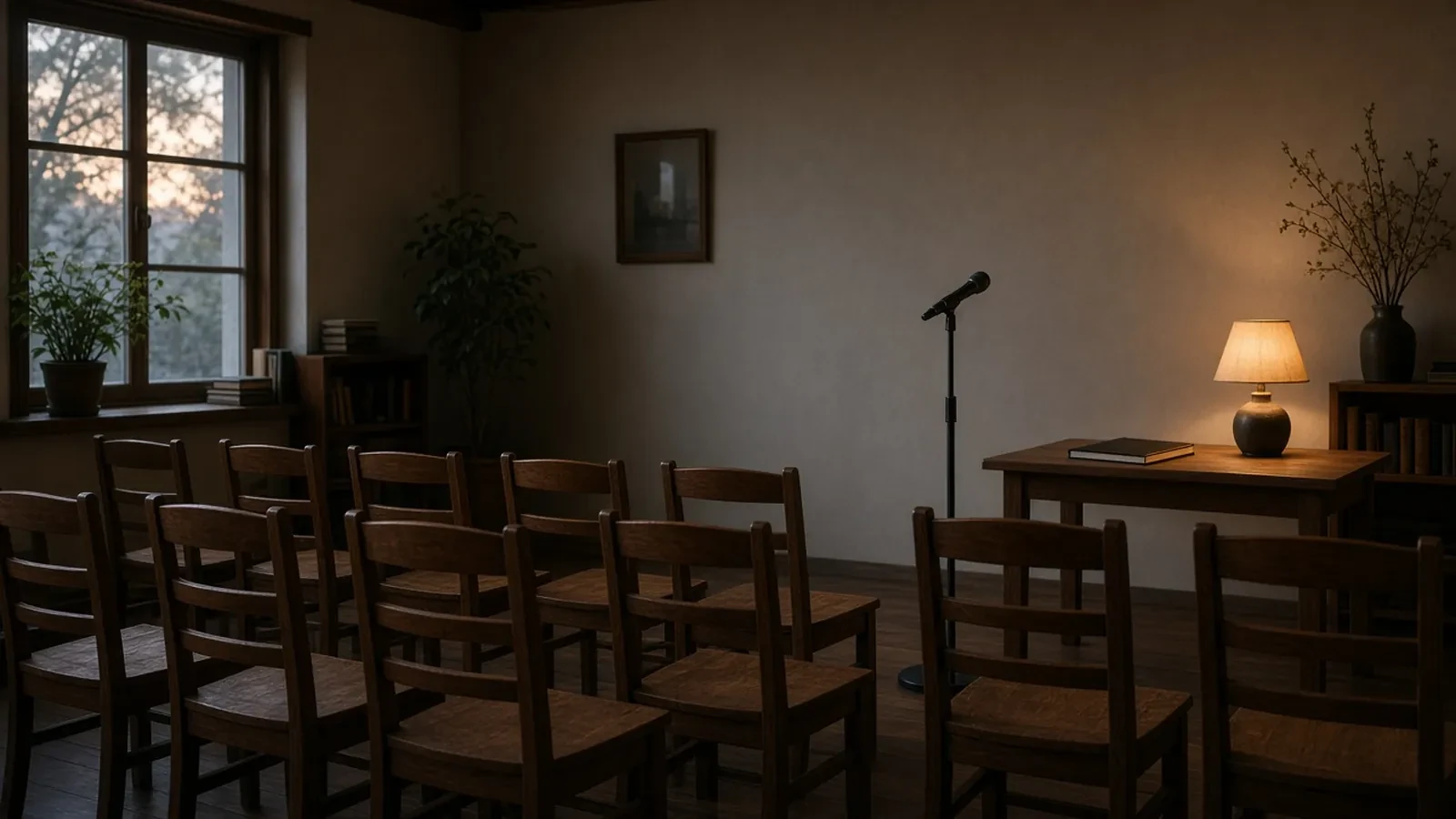
A poetry reading breaks when the room has thirty chairs and forty people are in the aisle, or when extra readers each expect ten minutes after the program was already timed. Chairs, the number of people who will read, and the length of each piece are set before anyone steps to the microphone. The bookstore does not add a row because a friend decided to come after the chairs were counted. A maybe does not hold a chair.
You can create a poetry reading RSVP that fills the chairs the room can hold, keeps a short open-poem list separate from the audience, and records who needs a seat the room can actually give them.
Split listeners from people who will read
Call the venue before you send the link. Write down the chair count, whether anyone may stand, the clock time the room is yours, and whether a microphone is already there. Those numbers are your cap. Do not guess from a photo of an empty shop. A chair is one person. A reader who stays after their piece needs a chair too.
Featured readers are booked before this form goes out. Put their names and their agreed minutes on the page so guests do not think every chair is a turn at the mic. This is not a night for songs, comedy, or instruments. If you are also offering a short open section, cap that list at the number of poems that fit after the featured readers. An audience yes is not a reading slot. Close the open list when it is full even if chairs remain.
Do the clock on paper. If the room is yours from 7:00 to 8:15, four featured readers at eight minutes each use thirty-two minutes, and a host needs about five. What is left is the open section. At three minutes a poem, including the walk up and the thanks, four open slots is the list. Five more friends do not fit. Set a capacity limit on bodies in the room, including readers who sit. When the last chair is taken, the form should say the reading is full.
A piece has a length, and a seat has a use
Write the maximum time per open poem on the page, in minutes, and say you will stop the piece at that mark. A poem that runs long takes the chair time of the next reader and the end time the venue gave you. Featured readers keep the longer slot you already agreed to. The open list does not copy that number. Ask for the title only if the host will say it. If you are not introducing titles, do not collect a paragraph about the work.
Ask for seating preferences the room can meet: a chair on the aisle, a seat near the reader if someone needs to hear, or a spot at the back if the front is a low bench. Cap aisle seats at the number that exist. If every seat is a folding chair on a flat floor, say that. A preference the room cannot meet should not be on the form. If the shop has a step at the door, a narrow aisle, or no accessible restroom, say that before someone takes a chair they cannot use.
Arrive before the first reader, not during a poem
Collect an arrival window that ends before the first reader starts. The window might be 6:40 to 6:55. Write what happens if someone is later: they wait for a break between readers, or they do not come in if the door has to stay shut. A reading does not restart for one person. Open-poem readers who miss the start of the program lose the slot. You give it to the next name on that list, not to a friend who walked in with them.
The moment the chair list is locked
The meeting point is the venue door, with the room name if the building has more than one. Put the host's phone on the page for the person holding the reservation. A screenshot of the invite is not a chair. If the venue charges a cover, say the amount and that it is paid at the door. The RSVP holds the seat. It is not the ticket.
If you allow a guest, that person needs their own chair line. They do not inherit a reading slot. Track them as a separate yes. One form that hides an extra listener puts you over the number the venue allowed. Say that on the page. Children count as a chair if they will sit in the room. If the reading is for adults because of the material or the venue rule, write the age on the page.
Tie your RSVP deadline to the day the venue locks the room count. After that, a late yes is a call about a cancellation, not a promise of another chair. If you want names ready when someone drops, keep them as standbys and tell them they do not have a chair until you write back. A maybe does not hold a chair.
Export the list the morning you lock: attending or not, audience or open poem, piece length if they are reading, seat note the room can meet, arrival window, and phone. A poetry reading RSVP is finished when every chair has a name, every open slot has a poem that fits the clock, and a late arrival knows whether the door is still open.