
Paper Making Workshop RSVP Website: Sheet Counts, a Vat Cap, and a Dry Line
A paper making workshop RSVP has to lock a sheet set and a vat place before the pulp is mixed, because a maybe does not hold a prepared screen or a drying slot.
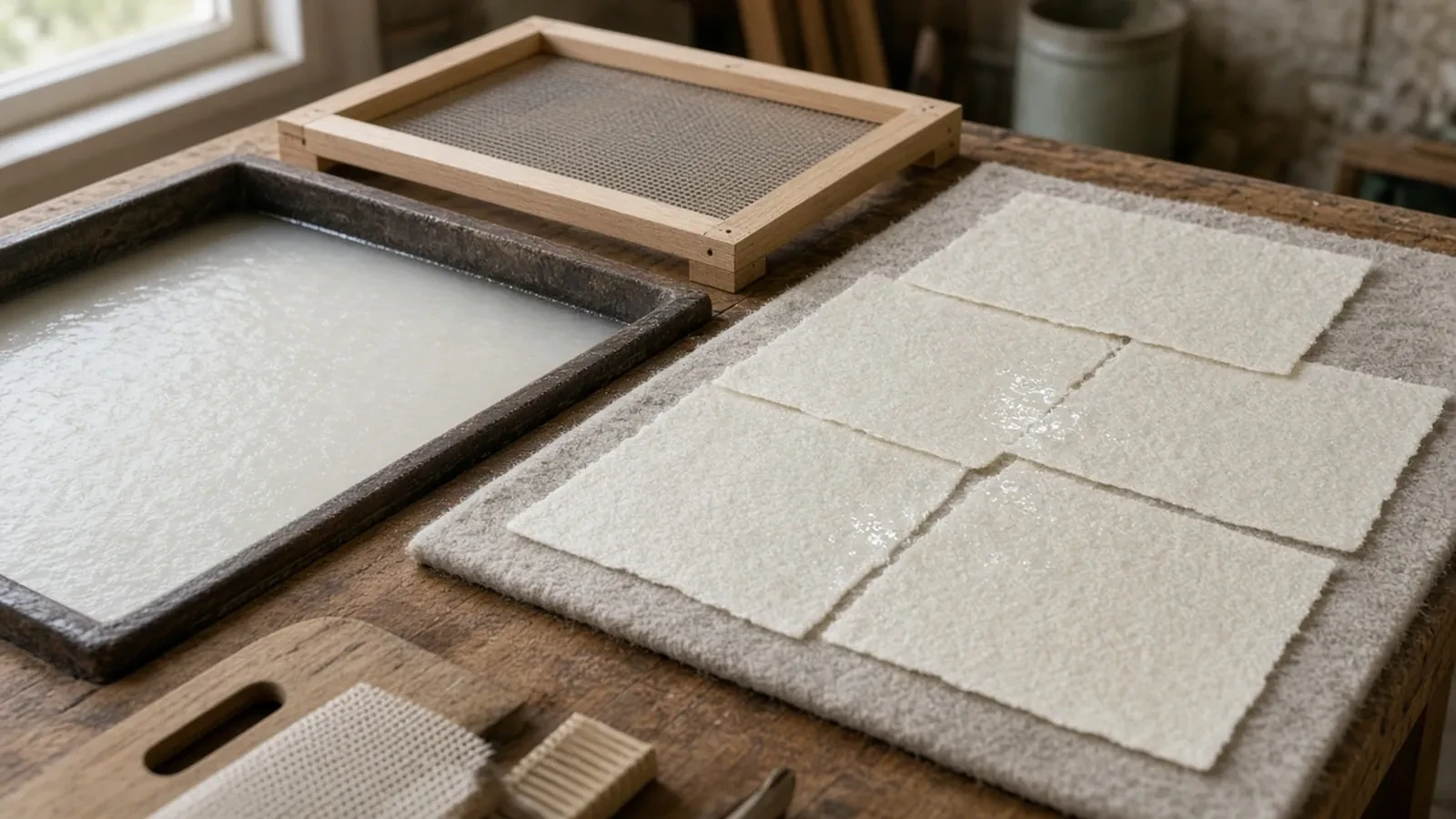
A paper making workshop breaks when the host has pulp for forty sheets, two vats, drying space for ten people, and sixteen students answer yes after the fiber is already soaked. Fiber, water, moulds, deckles, couching cloths, and rack slots are set before the pulp is beaten. The host does not mix a third vat or promise sheets that have nowhere to dry because a friend decided to come after the list closed. This is a wet batch with a finite pulp, not an open craft table and not a print shop. A maybe does not hold a screen.
You can create a paper making workshop RSVP that counts sheet sets, records access needs, and closes when the vat cap is reached.
Count pulp, screens, and drying slots
Weigh the fiber before sending the invitation. Recycled paper or cotton linters only become a set number of sheets once they are soaked and beaten, and leftover pulp does not keep like a stack of blank paper. If two vats will support ten makers at four sheets each, forty labeled sheets is the material count. A student who wants “a few extra if there is pulp left” is asking you to spend someone else’s sheets.
Count the tools that touch water. Mould and deckle pairs, couching cloths or felts, sponges, press boards, and a rack or blotter stack for every sheet are the limit. Two beautiful moulds do not create twenty stations. People can take turns pulling sheets, but each person still needs a cloth and a drying slot with their name on it. A sheet with nowhere to dry becomes a pile of wet pages that stick together and a guest who thinks the workshop failed.
Dry fiber weight, and how many sheets that batch honestly makes
Vats that fit on the tables without blocking the walkway
Moulds, deckles, cloths, and sponges you can rinse between turns
Press boards and a rack slot or blotter for every sheet
Towels and a floor plan for the splash, because the room will be wet
A paper making place is one named student with a sheet count, a turn at a vat, and a drying slot. A guest who wants to watch the first pull is not a student. Someone who expects to leave with paper needs a place in the batch. Ask who is pulling sheets, who is only accompanying, and whether a late student will accept a shorter set if a slot opens. Students stay inside the sheets you can dry. They do not pull another page because the vat still looks full.
The vat cap and the dry line
Two vats and ten makers is a cap only if the session length, the cloths, and the racks agree. If the racks hold thirty-two sheets, the cap is eight people at four sheets, not ten. The smallest real constraint wins. Set a capacity limit for students, not for every person who might stand near the water. When the last sheet set is claimed, the form should say the paper making workshop is full. If the fiber is beaten and the cloths are stacked, a late guest is not an unplanned student.
The dry line is the end of the workshop. Name it: the last sheet is couched, pressed, and on a labeled rack or in a blotter, names are written on the tags, and the leftover pulp is discarded or stored only if you already planned that and said so. A clear dry line stops the class from becoming an extra half hour of unlabeled pages. Pulp left in the vat is not a promise to a guest who arrives during cleanup. It thickens, it clogs the screen, and it is not a new seat.
Access and arrival windows fit a wet room
Pulling a sheet means standing at a vat, lifting a wet screen, and stepping onto a floor that will not stay dry. That is a real barrier, not a detail for the day of class. Collect accessibility needs on the RSVP before you assign vats. Ask whether someone needs a seated setup, a lower vat, a place to rest a cane off the splash zone, or extra time for grip. If you can set one station at sitting height, say how many of those stations exist. If you cannot, say that too, so a guest can decline instead of discovering the bench height at the door. Do not assign a sheet count that looks open on paper if that person cannot reach the vat and still finish before the dry line.
Use arrival time windows on the RSVP because pulp is mixed for the people who are coming, not held in perfect condition for an hour. The first window is apron on, names on cloths, and the first demonstration pull. The start window is when turns begin. A student who misses the start can keep a later turn only if their sheets are still in the batch. They do not get a fresh vat. Put the host’s phone on the page so a delay is a message, not a guess.
The moment the sheet list is locked
Tie the deadline to the soak. If the fiber has to be in water the night before a Saturday workshop, Friday is your lock. After that, a late yes is a call about a cancellation, not a promise of a screen. Standbys can wait, and you tell them they do not have sheets until you write back. A maybe does not hold beaten pulp.
The meeting point is the studio door, the check-in time, and the vat row you named, not “come by anytime and we will be making paper.” You match names to students, sheet counts, vat turns, drying slots, access notes, the vat cap, the dry line, and a phone. Export the list the morning you lock: attending or not, sheet count, vat, access note, arrival window, and phone.
A paper making workshop RSVP is finished when every sheet in the batch has a named rack slot, the dry line is the last labeled page rather than an open vat, and a late guest knows whether they are pulling sheets, watching from a dry corner, or waiting for a cancellation.