
Orienteering Meet RSVP Website: Map Counts, a Start Cap, and a Course Line
An orienteering meet RSVP has to lock a map and a start slot before the maps are printed, because a maybe does not hold a map.
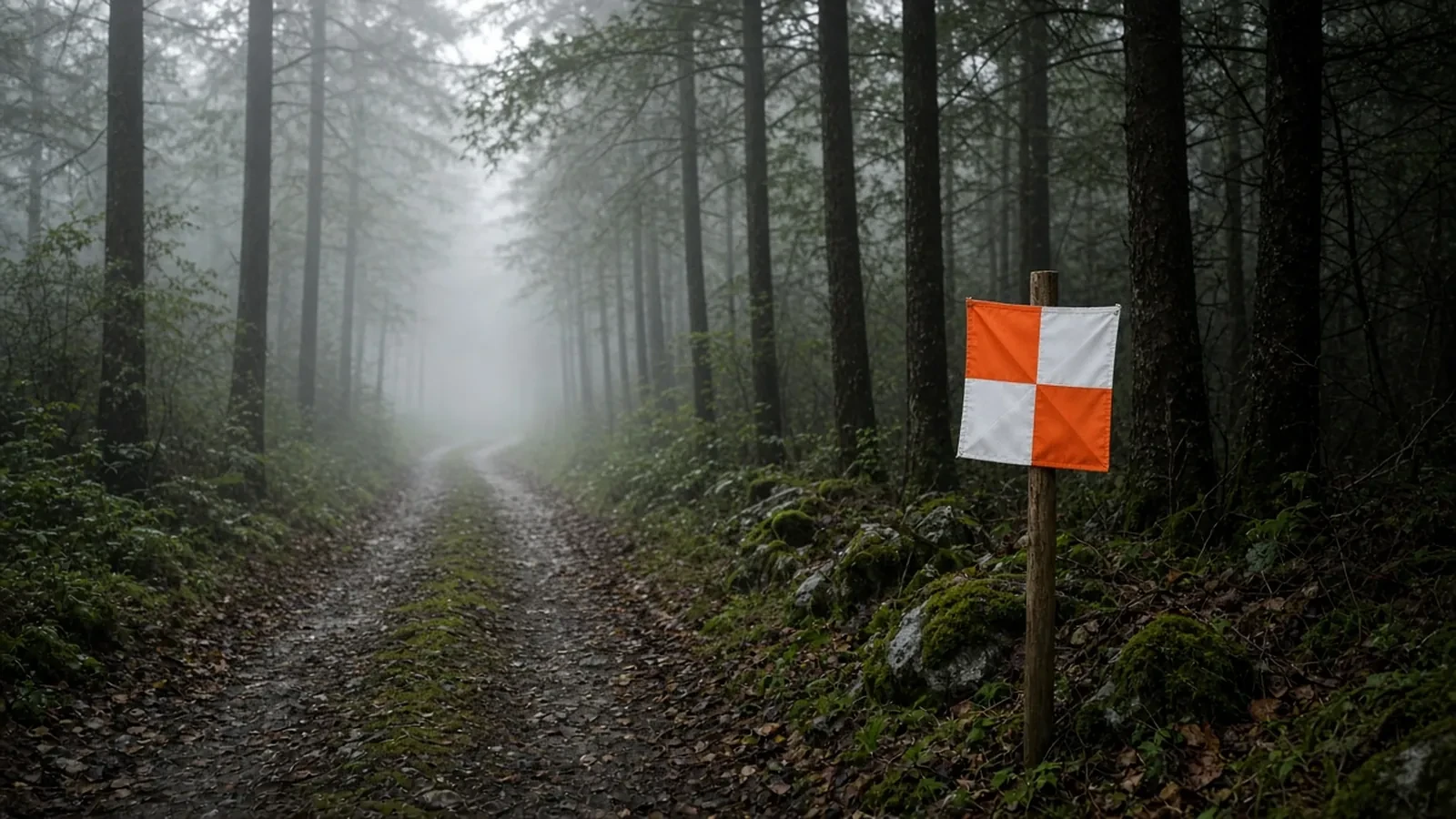
An orienteering meet breaks when the club printed eighteen maps and twenty-two people are at the start, or when someone who said maybe arrives after call-up and expects a map that was already handed to the person in the start lane. Maps, the start slot each runner gets, and the course you agreed to run are set before the first punch. The club does not print a map in the parking lot because a friend decided to come after the print deadline. A maybe does not hold a map.
You can create an orienteering meet RSVP that fills the start slots on one course, records who needs a rental timing stick, and stops when those maps are gone.
Ask what this meet will actually print
Call the meet director before you send the link. Write down the course name, the length, the climb, the start interval, how many maps they will print for your group, and whether runners start alone. If this outing is the yellow course only, 3.2 kilometers on trails with a two-minute start interval from 10:00 through 10:34, that is eighteen slots and eighteen maps. Those numbers are your cap.
A map is one runner. Ask whether the club allows a pair on this course. If yellow at this meet is individual, a friend running beside you still needs their own map and their own start time. Do not write "teams of two" on the page if the director said no. A parent who only waits at the finish does not take a map. A parent who runs, and a child who runs, each take a slot.
Ask the entry price, whether a timing stick rental is separate, and the last hour they will add a name to the print file. If the club prints Thursday at 5 p.m. and will not run a second print for one person, that is your deadline. Write it on the page. Also write how many rental sticks the club brought. Twelve rentals is a second cap. A runner who owns a stick should not be able to take the last rental.
Set a capacity limit on runners for this course, not on everyone who was invited to the park. When the eighteenth map is claimed, the form should say the course is full. A white course or an orange course, if the club is also offering them, is a different list with its own length and its own cap. Do not collect "any course" and assign people in the start lane.
The course line is the trail you will actually use
Put the course in plain words: yellow, trails and fields, 3.2 kilometers, one bridge over a stream, roots, and a short hill, with a ninety-minute time limit. Each person confirms they can cover that course on foot. This is not a guess about fitness in general. It is a yes to this map. Someone who wanted a bushwhack course should not take a yellow map, and someone who cannot do roots should not take this one hoping the field is flat.
Control descriptions are printed on the map. They are not a negotiation at the start. Nobody gets a shorter loop because the group is moving slowly.
Terrain the club cannot change
Ask about access needs the course can actually meet. If yellow is not step-free and there is no alternate map at this meet, say that. People who need a step-free route should not take one of the eighteen maps.
Put the weather plan on the page in the same words the director used. Rain does not cancel this meet. Lightning inside the park's rule, or a closed parking lot, does. Name the clock time you will send a cancel or a hold, for example 7:30 a.m. the morning of the start. A cancelled meet is not a walk with the same eighteen people and no finish crew.
The start window is the assigned minute, not "sometime after ten." Write the call-up rule: be at the start lane twenty minutes before your minute to pick up the map. A runner who misses their minute does not push everyone back. They take a later open minute if one is still empty, or they do not start. Say which of those the director allows.
The moment the map file is locked
The meeting point is the start banner. Put the host's phone on the page. A screenshot of the invite is not a start time. The person at call-up matches the name to the minute and to a rental stick only if the form said they need one.
If you allow a guest, that person needs their own course answer, their own stick answer, and their own start minute. Track them as a separate yes. One household form that hides a second runner will blow the map count. Say that on the page. Children who are running count as runners. Write the club's age rule next to the question. A child who is only visiting the finish does not get a map and does not stand in the start lane.
After Thursday at 5 p.m., a late yes is a call about a scratch, not a promise of a nineteenth map. Keep standbys off the print list and tell them they do not have a start until you write back with a minute that someone gave up. A maybe does not hold a map.
Export the list the night you lock the file: attending or not, course, own stick or rental, start minute, party size, access note the director agreed to, and phone. An orienteering RSVP is finished when every map has a named runner, the rental count matches the sticks in the box, and a late car knows whether they have a minute or they are watching from the finish.