
Lantern Walk RSVP Website: Lantern Counts, a Trail Cap, and a Weather Hold
A lantern walk RSVP has to lock a lantern and a trail spot before the group steps off, because a maybe does not hold a lantern.
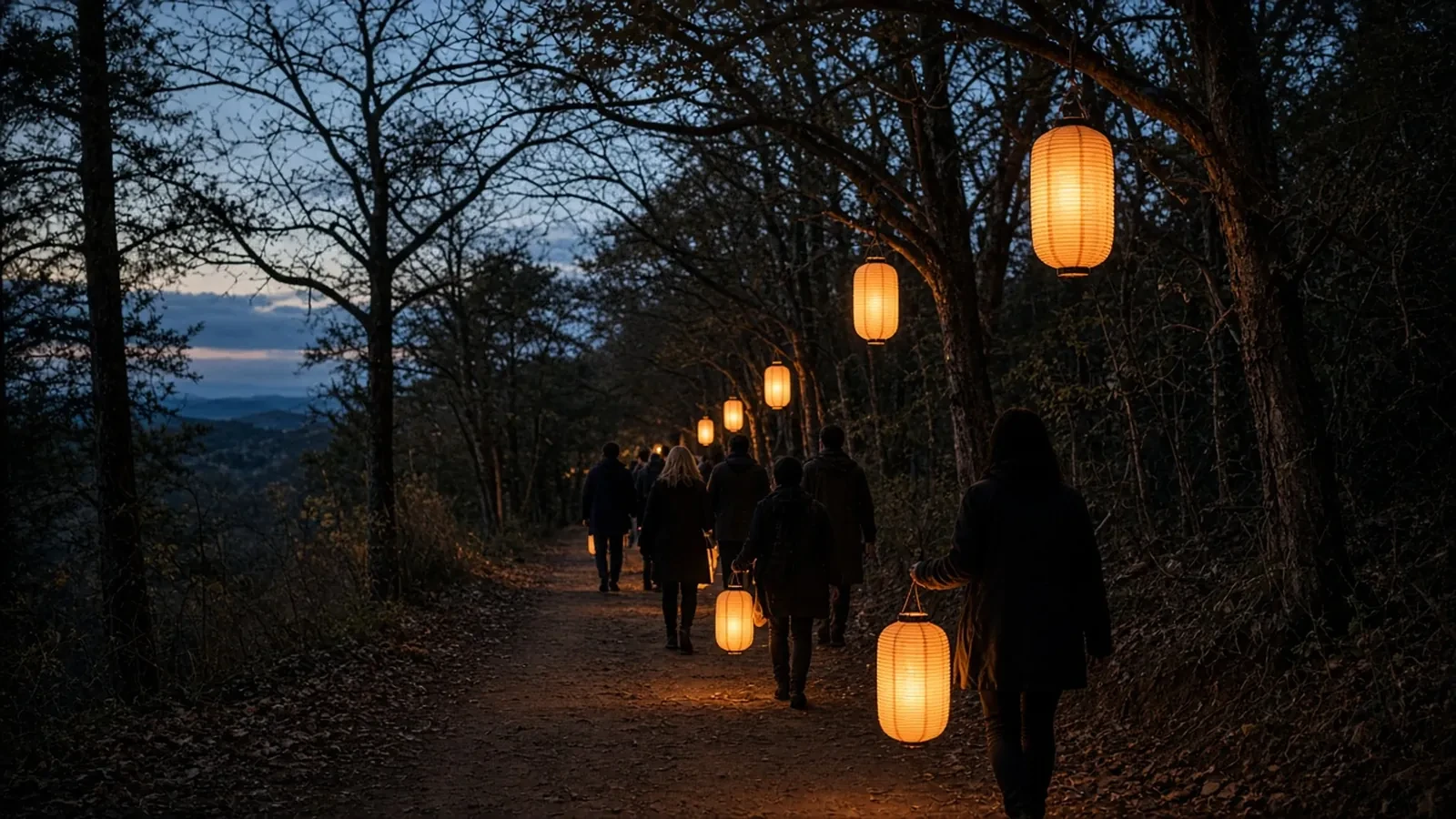
A lantern walk breaks when you own twenty lanterns and twenty-eight people are at the trailhead, or when the park permit was for a single-file group and extra friends are already on the path. Lanterns, the number of people the trail can hold, and the weather call are set before anyone steps off. The park does not extend your permit because a friend decided to come after the lanterns were packed. A maybe does not hold a lantern.
You can create a lantern walk RSVP that stops at the lanterns you can hand out, keeps the group inside the trail cap, and records a weather hold before anyone drives to the trailhead.
Count lanterns and the path, not the invite list
Call the park or read the permit before you send the link. Write down the maximum group, whether the path is one way, how long the walk takes, where you may meet, and whether flame is allowed. Those numbers are your cap. Do not guess from a daytime photo of an empty trail. If the permit says twenty-five, twenty-five is the list, including you and anyone leading the walk.
A lantern is one walker who will carry it. Count the lanterns you own, and separate LED from flame if the park allows only one of them. If flame is banned, say that, and do not let people bring candles in glass. Children who will be carried count toward the permit and do not get a lantern. Spares are for a dead battery or a cracked handle, not for a maybe. Two spares do not mean two extra guests.
Set a capacity limit on people who will walk, using the smaller of the permit and the lanterns you can hand to walkers. When that number is taken, the form should say the walk is full. A friend who might come still needs a lantern and a place in a group the lead can see. If the park already counted your permit, they are not an extra file on the trail.
Weather, a dark path, and someone off the walk
Put a weather contingency on the page in plain rules. Wind that blows out a flame lantern, rain that makes the path slick, or a park closure cancels the step-off. Name the clock time you will decide, such as 3:00 p.m. the same day, and how you will tell people: the page and a text to the numbers you collected. A cancelled walk does not become a picnic in the lot unless you wrote that plan and it still fits the permit.
The path is dark except for the lanterns. Say whether it is paved, whether it has stairs or roots, and that a stroller does not fit if it does not. People who cannot walk that surface should not take a lantern. You do not need a diagnosis. You need a yes against the trail you actually have. If one short stretch is the meet-up point and not the full loop, say which one you are walking so nobody plans for the wrong distance.
A name you can call if the group is late
Collect an emergency contact who is not on the walk: a name and a phone. Cell service on the trail may drop. Tell that contact the end time and the trailhead. If you are not back by the time you printed, that person is who the group expects to notice. Do not collect a contact and then leave the end time off the page.
The arrival window is at the trailhead before you step off, not somewhere along the path. A 6:40 meet for a 7:00 start is the window. Write what happens if a car is later: they do not get a lantern chased down the trail, and they do not walk in alone behind you. A group that has started does not split. If the lot holds fewer cars than people, say the number and ask who can share a ride. A yes is a person on the path, not a promise of a parking space.
The hour the lanterns are packed
The meeting point is the named kiosk or gate, not "the park." Put the host's phone on the page for the person holding the permit. A screenshot of the invite is not a lantern. Say whether you will hand out LED lanterns at the kiosk and collect them at the end. A lantern that goes home with a guest is one fewer for the next walk, so say they come back to you before people leave the lot.
Tie the headcount deadline to the day you need the permit list or the day you pack a lantern per walker, whichever is earlier. The weather call can be later, and it can cancel a list that was already full. After the headcount locks, a late yes is a call about a cancellation, not a promise of another lantern. If you want names ready when someone drops, keep them as standbys and tell them they do not have a lantern until you write back. A maybe does not hold a lantern.
Export the list the day you pack: attending or not, LED or no lantern because they are carried, emergency contact, ride or parking note if you asked, and phone. A lantern walk RSVP is finished when every lantern has a walker, the group fits the permit, and a late car knows the path has already started.