
Lantern Making Workshop RSVP Website: Frame Counts, a Station Cap, and a Light Line
A lantern making workshop RSVP has to lock a frame and a station place before the glue goes on, because a maybe does not hold a counted panel or a seat while the covering dries.
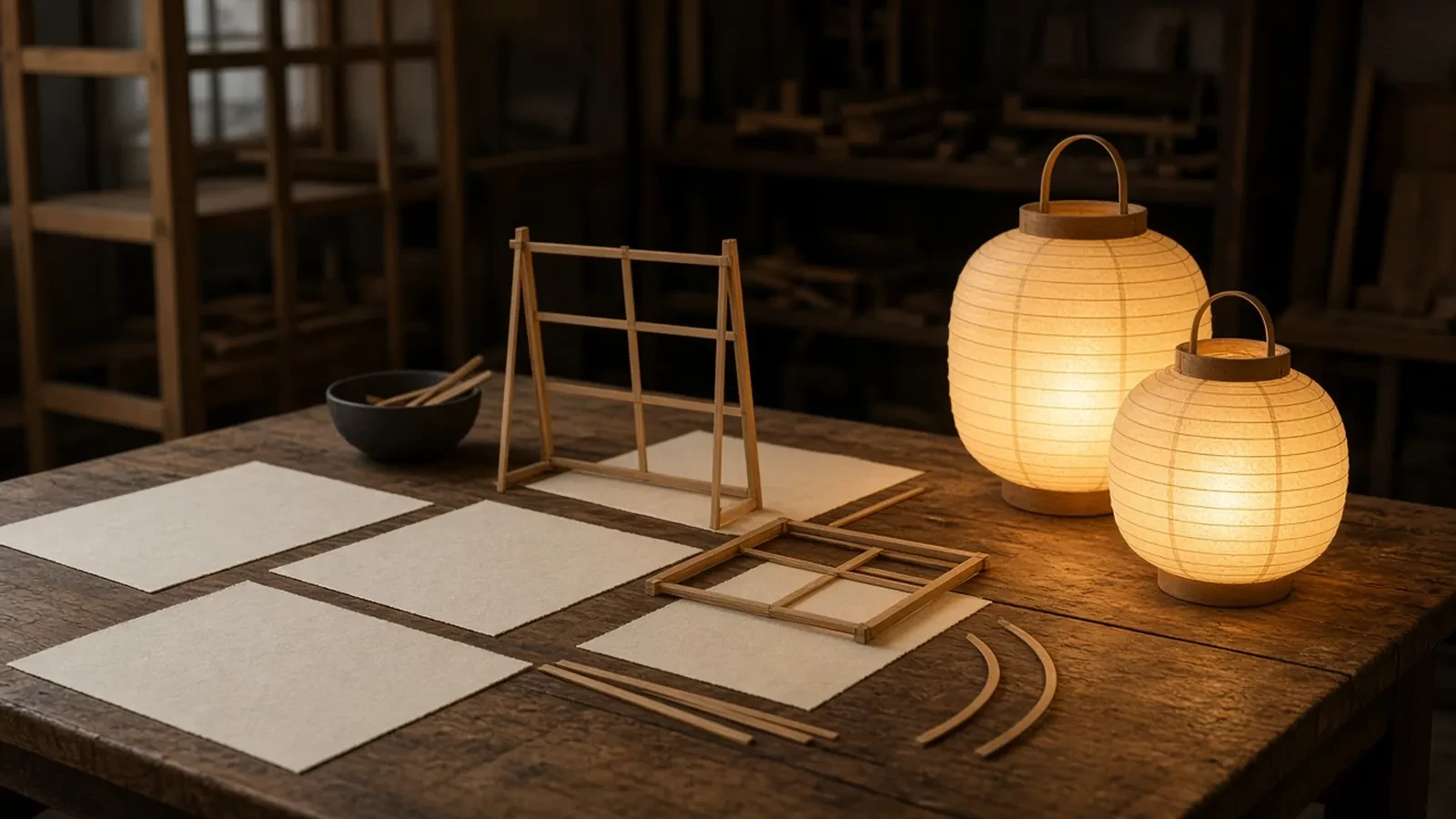
A lantern making workshop breaks when the host cut twelve frames, set six stations, and eighteen people answer yes after the glue is already open. Frames, panels, and a seat with room to dry a finished lantern are decided before the first joint is set. The host does not start a second stack of frames or promise a lantern that has no drying time left because a friend decided to come after the list closed. This is building a frame and covering it, not a walk with lanterns already made, not pouring candles, and not making paper from pulp. A maybe does not hold a frame.
You can create a lantern making workshop RSVP that counts frames, records access needs, and closes when the station cap is reached.
Count frames, panels, and drying space
Count the frames before you send the invitation. A lantern becomes a lantern only after the frame is square, the panels are cut, and the covering is attached and dry enough to move. A roll of wire in a bin is not a spare seat. Tissue and fabric wrinkle if they are cut early and left in a pile, and a bent frame is not a second lantern you can hand to a walk-in during the last half hour. If one small lantern takes one frame, four panels, and a battery light, ten labeled kits is the material count. A student who wants “a bigger lantern if there is tissue left†is asking you to spend someone else’s panels.
Count the tools that touch the build. Glue or tape that you can actually finish with, scissors, clips, a drying rack or a clear shelf, and a battery light for every lantern are the limit. Two glue pots do not create fourteen stations. People can share a cutting mat, but each person still needs a named frame that is not tangled with the next one, and a place to set the lantern down while it sets. A lantern with nowhere to dry becomes a wet shape in someone’s hands and a guest who thinks the class failed.
Frames by size, and how many you can square before the start
Panels, tissue or fabric, and a few torn spares that are not a second class
Glue, tape, clips, and scissors you can reset between makers
Drying shelves that are not the walkway
Battery lights, not an open flame, so the finish is a light and not a candle pour
A lantern making place is one named maker with a frame, panels, and a seat. A guest who wants to watch the first joint is not a student. Someone who expects to leave with a lantern needs a place at the table. Ask who is building, who is only accompanying, and whether a late student will accept a smaller lantern if a frame opens. Students stay inside the kits you prepared. They do not pull another frame because the wire still looks long.
The station cap and the light line
Six stations and ten frames is a cap only if the table, the glue time, and the drying shelf agree. If the room seats five people who can spread a panel without hitting the next lantern, the cap is five, not ten. The smallest real constraint wins. Set a capacity limit for makers, not for every person who might stand near the glue. When the last frame is claimed, the form should say the lantern making workshop is full. If the frames are cut and the panels are stacked, a late guest is not an unplanned maker.
The light line is the end of the workshop. Name it: the last panel is attached, the lantern can be lifted without the covering pulling free, the battery light goes in or is packed with the lantern, and the glue is capped. A clear light line stops the class from becoming an extra hour of wet joints and unfinished frames. A frame left on the table is not a promise to a guest who arrives during cleanup. It is still drying, and it is not a new seat.
Access and arrival fit a glue table
Building a lantern means sitting long enough to align a frame, handling glue or tape, and reaching panels that tear if they are rushed. That is a real barrier, not a detail for the day of class. Collect accessibility needs on the RSVP before you assign stations. Ask whether someone needs a seated setup they can already use, a place away from strong glue smell, extra time because fine clips are hard on the hands, or a clear path for a cane that does not cross the drying shelf. If you can set one station with a lower table and a chair that pulls out fully, say how many of those stations exist. If you cannot, say that too, so a guest can decline instead of discovering the stool height at the door. Do not assign a frame that looks open on paper if that person cannot reach the work and still finish before the light line.
Use arrival time windows on the RSVP because frames are laid out for the people who are coming, not held flexible for an hour. The first window is names on kits, a short look at the joints, and a check that the panels match the frame. The start window is when the covering begins. A student who misses the start can keep a later pace only if their frame is still on the table and the glue time still fits before the light line. They do not get a fresh kit. Put the host’s phone on the page so a delay is a message, not a guess.
The moment the frame list is locked
Tie the deadline to the prep. If the frames have to be cut the night before a Saturday workshop, Friday is your lock. After that, a late yes is a call about a cancellation, not a promise of a panel. Standbys can wait, and you tell them they do not have a frame until you write back. A maybe does not hold a squared kit.
The meeting point is the studio door, the check-in time, and the table row you named, not “come by anytime and we will be building lanterns.†You match names to makers, lantern size, station, access notes, the station cap, the light line, and a phone. Export the list the morning you lock: attending or not, frame, station, access note, arrival window, and phone.
A lantern making workshop RSVP is finished when every frame on the table has a named seat, the light line is the last capped glue rather than an open stack of wire, and a late guest knows whether they are building, watching from a dry corner, or waiting for a cancellation.