
Kumihimo Workshop RSVP Website: Thread Counts, a Disk Cap, and a Braid Line
A kumihimo workshop RSVP has to lock a thread set and a disk before the first braid, because a maybe does not hold a thread set.
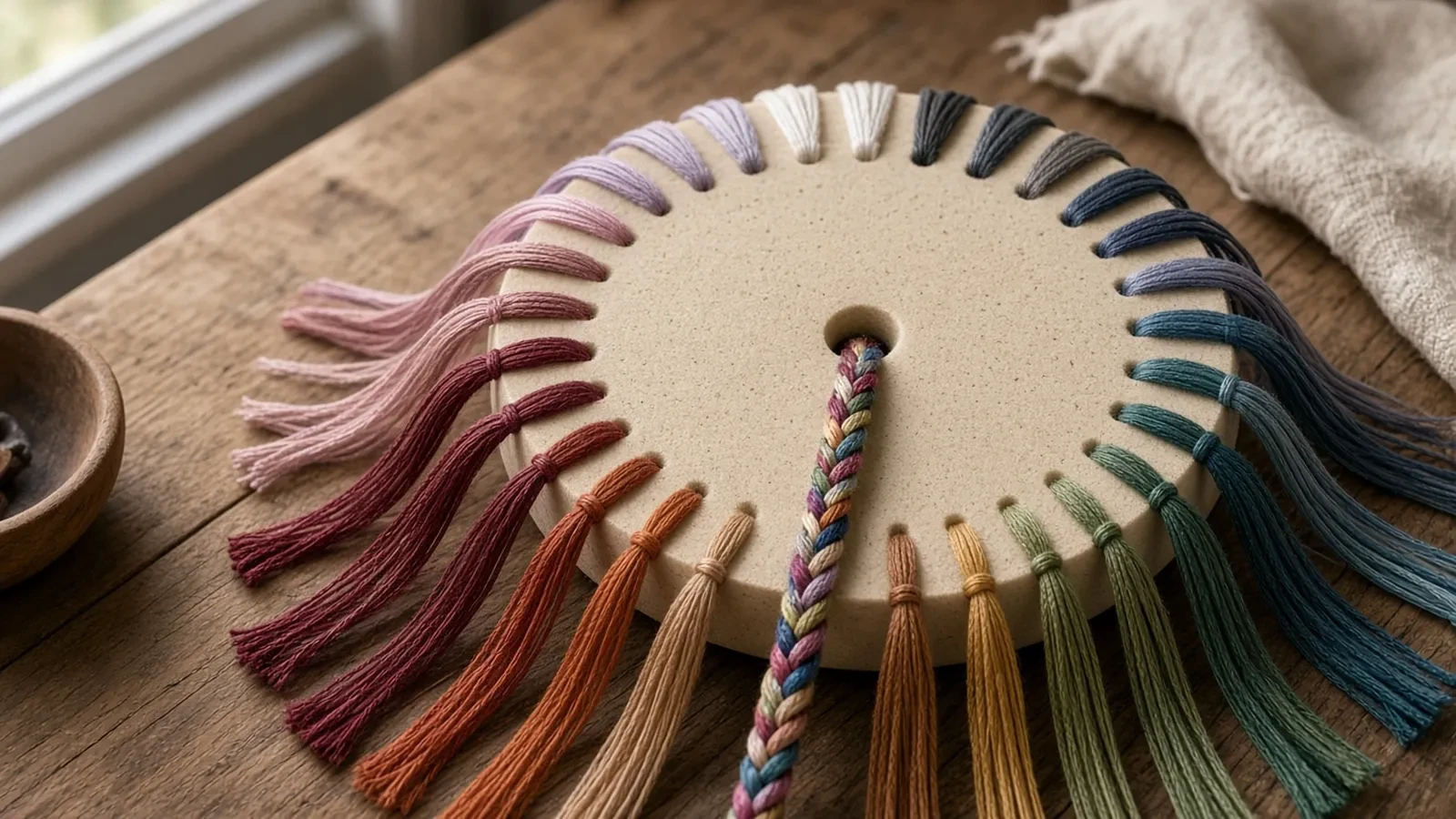
A kumihimo workshop breaks when eight disks are set and fourteen people arrive expecting a wound thread set, or when the thread order was built for eight and three of those names were still a maybe on Friday. Thread sets, the disk each braider uses, and the cord length you will actually stop at are set before the first move. The host does not open a ninth set because a neighbor decided to braid after the sheet closed. This is kumihimo, numbered warps moved on a round disk into a cord, not a friendship-bracelet knot on a clipboard and not macrame on a dowel. A maybe does not hold a thread set.
You can create a kumihimo workshop RSVP that fills the disks you will actually set, records who is braiding and who is only watching, and stops when those seats are full.
Count the braiders the disks can hold
Walk the room before you send the link. Write down how many foam disks or marudai you can set up, how many thread sets are already wound onto bobbins, and whether a spare set is a replacement for a tangled warp or a ninth braid. If eight disks can each take one braider, that number is your cap: eight braiders, not a crowd passing one disk around the table.
A kumihimo station is one thread set, one disk, and one chair. You move opposite warps in a numbered order, let the bobbins drop so the cord tightens, and stop at a marked length. There is no embroidery-floss knot chart, no square knot on a dowel, and no shared bobbin box that becomes someone else's cord. Ask whether a person who will not braid can watch from a chair away from the hanging weights, and whether that person still counts toward the number the room can hold. Pick one rule and write it on the page. Watchers stay off the disk. They do not take a turn with someone else's warps or start a second cord just to see the pattern.
Ask the last time you can change the thread order without paying for sets you cannot return. If the supplier locks the order on Monday for a Saturday class, that Monday is your lock. Write the finish too: one set, one named braider, bobbins unwound only if a warp snaps, disk cleared when the cord has reached the length you named. A ninth disk "if a foam round turns up in the closet" is not a plan.
Set a capacity limit on braiding seats, not on everyone who was invited to watch. When the eighth seat is taken, the form should say the workshop is full. If the sets are already wound, a late braider is not at these disks.
The braid line is a length, not a vibe
Name the cord you will finish and stop there. A clear line is one round braid, a set number of moves, and a stop at "measured to sixteen inches and tied off," not a pair of bag straps with tassels. Braiding until every bobbin is empty is a different workshop, and you will not finish it in this block of time. A friendship bracelet, with floss knotted on a clipboard, is a different party. So is macrame, with cotton cord knotted on a dowel.
Put that length on the form as the point you will stop, not a vague "until it looks long enough." If the class ends when the cord is tied off and the disk is clear, that is the line. People who want to keep moving warps until the thread is gone will still be braiding when the room has to close. You need a yes to this set, this disk, and this braid line before you hand out bobbins.
Who can sit the disk, and who needs a different chair
Workshops go wrong when the seat is a surprise. Kumihimo means sitting for a long stretch, lifting light bobbins, and watching a small numbered disk. Ask whether someone needs a taller chair, a disk on a low table instead of a lap, or a spot with room for the weights to hang without hitting a neighbor. A guest who cannot sit through the block does not get assigned a wound set they will abandon halfway.
Collect seating preferences so you know who needs an end seat and who wants the disk on a table. Ask about accessibility needs before you assign disks: a chair with or without arms, a larger-grip bobbin, and a path that is not blocked by a thread cart. Write what happens if someone misses the start: their set goes to a standby already in the room, or it stays on the shelf and the late guest does not begin a second cord.
The moment the sets are locked
The meeting point is the room you named, not "the fiber studio" with no disk marked. Put your phone on the page. A message in the group chat is not a disk assignment. You match names to wound sets.
Tie the deadline to the thread order, the day the braider count cannot change. After that, a late yes is a call about a cancellation, not a promise of another set. If you want names ready when a braider drops, keep them as standbys and tell them they do not have bobbins until you write back. A maybe does not hold a thread set.
Export the list the morning you lock: attending or not, which disk, seating note, accessibility note, and phone. A kumihimo RSVP is finished when every disk has one named braider, the braid line is the length you will actually stop at, and a late guest knows whether they are braiding or watching from the chair.