
Halloween Party Games for Kids: 20 Ideas by Age Group
Halloween party games for kids sorted by age: toddler-friendly activities, classic games for ages 5 to 8, and spooky challenges for tweens, plus a sample schedule.
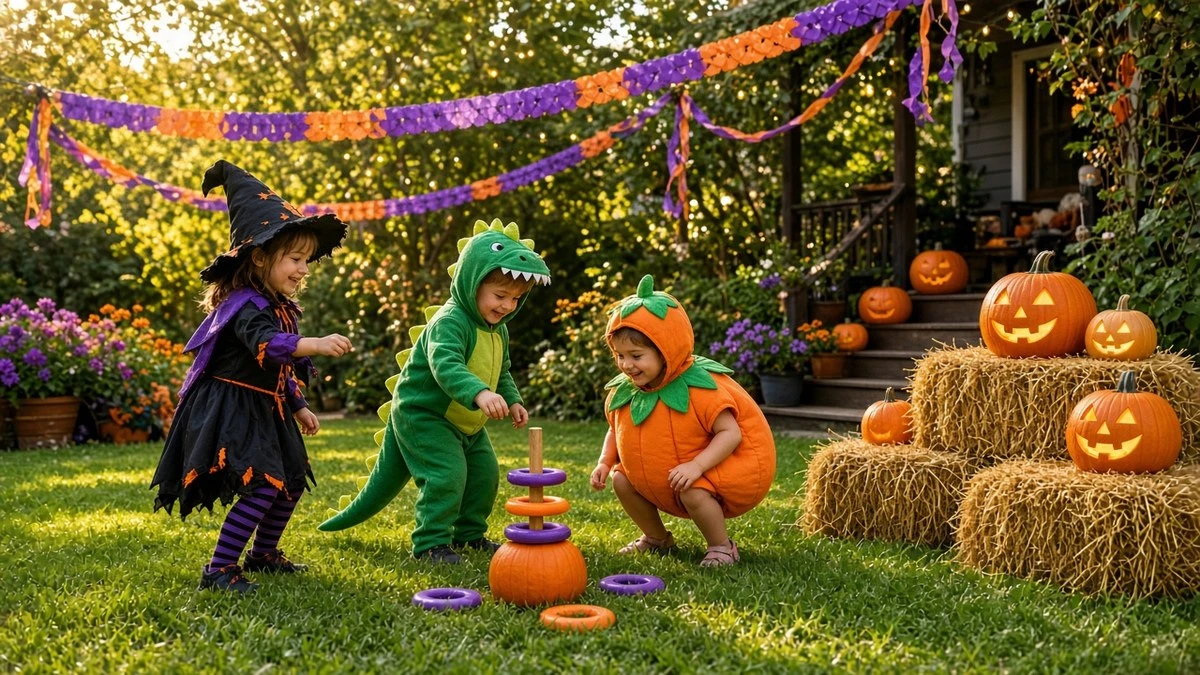
A kids' Halloween party lives or dies by its games. Costumes are exciting for the first twenty minutes; after that, children need something to do. The trick is matching the activity to the age group: what delights a four-year-old will bore a ten-year-old, and a spooky challenge for tweens can scare a toddler. Below are twenty Halloween party games sorted by age, plus a schedule that keeps a two-hour party moving.
Before you plan the games: know your headcount and ages
The number of kids and their ages decide almost everything, from how many prizes to buy to whether you need a second adult running a station. When you send invitations, ask parents for each child's age and whether a parent will stay. Our guide to tracking RSVPs for a kids party covers the questions worth asking.
For wording ideas, see our collection of Halloween party invitation wording, including lines that mention costumes and pick-up times.
Games for toddlers and preschoolers (ages 2 to 4)
Keep it short, gentle, and non-competitive. Everyone should "win."
Pumpkin hunt: hide small plastic or mini real pumpkins around the yard. Each child finds three and puts them in their bucket.
Monster freeze dance: play silly Halloween songs and have everyone freeze like a monster when the music stops. No one is "out."
Feed the pumpkin: cut a big mouth in a cardboard jack-o-lantern and let toddlers toss beanbags or soft balls through it.
Spider web walk: stretch yarn across a hallway at different heights for kids to crawl under and step over.
Sticker pumpkins: give each child a small pumpkin and foam stickers for eyes and mouths. It doubles as a take-home favor.
Games for young kids (ages 5 to 8)
This is the sweet spot for classic party games. Light competition is fun as long as prizes are small and plentiful.
Mummy wrap race: pair kids up and give each pair a roll of toilet paper. One wraps the other; fastest complete mummy wins.
Pumpkin ring toss: line up pumpkins with stems and toss glow-stick bracelets or plastic rings over them.
Witch hat ring toss or knock down the ghosts: stack paper cups decorated as ghosts and knock them over with a small ball.
Candy corn guessing jar: fill a jar and have kids write their guess. Closest guess takes the jar home.
Halloween musical chairs: play spooky music and use chairs decorated with orange tablecloths.
Pass the pumpkin: like hot potato, but with a mini pumpkin. Whoever holds it when the music stops answers a silly question.
Spider relay: kids carry plastic spiders on a spoon across the yard and drop them into a bowl.
Games for older kids and tweens (ages 9 to 12)
Older kids want a challenge, a little mystery, and the chance to be slightly scared.
Halloween scavenger hunt: write rhyming clues that lead around the house or yard to a final treasure of candy.
Mystery boxes: fill covered boxes with peeled grapes ("eyeballs"), cold spaghetti ("worms"), and gelatin ("brains"). Kids guess what they are touching.
Costume fashion show: set up a runway with a playlist and give awards like "most creative," "funniest," and "best homemade."
Glow-in-the-dark tag: as it gets dark, hand out glow sticks and play flashlight tag in a safe, fenced area.
Pumpkin decorating contest: paints, markers, and craft supplies only (no knives for this age without close supervision).
Murder-mystery lite: a simple "who stole the candy" mystery with character cards and clues hidden around the room.
Donut on a string: hang donuts from a line and race to eat one without using hands.
Spooky storytelling circle: dim the lights, add a flashlight, and let each kid add one sentence to a scary story.
A sample two-hour kids Halloween party schedule
0:00 to 0:15: arrivals, a simple craft table (sticker pumpkins or mask decorating) so early kids are busy
0:15 to 0:45: two active games, such as the mummy wrap race and pumpkin ring toss
0:45 to 1:05: snack break: mummy hot dogs, clementine "pumpkins," and juice
1:05 to 1:35: scavenger hunt or costume parade
1:35 to 1:50: calm-down game like the guessing jar or storytelling
1:50 to 2:00: treat bags and pick-up
Mixing high-energy and quiet games prevents meltdowns, and ending with something calm makes pick-up much smoother for parents.
Prizes and supplies to buy
Small prizes: glow sticks, stickers, mini erasers, spider rings, and temporary tattoos
Plan one prize per child per competitive game, or make every game "everyone gets something"
Toilet paper (two rolls per pair for mummy wrap), mini pumpkins, plastic spiders, rings, cups, and a speaker
Treat bags with a mix of candy and non-candy items for kids with allergies
Safety and inclusion tips
Allergies: ask about food allergies in the RSVP and keep a few non-food prizes for kids who cannot have candy.
Scare level: tell parents in the invitation if anything will be spooky so they can prepare sensitive kids.
Costumes: suggest costumes that kids can run in, and keep masks off during active games.
Supervision: one adult per six to eight young kids is a comfortable ratio for games.
Party at a school, church, or community lot?
Many of these games work at a larger community event too. If you are hosting dozens of families, check our guide to organizing a trunk-or-treat, where games can run at a central station while families move between decorated cars.
Ready to send invites? Set up a Halloween party RSVP that asks for each child's age, allergies, and whether a parent is staying, so you can plan the right games for the kids who are actually coming.