
Diwali Party RSVP Guide: Guest Count, Sweets, and Timing
Plan a Diwali party with fewer surprises: when to invite, what to ask on the RSVP, sweets and food planning ranges, open-house timing, and family headcounts.
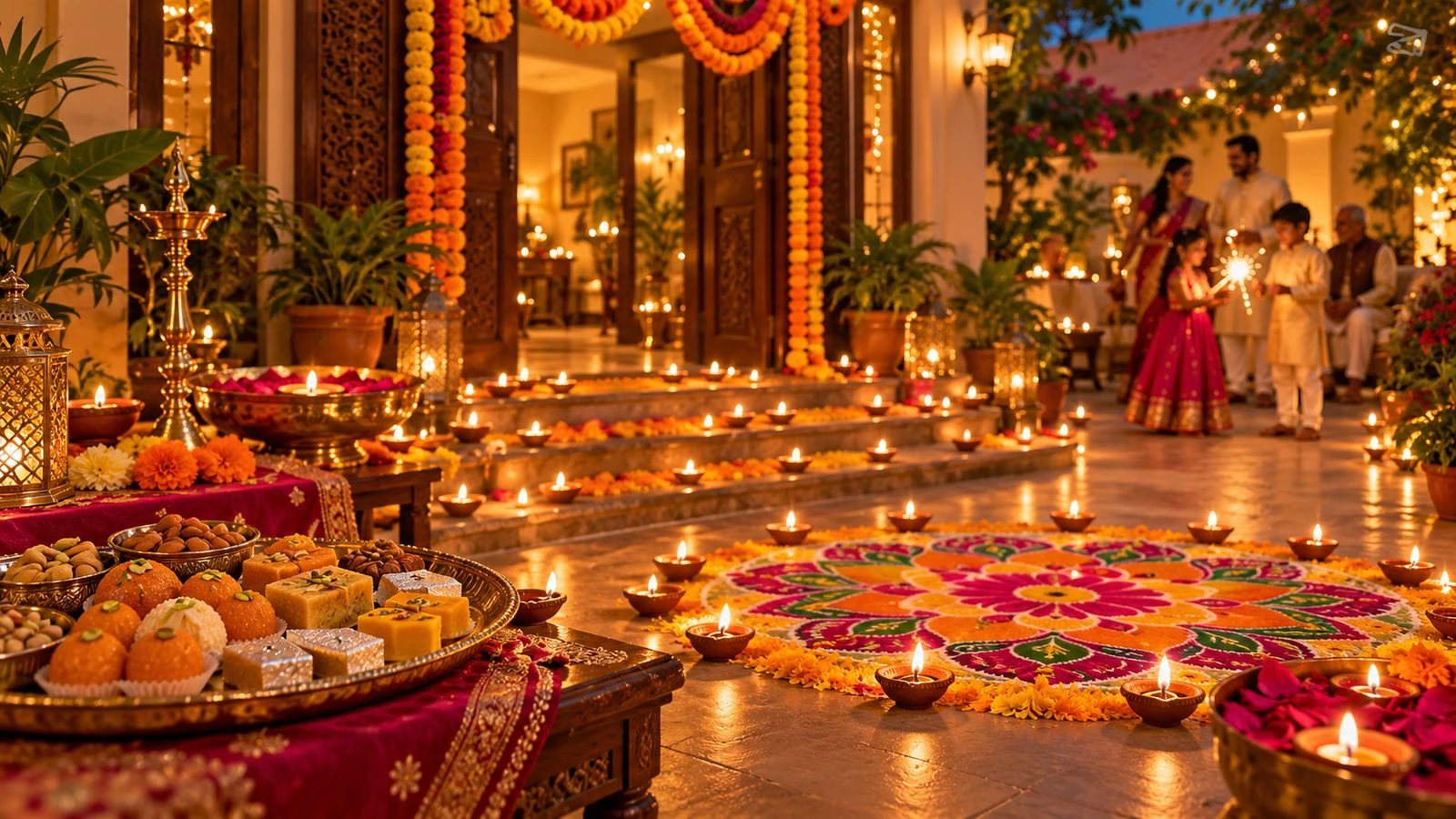
Diwali gatherings are some of the warmest parties of the year—lamps in every window, tables of sweets and savory snacks, families moving between homes, and children with sparklers. They are also some of the hardest to plan headcounts for. Guests bring extended family, drop in between other visits, and often arrive at very different times.
A simple RSVP process makes a big difference. This guide covers when to invite, what to ask, how to estimate sweets and food, and how to handle the open-house style many Diwali parties follow.
When to send Diwali party invitations
Diwali falls in October or November, and the exact date shifts each year with the lunar calendar, so confirm the dates for your community first. Because many families host or attend several gatherings across the festival days, calendars fill quickly.
Large gatherings or community events: invite roughly 3–4 weeks ahead.
Family dinners and friend gatherings: roughly 2–3 weeks ahead.
RSVP deadline: about a week before, so you can order sweets and catering with confidence.
Say clearly which day you are hosting—Dhanteras, Choti Diwali, Lakshmi Puja night, or a weekend celebration—so guests can plan around their other visits.
Choose your format: dinner, puja, or open house
The format shapes your RSVP questions.
Puja followed by dinner: guests should arrive on time for the prayers. Ask for a firm yes/no and the number of adults and children.
Sit-down or buffet dinner: you need an accurate count for food. Ask for headcount and dietary needs.
Open house: guests drop in during a window, such as 5–10 pm. Ask for an approximate arrival time so you can spread food across the evening.
Card party or late-night gathering: ask adults only, and be clear in the invite if children are not included.
What to ask on a Diwali RSVP
Keep the form short, but capture what affects planning:
Attending: yes or no. Make the "no" option visible so families who are visiting elsewhere can decline easily.
Number of adults and children, listed separately. Children change food quantities, space needs, and safety planning around diyas and fireworks.
Arrival window for open houses—"early evening," "after puja," or "late." Our guide on collecting arrival time windows on an RSVP shows simple ways to phrase this.
Dietary needs: vegetarian, Jain (no root vegetables), no onion or garlic, egg-free, nut allergies, and diabetic-friendly sweets are all common. See how to collect dietary restrictions with severity to separate preferences from serious allergies.
Bringing a dish or sweets? Optional, but useful if your gathering is potluck-style.
Notes: a free-text box for anything else, like elderly guests who need seating or a ride.
Handling extended family and "plus family"
Diwali is a family festival, and guests may assume they can bring parents, in-laws, or visiting relatives. Neither strict rules nor an open door is right for every host—decide what you can accommodate and say so warmly.
If space is limited, name who is invited in the message ("for you, Ravi, and the kids") and limit the number of guest fields on the form.
If you welcome extended family, ask guests to list everyone coming, so your count is realistic.
Add a line like "Visiting family are welcome—just add them below" to avoid awkward surprises.
How much food and how many sweets?
Diwali parties tend to run on snacks and sweets, with a meal later in the evening. Use your confirmed count—adults and children separately—as the base, and adjust for format. Common planning ranges hosts use:
Mithai (sweets): often 3–5 pieces per adult across the evening, more if sweets are the main offering. Mix a few varieties so there is something for everyone, including a sugar-free option.
Savory snacks (samosas, pakoras, chaat, namkeen): several pieces per person during the first hour, especially for open houses.
Main meal: plan full portions for every confirmed adult, roughly half for young children.
Drinks: chai, lassi, soft drinks, and water. Expect people to have more than one cup of chai over a long evening.
For open houses, add a buffer for guests who stay longer than planned, and keep some sweets boxed for guests who leave with something—a lovely Diwali tradition.
Potluck Diwali gatherings
Many friend groups share hosting duties. If guests are bringing dishes, use the RSVP to coordinate: one family brings biryani, another brings dessert, someone else covers drinks. That prevents five trays of gulab jamun and no mains. Our guide to a potluck party RSVP with dish sign-up explains how to set up categories so the menu balances itself.
Safety and practical notes to share
Include a short "good to know" section on your invitation or RSVP page:
Parking instructions—festival nights can be crowded in residential streets
Whether fireworks or sparklers are planned, and any rules for children
Shoes-off policy, if you have one
Dress suggestions, such as traditional or festive wear
Timing of puja, if guests should arrive before it starts
Sample Diwali invitation message
"Happy Diwali! Join the Sharma family for an evening of lights, sweets, and dinner on Saturday from 6 pm. Puja begins at 6:30. Please RSVP by Sunday with the number of adults and kids and any dietary needs so we can plan the food. Festive wear welcome!"
Short, warm, and it asks for exactly what you need.
Follow-up and day-of tips
Send one friendly reminder a couple of days before the deadline.
Message confirmed guests the day before with the address, start time, and parking notes.
Keep a printed or phone copy of the list near the door so you can welcome people by name.
Expect a few late additions from family—keep extra sweets and chairs on standby.
Set up your Diwali RSVP
An online RSVP page keeps adults, children, arrival windows, and dietary notes in one list you can check from your phone while cooking. You can create a Diwali party RSVP page, add your own questions, and share it in your family group chat.
Quick FAQ
Should I include children in the headcount?
Yes, but separately from adults. It helps with food, seating, and safety around lamps and fireworks.
Is an RSVP necessary for an open house?
Not strictly, but even a rough count and arrival window helps you plan food for the whole evening.
How do I handle guests who bring extra family?
Plan a small buffer, and next time include a line on the RSVP asking guests to list everyone attending.