
Birding Boat Tour RSVP Website: Binocular Counts, a Deck Cap, and a Weather Cutoff
A birding boat tour RSVP has to lock a binocular and a deck seat before the boat leaves, because a maybe does not hold a deck seat.
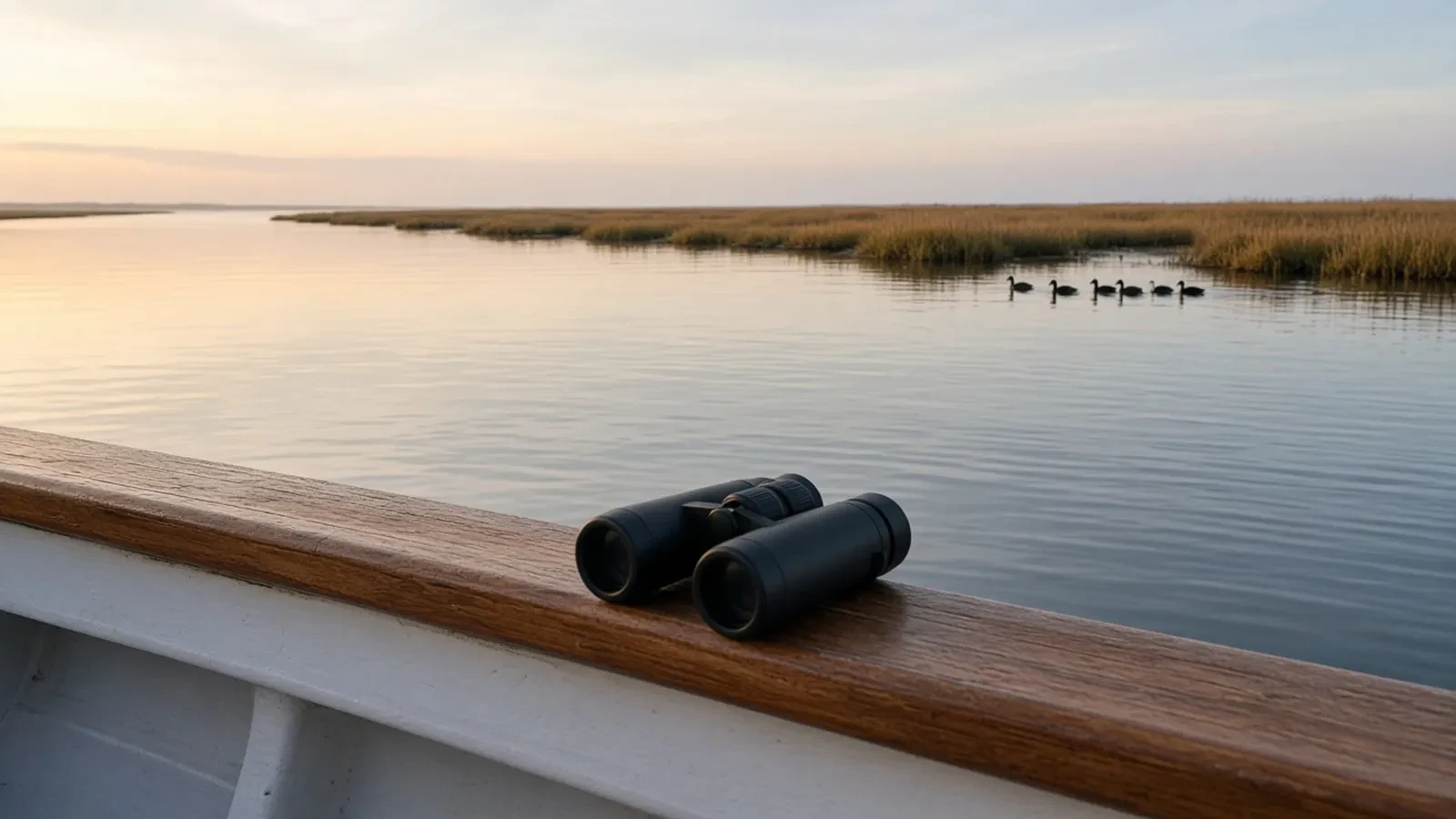
A birding boat tour breaks when the deck is rated for twelve and eighteen people arrive expecting a seat and a binocular, or when the passenger list was built for twelve and three of those names were still a maybe on Friday. Binoculars, the deck seat each birder uses, and the weather call you will actually honor are set before the lines come off. The operator does not add a thirteenth seat because a neighbor decided to come after the list closed. This is a skippered boat looking for birds from the deck, not a bird watching walk on a trail and not a canoe, paddleboard, or sailing crew. A maybe does not hold a deck seat.
You can create a birding boat tour RSVP that fills the seats the boat will actually carry, records who is birding and who is only riding along, and stops when those seats are full.
Count the birders the deck can hold
Read the boat before you send the link. Write down the passenger limit the operator will not cross, how many loaner binoculars are in the bin, and whether a spare pair is a replacement for a fogged lens or a thirteenth birder. If the deck can take twelve people, that number is your cap: twelve people on board, not a crowd standing in the aisle.
A birding spot on this tour is one deck seat and one binocular. You face the rail, call what you see, and stay seated when the skipper says so. There is no trail and no dawn meetup at a parking lot. Nobody paddles, nobody stands on a board, and nobody trims a sail. Ask whether a person who will not use a binocular still needs a seat, and count that person toward the limit. Pick one rule and write it on the page. Riders stay in their own seat. They do not borrow the strap off someone else's binocular or "just stand for a minute" in a spot the operator left clear.
Ask the last time the operator will change the manifest without dropping a name. If the boat locks the list at noon the day before, that noon is your lock. Write the finish too: one seat, one named birder, binoculars back in the bin when the boat ties up. A thirteenth seat "if someone is small" is not a plan, and it is not legal if it breaks the limit posted on the boat.
Set a capacity limit on deck seats, not on everyone who was curious about the trip. When the twelfth seat is taken, the form should say the tour is full. If the manifest is already with the operator, a late birder is not on this boat.
The weather cutoff is a call, not a vibe
Name the condition that cancels the trip and stick to it. A clear cutoff is a wind speed, a fog bank, or a small-craft advisory the operator names the night before, and a stop at "we do not leave the dock," not a hope that it will look better at dawn. A trail walk can turn around. A boat that has already left is a different problem. This is not the dawn path from a bird watching walk, and it is not a paddle you can beach when the chop builds.
Put that cutoff on the form as the point you will cancel or go, not a vague "weather permitting." If the operator calls it at 6 p.m. the night before, that is the line. People who want to "see how it feels in the morning" will still be texting while the skipper is deciding whether to fuel. You need a yes to this binocular, this deck seat, and this weather cutoff before you put a name on the manifest.
Who must be on the dock, and what rain or wind does to the trip
Tours go wrong when arrival is a guess. The boat leaves on a clock, and a seat held for someone still in traffic is a seat the operator cannot fill. Ask which arrival window a birder can actually make at the named float. A guest who misses the window does not get a promise that the boat will wait.
Collect arrival time windows so the manifest matches people who can be on the dock, not people who hope to be close. Put a weather contingency on the page before anyone drives to the marina: the wind or fog number that cancels, the time you will send that call, and whether a canceled trip is rescheduled or simply off. Write what happens if someone misses the window: their seat goes to a standby already at the float, or it stays empty and the late guest does not step on as the lines come off.
The moment the manifest is locked
The meeting point is the float you named, not "the marina" with no slip marked. Put your phone on the page. A message in the group chat is not a seat assignment. You match names to binoculars and to the list the operator holds.
Tie the deadline to the manifest, the hour the birder count cannot change. After that, a late yes is a call about a cancellation, not a promise of another seat. If you want names ready when a birder drops, keep them as standbys and tell them they do not have a binocular until you write back. A maybe does not hold a deck seat.
Export the list the morning you lock: attending or not, which seat, arrival window, weather-call phone, and whether they need a loaner binocular. A birding boat RSVP is finished when every seat has one named person, the weather cutoff is the call you will actually make, and a late guest knows whether they are on the boat or off the list.