
Tie-Dye Party RSVP Website: Shirt Counts, a Station Cap, and a Dye Line
A tie-dye party RSVP has to lock a shirt and a station before the dye is mixed, because a maybe does not hold a shirt.
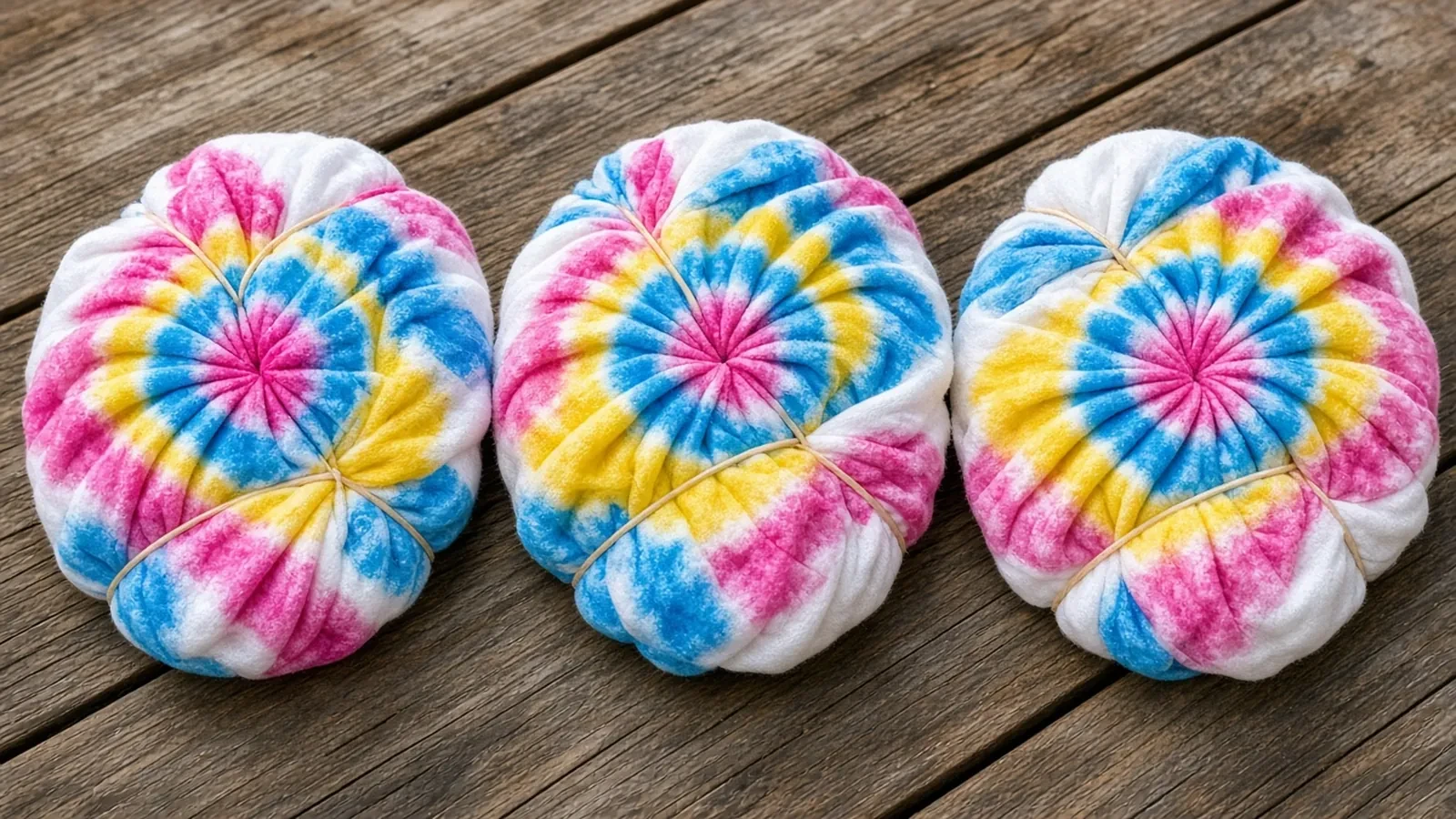
A tie-dye party breaks when eight folding tables are taped down and twelve people walk in holding a shirt from home, or when the dye was mixed for a count that included three maybes who never came. Shirts, the station each person stands at, and the colors in the bottles are set before anyone snaps a rubber band. The host does not mix another bottle because a neighbor decided to come after the cotton order closed. A maybe does not hold a shirt.
You can create a tie-dye party RSVP that fills the stations you will actually tape down, records a size for each person who will dye, and stops when those stations are full.
Ask what the party will actually dye
Walk the space before you send the link. Write down how many tables fit once plastic is on the floor, how long the block is, and whether each person keeps one station or shares a table with a partner who has their own shirt. If you can run eight stations for two hours, with one white 100 percent cotton shirt per person, that number is your cap. A polyester blend from someone's drawer will not take the dye, so the page should say cotton only, and that a shirt from home is not a substitute unless you have looked at the tag.
A station is one person dyeing. Ask whether a friend who will not dye can stand in the room, and whether that person still counts toward the headcount the venue set. Pick one rule and write it on the page. Spectators stay off the plastic. They do not reach across a bottle.
Ask the last time you can cut the shirt count without paying for cotton you already ordered. If the shop will not take an unopened bundle back after Thursday for a Saturday party, that Thursday is your lock. Write the finish too: one shirt, rinsed at home, not a second shirt "if there is extra dye." Extra dye is not a plan.
Set a capacity limit on people who will dye, not on everyone who was invited. When the last station is taken, the form should say the party is full. If the shirts are already bagged by size, a late friend is not in this batch.
The dye line is a list, not a wish
Name the colors you will mix and stop there. A clear line is three fiber-reactive colors, fuchsia, turquoise, and golden yellow, in eight-ounce bottles, plus a soda-ash soak and a bundle of rubber bands. Each person confirms they will use that set. Black is not a request you can grant at the table. It drinks more dye than the other colors, and you did not buy it. Neon, bleach patterns, and a second technique are a different party with a different supply list.
Put sizes on the form in the sizes you ordered: youth small through large, adult small through extra large, one shirt each. If you did not order 2XL, do not offer it. People who want a tote, a pair of socks, or their own garment should not take a station that was built for one white tee. You need a yes to this shirt and these three colors before you soak anything.
Households, gloves, and a time to show up
Families are where the count goes wrong. One adult yes that hides two children is three shirts and three stations, not one. Use a household RSVP so each person has a name and a size on the same form. A child dyes only if you have a station and a youth shirt for them. They do not share a parent's bottle. Write the age you are willing to host next to that question. Dye, soda ash, and rubber bands are a poor fit for a toddler, and the table is not a babysitting plan.
Closed-toe shoes, gloves, and clothes that can be stained are part of the same yes. Say that on the page. Collect an arrival window that matches the soak, not a vague afternoon. The window might be 1:40 to 1:50 for a 2:00 start, so sizes can be checked before bottles are uncapped. Write what happens if someone is later than that: the station goes to a standby who is already there, or it stays empty and the late person does not dye.
The moment the shirt list is locked
The meeting point is the door you named, not "the park" or "my house" with no street. Put your phone on the page. A screenshot of the group text is not a size. You match names to the shirts on the table.
Tie the deadline to the order, the day the cotton cannot come back. After that, a late yes is a call about a cancellation, not a promise of another shirt. If you want names ready when someone drops, keep them as standbys and tell them they do not have a shirt until you write back. A maybe does not hold a shirt.
Export the list the morning you lock: attending or not, size, dye-line yes, party size, arrival window, and phone. A tie-dye RSVP is finished when every station has a named person, the shirt matches a size you already bought, and a late car knows whether they are dyeing or going home.