
Squash Outing RSVP Website: Eyewear Counts, a Court Cap, and a Game Line
A squash outing RSVP has to lock protective eyewear and a court place before the first serve, because a maybe does not hold a ball or a booked court hour.
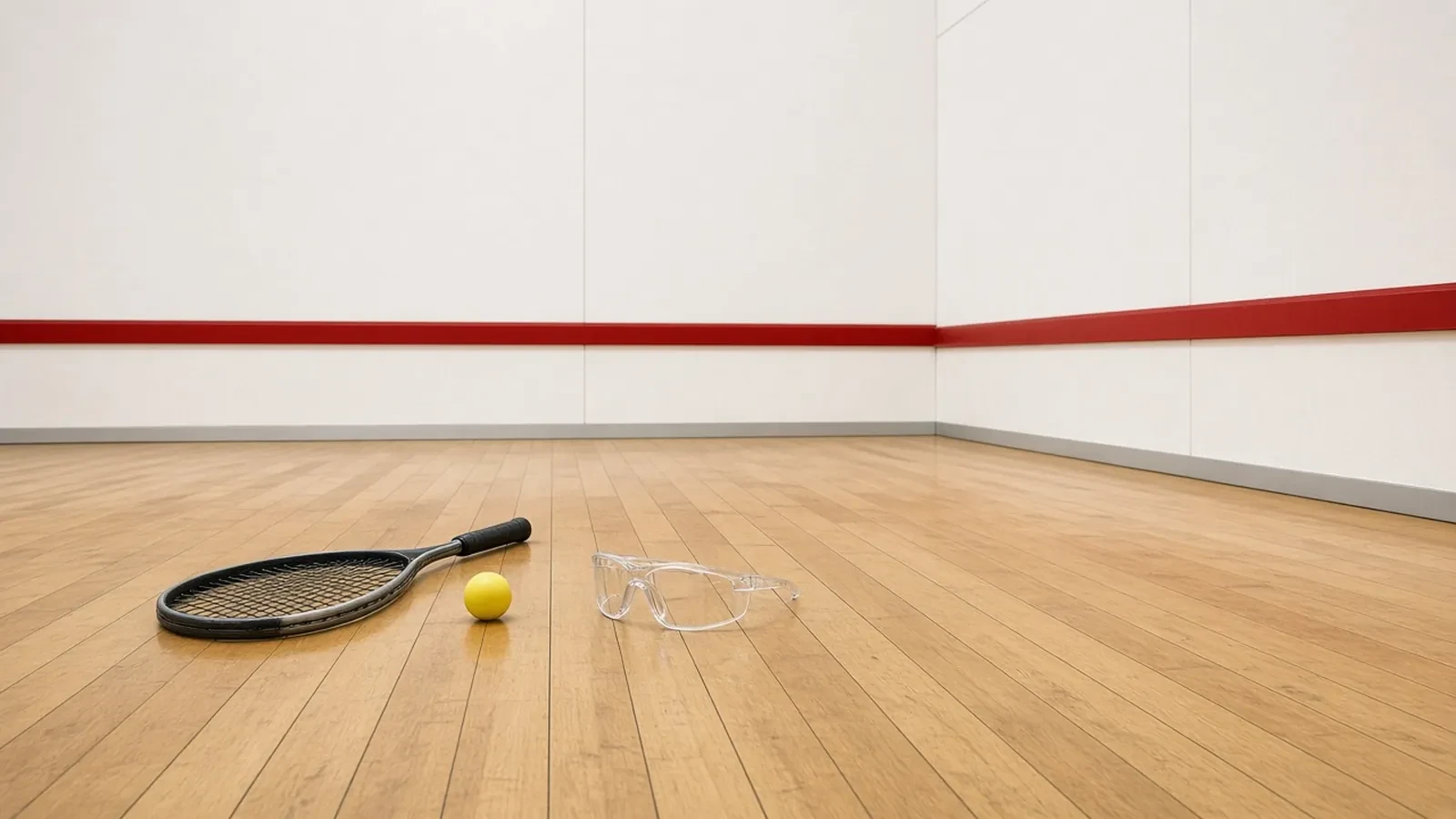
A squash outing breaks when the host booked two courts for ninety minutes, packed eight pairs of protective eyewear, and sixteen people answer yes after the first game is already on the clock. Balls, goggles, and a court that is actually reserved are decided before the first serve. The host does not buy another tin of balls or promise a game that has no court time left because a friend decided to come after the list closed. This is squash on a booked court, not racquetball, not tennis, not pickleball, and not badminton. A maybe does not hold a court.
You can create a squash outing RSVP that counts players, records plus-ones, and closes when the court cap is reached.
Count balls, goggles, and court time
Count the play before you send the invitation. A squash game uses a ball that has to be warm, two players, and a court hour you already paid for or were given. A spare racquet in a bag is not a third match. Club courts are booked in blocks. If you have two courts from 6:00 to 7:30, that is three games a court only if you keep changeovers short and you already named who plays whom. A walk-in does not stretch a booking. The front desk will not add a court because your form still says maybe.
Count the gear that makes a safe game. Protective eyewear for every player on court, balls that match the level you are playing, and racquets for anyone who does not own one are the limit. A tin of balls does not create a fifth court. People can lend a racquet, but each player still needs goggles that fit and a named spot in the rotation. A player without eyewear does not step on court “just for a rally.†Squash balls move fast in a small room, and a borrowed pair that does not fit is not a plan.
Court bookings by start time, and how many games fit before you must leave
Protective eyewear that fits, including a spare pair if a strap breaks
Balls for the pace you are playing, because a cold or dead ball wastes a game
Loaner racquets, and who already brings their own
A rotation that names partners so two strong players do not take every court
A squash place is one named player with eyewear, a racquet, and a game on a booked court. A guest who wants to watch from the gallery is not a player, and the gallery is not a hidden extra match. Someone who expects to play needs a place in the rotation. Ask who is playing, who is only riding along, and whether a late player will accept a shorter game if a court opens. Players stay inside the bookings you hold. They do not invent a court because the club looks quiet from the hallway.
The court cap and the game line
Two courts and eight players is a cap only if the booking length, the changeovers, and the eyewear agree. If you only have six pairs of goggles that fit, the cap is six, not eight. The smallest real constraint wins. Set a capacity limit for players, not for every person who might stand behind the glass. When the last game slot is claimed, the form should say the squash outing is full. If the courts are booked and the rotation is written, a late guest is not an unplanned player.
The game line is the end of the outing. Name it: the last point is played, the ball is back in the tin, the court is clear, goggles are returned, and you are off the court before the next booking starts. A clear game line stops the outing from becoming an extra set that runs into someone else’s hour. A ball left on the floor is not a promise to a guest who arrives during the last changeover. It is still a reserved court, and it is not a new match.
Plus-ones and a phone for the court
A friend who “might swing by the club†is another body who needs goggles and a game, or they are a spectator who must not be counted as a player. Track plus-ones separately so a member’s guest is a name, not a vague extra. Ask whether the plus-one plays, what racquet they need, and whether they have their own eyewear. If your booking is eight players and a member adds a guest, someone else loses a game unless you already held that seat. Do not let a plus-one skip the cap because they are not on the original text thread.
Use an emergency contact on the RSVP because a court is a small room, a ball can catch an eye even with goggles on, and an ankle can turn on a lunge. You are not collecting a medical history. You are collecting a name and a phone for the person you should call if a player cannot call for themselves. Put the host’s number on the page too, so a delay is a message before you hold a court empty. A player who is late can join the next game only if their slot is still inside the booking. They do not get a new court.
The moment the court list is locked
Tie the deadline to the booking. If the club needs names or a headcount the day before, that afternoon is your lock. After that, a late yes is a call about a cancellation, not a promise of a game. Standbys can wait, and you tell them they do not have a court until you write back. A maybe does not hold a paid hour.
The meeting point is the club door, the check-in time, and the court numbers you booked, not “come by the sports center and we will be around.†You match names to players, goggles, loaner racquet, plus-one, the court cap, the game line, and a phone. Export the list the morning you lock: attending or not, court, eyewear, plus-one, emergency contact, and phone.
A squash outing RSVP is finished when every booked game has named players, the game line is the last point rather than an open court door, and a late guest knows whether they are playing, watching from the gallery, or waiting for a cancellation.