
Spikeball Outing RSVP Website: Ball Counts, a Net Cap, and a Set Line
A spikeball outing RSVP has to lock a ball and a net before the first serve, because a maybe does not hold a ball.
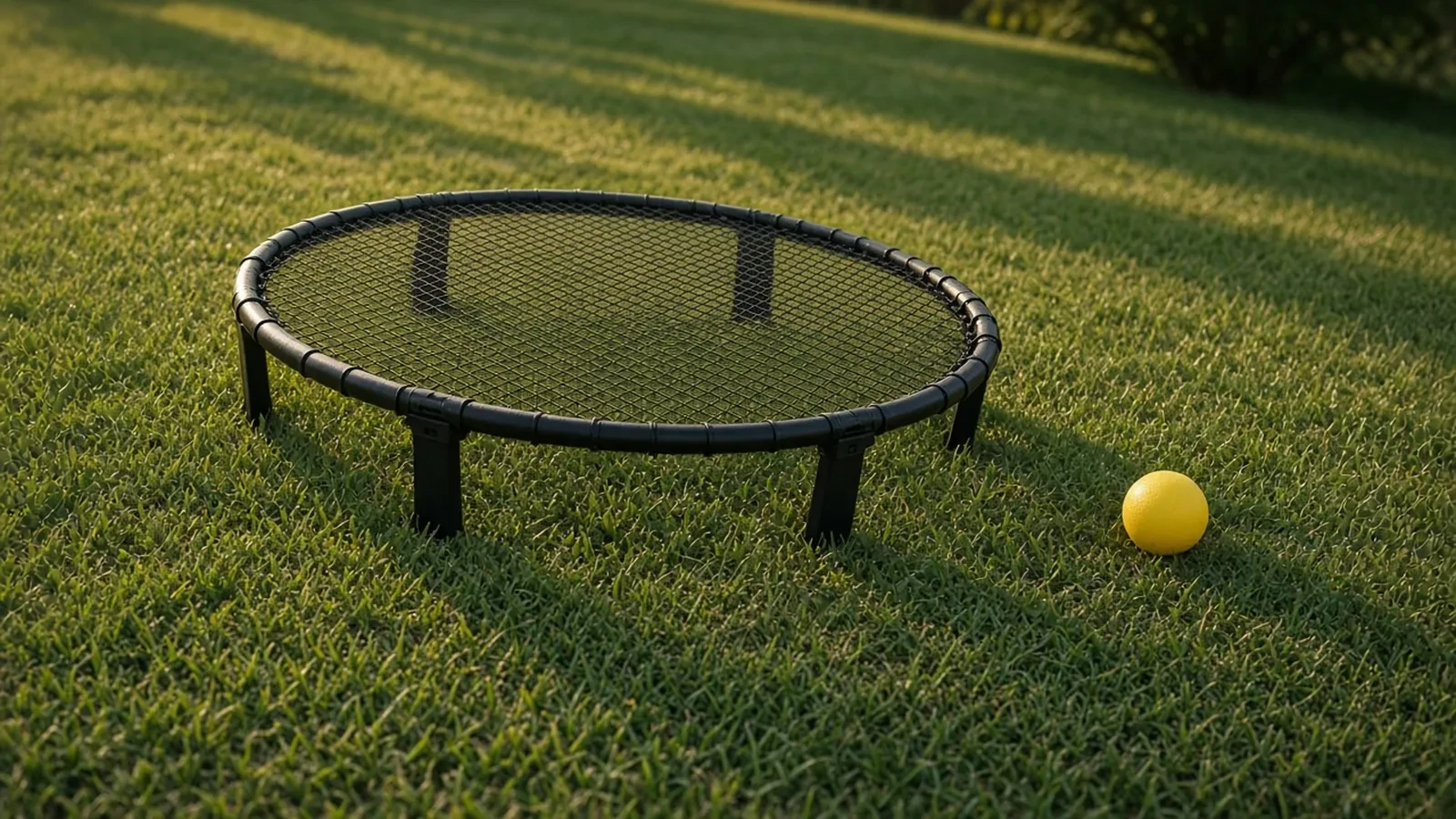
A spikeball outing breaks when four round nets are staked and twenty people walk up expecting to serve, or when the rotation was written for sixteen and three of those names were still a maybe on Friday. Game balls, the net each four-player set uses, and the score you will actually play to are set before the first serve. The host does not stake a fifth net because a neighbor decided to jump in after the sheet closed. This is roundnet, two against two around a small circular net you play the ball down onto, not a volleyball court and not a game of catch. A maybe does not hold a ball.
You can create a spikeball outing RSVP that fills the nets you will actually stake, records who is playing and who is only on a blanket, and stops when those nets are full.
Count the players the nets can hold
Walk the lawn before you send the link. Write down how many round nets you own, whether each one has all of its legs, and whether a spare ball is a backup or a fifth game. If you can run four nets at once, with four players on each, that number is your cap: sixteen players, not a crowd standing inside the circle.
A spikeball set is four players and one net, not one friend who likes the park. Two play one side of the rally and two play the other, and any of them can move all the way around the net. A team gets up to three touches to return the ball onto the net. Ask whether a person who will not play can sit on a blanket, and whether that person still counts toward the number the park permit allows on the grass. Pick one rule and write it on the page. Watchers stay off the circle. They do not claim a seventeenth spot or turn a four-player set into a five-person scramble.
Ask the last time you can change the rotation without losing the park window. If the permit locks the lawn at noon for a two-hour block, that noon is your lock. Write the finish too: one game ball per net, four named players, nets pulled when the permit ends. A fifth game "if a net frees up" is not a plan.
Set a capacity limit on playing spots, not on everyone who was invited to watch. When the last spot on the fourth net is taken, the form should say the outing is full. If the rotation is already written, a late pair is not on these nets.
The set line is a number, not a vibe
Name the game you will play and stop there. A clear line is one round net, a roundnet ball, and a set you can read on a card: first to 21, win by two. A volleyball match with six on a side, a high net, and a fixed rotation is a different outing. So is a disc thrown at a basket on a walking course.
Put that set on the form as the game you will finish, not a vague "until people get tired." If you play one set to 21, that is the line. People who want to "just keep the rally going" will leave you with a fifth body in a four-player circle. You need a yes to this ball, this net, and this set before you write the rotation.
Households, and who arrives in time to serve
Outings go wrong when one yes hides a whole family. One player who brings a partner and a kid is one spot, a second spot, and a third body who cannot stand in the circle. Ask for each player's name, which net they are willing to join, and how many people will be on the blanket. A child who is only watching does not get a ball.
Use household RSVPs so a couple is two named players, not one yes that becomes four at the curb. Ask for an arrival window so the first serve is not waiting on a car that is still in traffic. Write what happens if someone misses the start: the spot goes to a standby already on the blanket, or it stays empty and the late car does not walk into a set that has already begun.
The moment the rotation is locked
The meeting point is the lawn you named, not "the park" with no side of the field. Put your phone on the page. A message in the group chat is not a net assignment. You match names to nets.
Tie the deadline to the permit, the hour the player count cannot change. After that, a late yes is a call about a cancellation, not a promise of another net. If you want names ready when a player drops, keep them as standbys and tell them they do not have a spot until you write back. A maybe does not hold a ball.
Export the list the morning you lock: attending or not, which net, party size on the blanket, arrival window, and phone. A spikeball RSVP is finished when every circle has four named players, the set line is the number you will actually play to, and a late car knows whether they are serving or sitting down.