
Shuffleboard Night RSVP Website: Cue Counts, a Table Cap, and a Wax Line
A shuffleboard night RSVP has to lock a cue and a table before the wax goes down, because a maybe does not hold a cue.
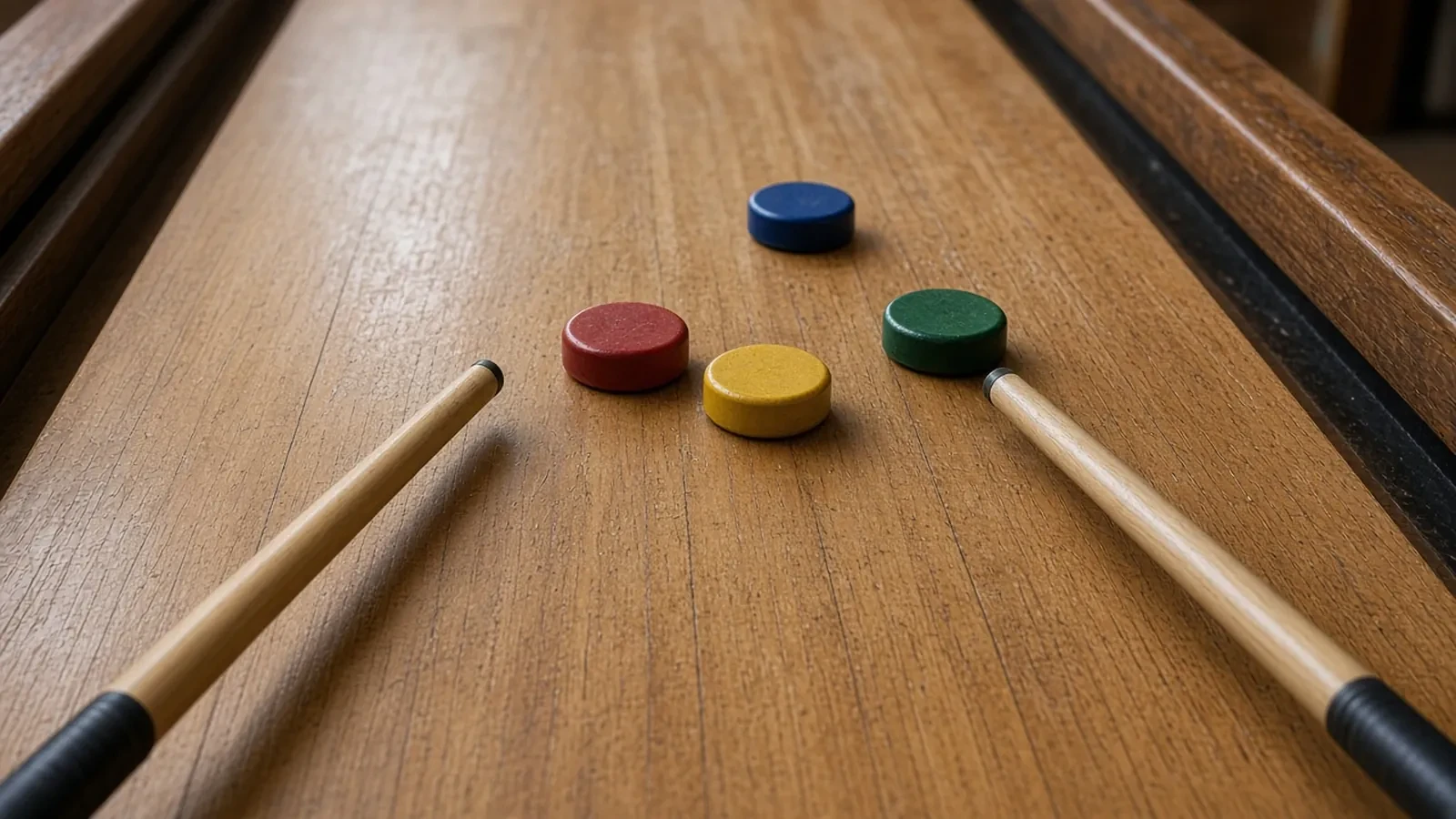
A shuffleboard night breaks when three tables were waxed for twelve players and sixteen people walk in holding a cue from home, or when the bracket was built for a count that included four maybes who never came. Cues, the table each pair will use, and the wax on the playing surface are set before anyone slides a weight. The host does not chalk a fourth table because a neighbor decided to play after the reservation closed. A maybe does not hold a cue.
You can create a shuffleboard night RSVP that fills the tables you will actually reserve, records a cue for each person who will play, and stops when those tables are full.
Count the players the tables can hold
Walk the hall before you send the link. Write down how many tables the venue will give you, whether you are playing singles or doubles, and how long the block is. If you have three tables for two hours and doubles puts four players on a table, twelve is your cap. A person leaning on the end rail is not a fifth player. The table is the whole game.
A cue is one player. Ask whether a friend who will not shoot can stand along the wall, and whether that person still counts toward the headcount the hall set. Pick one rule and write it on the page. Watchers stay off the playing surface. They do not reach for a weight "for one round."
Ask the last time you can change the table count without losing the block. If the hall wants a final number on Thursday for a Saturday night, that Thursday is your lock. Write the finish too: one block, the tables you reserved, done when the clock on the booking ends. A second hour "if the next group is late" is not a plan.
Set a capacity limit on people who will play, not on everyone who was invited to watch. When the last cue is taken, the form should say the night is full. If the bracket is already drawn, a late friend is not in this rotation.
The wax line is a can, not a preference
Name the wax you will put down and stop there. A clear line is one speed powder the hall already uses, applied before the first game, with house weights and house cues in the two lengths they own. Each person confirms they will play on that surface. A silicone spray from someone's garage, a different powder "for more slide," and a set of personal weights that do not match the house set are a different night. They change the table for everyone after you.
Put the format on the form in the format you booked: doubles, four per table, house cues only. If you did not reserve a fourth table, do not offer a waiting game on the floor. People who want to practice alone should not take a spot that was built for a pair. You need a yes to this wax and this format before you draw a bracket.
Partners, and a time to be at the table
Nights go wrong when one yes hides a partner who was never named. One player who brings a friend is two cues, not one, and a doubles team is four named people before the table is real. Use a form that tracks plus-ones separately so the partner has a name and counts against the cap. A guest plays only if a cue is still open. They do not share a handle for the night.
Tables sit empty when people treat the start as a suggestion. Collect an arrival window that matches the wax, not a vague evening. The window might be 6:40 to 6:50 for a 7:00 start, so cues can be handed out before the first weight is set down. Write what happens if someone is later than that: the cue goes to a standby who is already in the hall, or the table plays short and the late person does not enter the bracket.
The moment the bracket is locked
The meeting point is the table row you named, not "the hall" with two floors. Put your phone on the page. A reply in a group text is not a cue. You match names to the bracket.
Tie the deadline to the reservation, the day the hall will not add a table. After that, a late yes is a call about a cancellation, not a promise of another cue. If you want names ready when someone drops, keep them as standbys and tell them they do not have a table until you write back. A maybe does not hold a cue.
Export the list the morning you lock: attending or not, partner name, wax-line yes, party size in the hall, arrival window, and phone. A shuffleboard RSVP is finished when every table has named players, the cue is one the hall already owns, and a late car knows whether they are playing or going home.