
Rug Tufting Workshop RSVP Website: Frame Counts, a Gun Cap, and a Yarn Line
A rug tufting workshop RSVP has to lock a frame and a tufting gun before the first pass, because a maybe does not hold a frame.
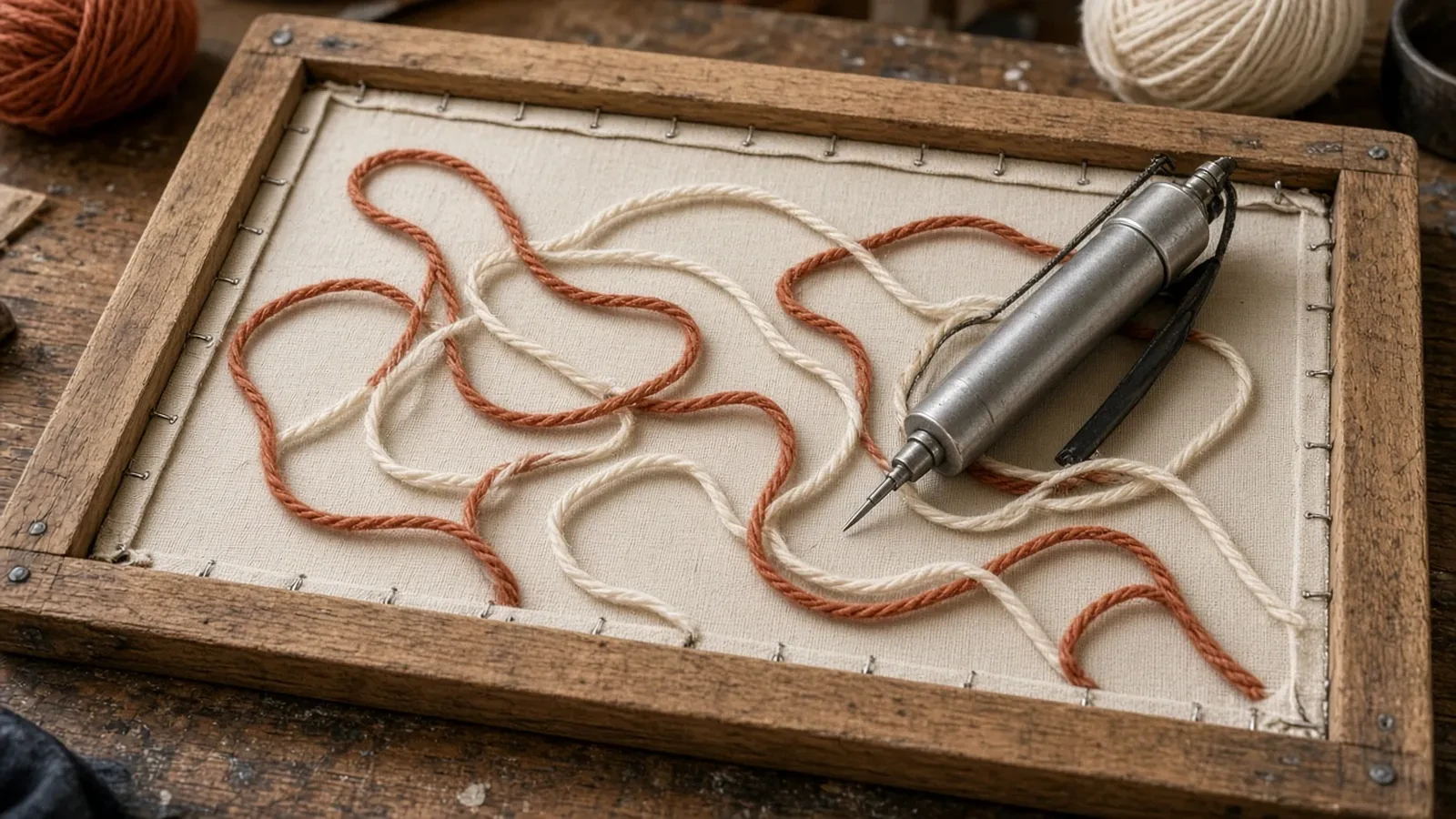
A rug tufting workshop breaks when eight people arrive for five frames and guns, or when the yarn colors were wound for the names that answered yes and a late guest expects a new design. Frames, tufting guns, and the number of people you can keep behind the safety line are set before the first pass. The host does not add a sixth gun because a neighbor decided to tuft after the list closed. This is rug tufting through stretched cloth with a powered tufting gun, not rug hooking with a hand tool and not weaving on a loom. A maybe does not hold a frame.
You can create a rug tufting workshop RSVP that fills the frames you will actually stretch, records who needs a seated setup or a clear route, and stops when those stations are full.
Count the frames the studio can supervise
Walk the studio before you send the link. Write down how many frames can be spaced so a gun cord and a person's hands do not cross another station, how many working guns and backing pieces you have, and whether a spare frame is a replacement for damaged cloth or a sixth maker. If five frames can each take one named maker and one instructor sightline, that number is your cap: five makers, not a crowd sharing one frame.
A rug tufting station is one named maker, one stretched frame, one powered gun, and one clear place behind the work line. You transfer the design, run the yarn through the cloth, trim or carve the surface as instructed, and stop at the finish you named. There is no hand-held rug hook, no loom shuttle, and no shared frame that becomes someone else's extra panel. Ask whether a person who will only watch needs a chair outside the cord path, and whether that person still counts toward the studio limit. Pick one rule and write it on the page. Observers stay behind the marked line. They do not take the gun for "one quick pass" or lean over a full frame.
Ask the last time you can change the yarn order or frame preparation without leaving a station empty. If the studio needs the final maker count by Monday for a Saturday workshop, that Monday is your lock. Write the finish too: one frame, one named maker, and the gun unplugged when the yarn sequence you named is complete. A sixth maker "if a spare gun appears" is not a plan.
Set a capacity limit on active frames, not on everyone invited to look at the finished rugs. When the fifth station is taken, the form should say the workshop is full. If the frames and tool briefing are already assigned, a late maker is not at this bench.
The yarn line is a design finish
Name the work you will finish and stop there. A clear line is one design, a color map or section target, and a stop at "the named shape filled, backing secured, and the gun unplugged," not an open frame until every cone of yarn is empty. Tufting until the studio closes is a different workshop, and the instructor cannot safely supervise an endless design. Rug hooking, with a hand tool pulling loops, is a different craft. So is weaving, with warp, weft, and a loom.
Put that yarn line on the form as the point you will stop, not a vague "we will keep adding color until it looks right." If the workshop ends when the named section is filled and the tool is put away, that is the line. People who want to redesign the border will still be at the gun when the cleanup crew needs the floor. You need a yes to this frame, this gun, and this yarn line before you stretch the cloth.
Who needs a safe station
Workshops go wrong when the tool briefing is treated as enough for everyone. A maker may need a seated station, a clear cable route, a lower frame position, more room around the frame, or instructions repeated before the gun starts. Ask whether a household is one maker with one frame or two people who each need a station, and do not assume a couple shares one powered tool. A guest who cannot safely reach the cloth does not get assigned to a bench that only works on paper.
Collect accessibility needs so you know who needs a seated setup, a clear route, a quieter position, or extra time for the safety briefing. State that the instructor will confirm which modifications fit the equipment. Write what happens if someone misses the start: their frame goes to a named standby only before the tool briefing, or it stays empty and the late guest does not cross a powered station in progress.
The moment the frames are locked
The meeting point is the studio, bench number, and safety line you named, not "the workshop" with no tool area. Put your phone on the page. A message in the group chat is not a frame assignment. You match names to frames, colors, and access notes.
Tie the deadline to the frame stretch and yarn order, the day the maker count cannot change. After that, a late yes is a call about a cancellation, not a promise of another gun. If you want names ready when a maker drops, keep them as standbys and tell them they do not have a station until you write back. A maybe does not hold a frame.
Export the list the morning you lock: attending or not, frame, design section, accessibility note, tool briefing, and phone. A rug tufting workshop RSVP is finished when every frame has a named maker, the yarn line is the design finish you will actually stop at, and a late guest knows whether they are tufting or observing behind the line.