
Pool Party RSVP Website: Swimmers, Deck Space, and a Safe Headcount
A pool party RSVP has to separate people in the water from people on the deck, because the gate count and the safe swimming count are not the same number.
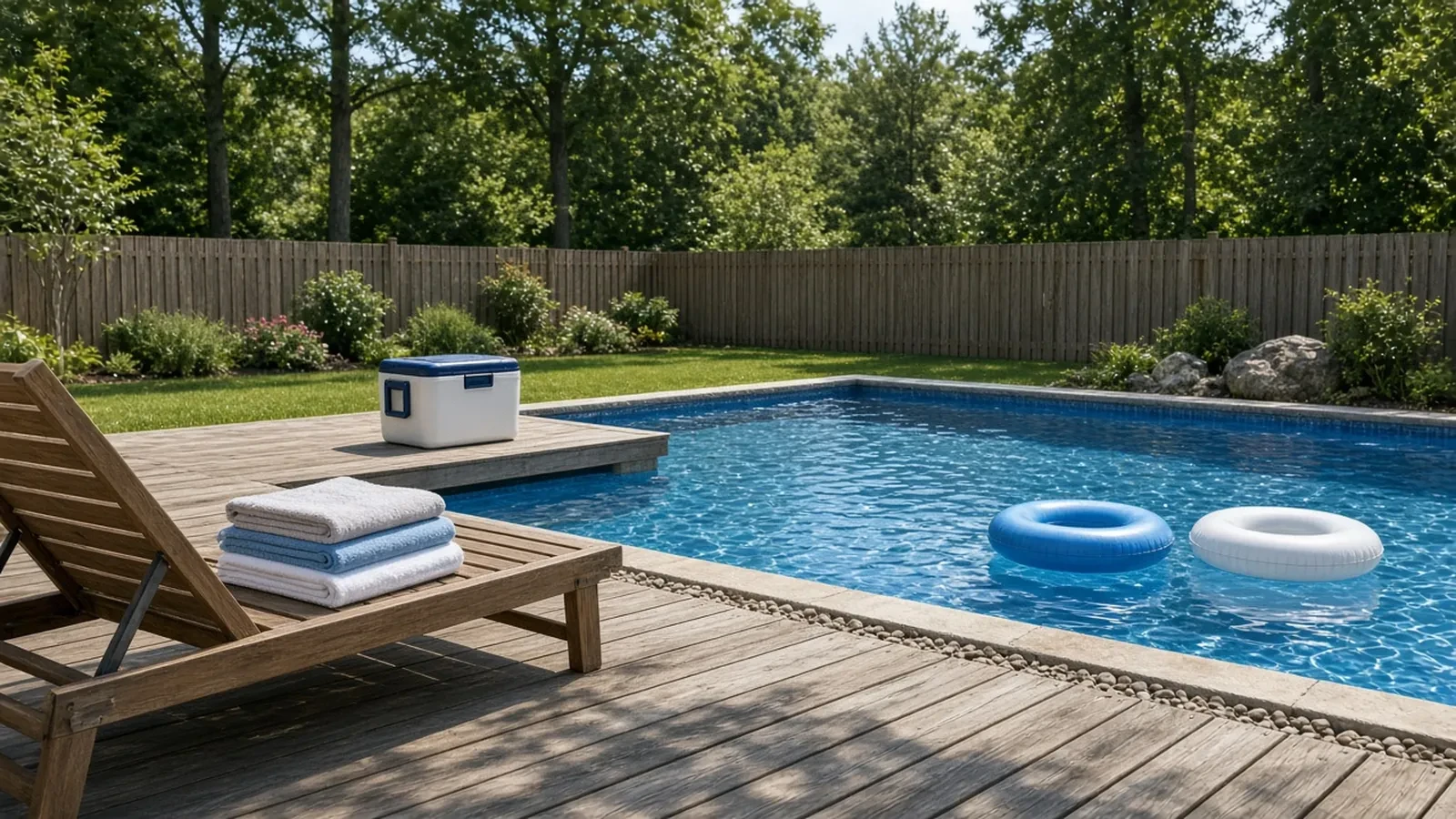
A pool party RSVP fails when you count invitations instead of bodies that will be inside the fence at the same time. The water holds fewer people than the yard. The gate does not care that someone texted they were coming. A parent who assumed another parent was watching is how a casual afternoon turns into a story you do not want to tell. You need names, a split between swimmers and people who are only there to eat, and a cap you are willing to enforce before the first car door opens.
You can create a pool party RSVP that starts with yes or no, then asks what each person will actually do once they are past the gate. A group text that says the kids would love it does not tell you whether you need six towels or whether a family has to hear that the list is full.
Count the water and the deck as two different rooms
Start with the smaller number. A yard that can hold twenty-five people around a table may only be a safe place for eight in the water, especially if the pool is a short rectangle with one ladder and no shallow shelf. Before you invite anyone, decide how many people you will allow in the water at once, and how many you can have on the deck if the water is already at that limit. Those two caps are the RSVP. The mood of the day does not get to invent a third.
If you are in a rented house, read the listing again for a guest maximum and for any line that forbids parties. You are still the person the owner calls when the deck is over the number in the agreement, even if you only invited neighbors. If your own pool has a lock, a child fence, or a rule about unsupervised swimming, guests should read that on the page, not on a sign you tape up after they arrive.
Read the capacity-limit guide and apply it to the deck, not to a vague sense of how social the afternoon should feel. When the last spot is taken, the next household should see that the list is full. A short waitlist is fair if you expect cancellations when the forecast changes. It is not a way to invite the whole street and sort bodies at the gate.
Ask who is swimming, who is watching, and who is only eating
A yes from a family of five can mean one adult in a chair and four children in the water, or five people who will never get wet. Those replies need different chairs, different food, and a different answer to who has eyes on the pool. Ask each person, including each child, to be marked as one of three things.
Swimming — they will be in the water, and you are counting them against the water cap
In the water with a named adult — a child who should not swim alone, with that adult’s name on the same reply
Deck only — they are eating and sitting, and they are not a swimmer just because the party is at a pool
Do not accept “the parents will watch†as a plan. Parents talk to each other. Ask for the name of the adult responsible for each child who cannot swim the length without stopping. If that adult also plans to swim, the page should say you still need someone on the deck who is not in the water. If you are hiring a person to watch the water, say so, and do not describe them as a babysitter for kids who wander inside. Their job is the water. Your job is knowing how many children are signed up to be in it.
If this is drinks in the pool and you do not want children there at all, say that in the first paragraph, before someone asks to bring a nephew. The adults-only RSVP notes belong on the page before the invitation spreads. A mixed-age pool party needs the age and swimmer questions. An adults-only pool party needs the rule in the same size type as the start time.
Glass, floats, towels, and the path through the house
Put the glass rule on the RSVP, not on a cooler lid people notice after they have already unpacked a bottle. Glass on a wet deck is how a party ends early. Say “no glass past the back door†or “cans and cups only,†and keep the same rule when your own friends arrive. If drinks are allowed, name the table where they stay. A drink on the coping is how the water cap and the alcohol plan collide.
Floats are a space problem. One large inflatable can take the middle of a small pool and leave nowhere for the swimmers you already approved. If floats are welcome, say how many you already own and that guests should not bring a raft the size of a mattress. If they are not welcome, say that too.
Ask whether each swimmer needs a towel from you. A household that brings its own is one less stack in the laundry. A household that assumes you run a club will dry off with your bath towels. One yes or no is enough. Tell people to put sunscreen on before they sit on the cushions, because that stain does not come out in a single wash. If infants are invited, require a swim diaper in the same sentence as the swimmer question. A regular diaper in the pool is how you close the water for everyone else.
Say how guests get from the gate to the pool without tracking the whole yard through the bedrooms. If the bathroom they may use is the one off the kitchen, name it. If bags and shoes stay on a bench by the door, say that. Street parking belongs next to the time if your driveway only holds two cars.
Weather closes the water before it cancels the count
Lightning is not a maybe you can host through. If a storm can shut the pool, the page needs a plain line for what you will do: everyone out of the water, the party moves under the porch, or you call it off by a clock time you name. A short weather note on the RSVP saves you from rewriting the plan in a group chat while people are already in the car.
Heat changes the food more than it changes the headcount. A bowl of mayonnaise in full sun is a bad idea at a party that would have been fine in May. You need the headcount early enough to buy less food that cannot sit out, and to borrow shade if the deck has one umbrella. Ask for an arrival window if people tend to stay all day. A guest at noon and a guest at four are not both in the water at the peak. If the deck is the tight constraint, the window is what keeps that peak under the cap you wrote down.
Close the list before you staff the water
Set the deadline a day before you shop, and earlier if you might still hire a watcher or tell a family they cannot add four cousins. After the deadline, a late add is a decision about the water cap, not a courtesy. An open form on the morning of the party is how the number you planned and the number at the gate stop matching.
The night before, export the yes list: name, swimming or deck only, the adult named for each child, towel yes or no, and a blank line for who actually came through the gate. If the swimmer count is already over the water number, fix it before anyone arrives.
A pool party RSVP is finished when you can say how many people will be in the water, how many will be on the deck, which adult is with which child, and what happens if the sky turns. The playlist can wait. The gate count cannot.