
Paella Party RSVP Website: Rice Counts, a Pan Cap, and a Serve Line
A paella party RSVP has to lock a rice portion and a pan place before the first pan is heated, because a maybe does not hold a counted serving in a single cook.
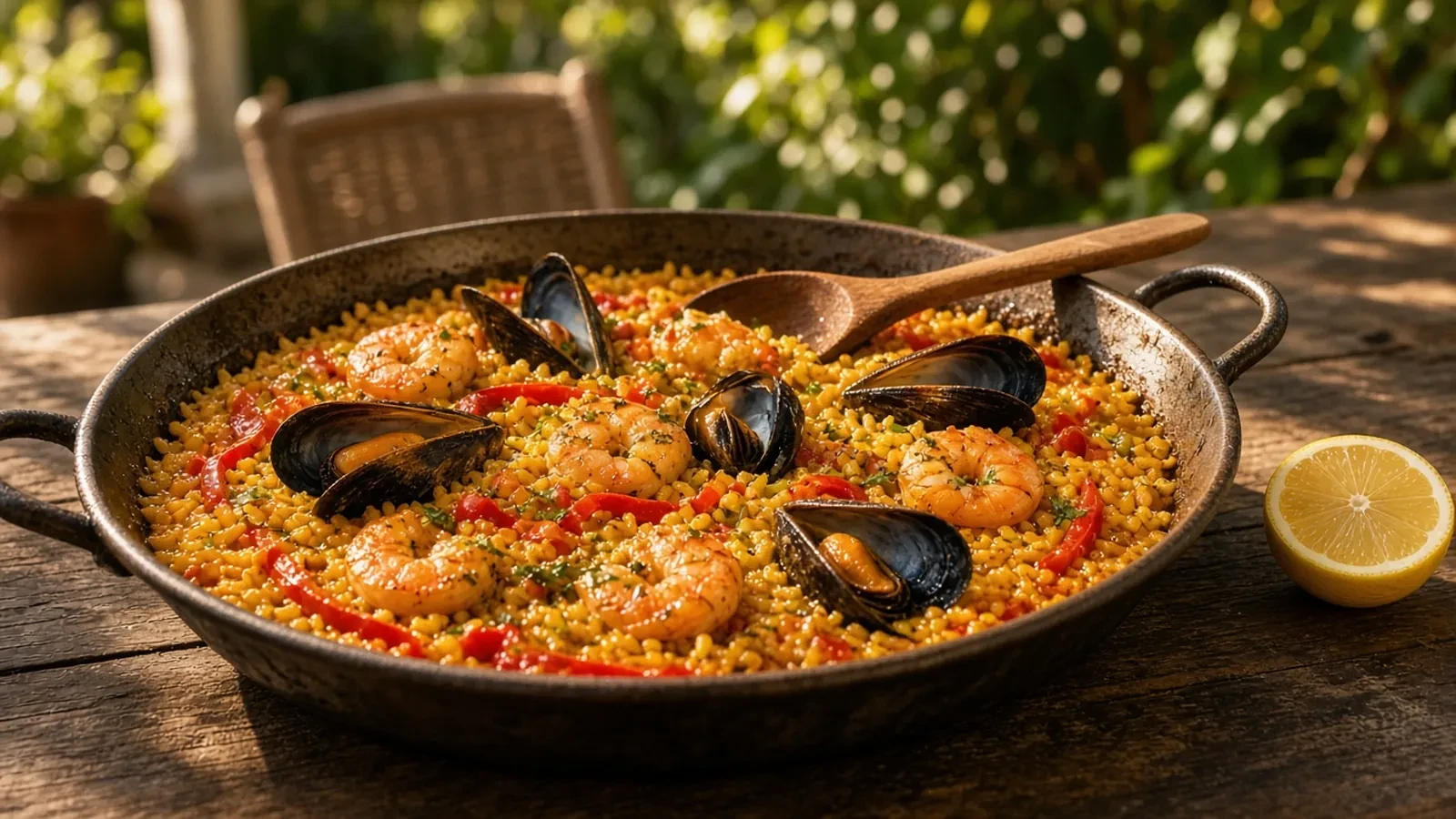
A paella party breaks when the host has one pan, a burner that can hold it, rice measured for fourteen plates, and twenty-one people answer yes after the stock is already simmering. Rice, stock, the protein, the pan, the burner, and the seats at the table are set before the oil goes in. The host does not start a second pan or stretch the rice with extra water because a friend decided to come after the list closed. This is one cook in one pan, not a boil and not a buffet that can be topped up. A maybe does not hold a plate.
You can create a paella party RSVP that counts portions, records seating, and closes when the pan cap is reached.
Count rice, protein, and the single pan
Stand at the burner before sending the invitation. A paella pan has a real serving number, and that number is smaller than the number of friends who would enjoy the meal. If your pan and your recipe are built for fourteen plated portions, fourteen is the count. Extra rice piled into the same pan steams instead of cooking in a shallow layer, and the crust at the bottom never forms. Write down the dry rice, the stock, the saffron or smoked paprika, the olive oil, and the protein portions as they fit that pan, not as they fit a hopeful headcount.
The burner is part of the cap. A wide pan on a weak burner cooks the center and leaves the edge raw. If you have one burner that can carry this pan, you have one cook. A second pan in the oven is a different dish. Do not describe it as the same party with extra seats. Count serving spoons, shallow plates, and a board or trivet that can take the hot pan when it comes off the fire. If you only have twelve plates, the cap is twelve even when the recipe says fourteen.
Dry rice and stock measured for one pan, with no backup bag set aside as a maybe
Protein portions that match those plates, including a seafood or meat choice you will actually cook
The pan, the burner, and the hours the pan must sit undisturbed
Plates, a serving spoon, and seats for every portion
What the pan contains for allergens, written before anyone accepts
A paella party place is one named guest with one plated portion from this pan. A guest who hopes for a second helping is not a second seat, and you should not promise leftovers as if they were a reserved plate. Ask who is eating, who is only visiting the kitchen, and whether anyone needs a seat rather than a standing spot with a plate. Portions stay inside the rice you measured. They do not appear because the pan still looks full before it rests.
The pan cap and the serve line
Fourteen portions means fourteen yeses, or fewer if plates or seats run out first. Set a capacity limit for portions, not for every person who might wander through during the cook. When the fourteenth place is taken, the form should say the paella party is full. If the rice is already in the pan, a late guest is not an unplanned serving. You cannot scrape the socarrat back into broth and start over.
The serve line is one pass after the rest. Name it: the pan comes off the heat, it rests for the few minutes the recipe needs, then one person serves from the edge inward, one portion per name. When the spoon has made that pass, service is over, including the crust. A clear serve line keeps the host from cooking a second undocumented batch while guests are still sitting down. Another pan would need another burner, another measure of rice, and another RSVP.
Allergies and seats are part of the cook
Paella often carries shellfish in the stock even when the visible protein is chicken. That is not a preference someone can pick around at the table. Collect dietary restrictions with severity before you buy the stock. A guest who avoids spicy food can be a note. A severe shellfish allergy means this pan is unsafe for them if shellfish touches the stock, the spoon, or the rice. Say that on the form in the same sentence as the menu. Do not offer to “pick the shrimp out.†If you cannot run a fully separate pan on a separate burner with separate tools, the honest answer is that this party is one shared pan, and a guest who cannot eat it should decline rather than stand next to the steam.
Ask for seating preferences on the RSVP because this is a plated meal, not a handful of food eaten over the sink. Note who needs a real chair, who is fine on a bench outdoors, and who should not sit beside the burner while the pan is still on the fire. A seat is assigned to a portion. An empty chair is not a fifteenth serving.
The moment the pan list is locked
Tie the deadline to the market run and the stock. If you have to buy rice, seafood, and stock on Friday for a Saturday cook, Friday morning is your lock, earlier if a fishmonger needs a preorder. After that, a late yes is a call about a cancellation, not a promise of a plate. Standbys can wait for a drop, and you tell them they do not have a portion until you write back. A maybe does not hold a measured cup of rice.
The meeting point is the table and the hour you serve, not the hour you start heating oil. Guests who arrive for the whole cook still get one plate at the serve line. Put the host’s phone on the page. You match names to portions, allergy notes, seat, the pan cap, the serve line, and a phone. Export the list the morning you lock: attending or not, portion count, shellfish or other allergy severity, seat, and phone.
A paella party RSVP is finished when every portion in the pan has a named plate, the serve line is one pass after the rest, and a late guest knows whether they are eating, stopping by after service, or waiting for a cancellation.