
Jam Making Workshop RSVP Website: Jar Counts, a Kettle Cap, and a Set Line
A jam making workshop RSVP has to lock a jar and a kettle before the fruit is mashed, because a maybe does not hold a jar.
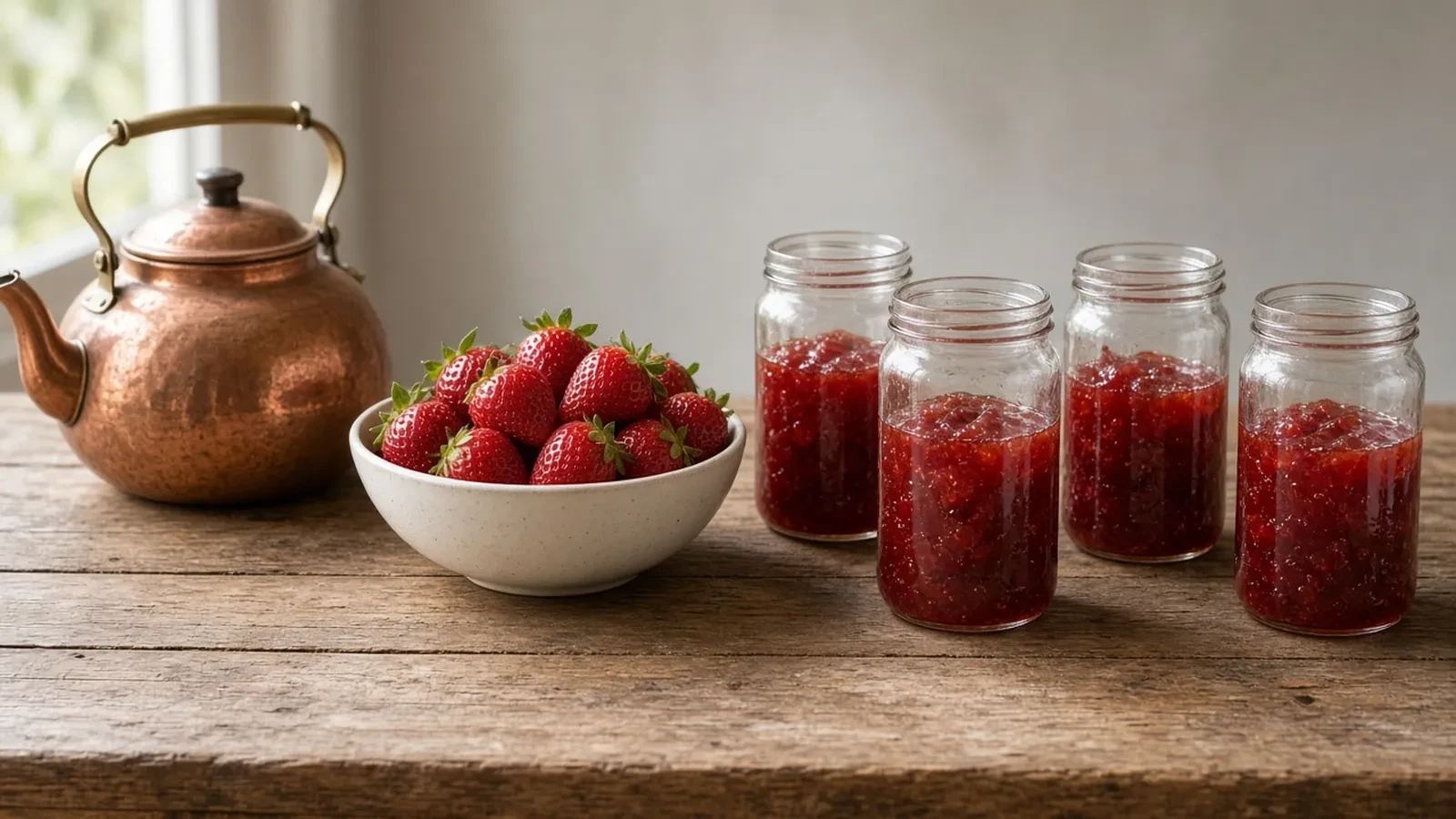
A jam making workshop breaks when two kettles are on the burners and ten people arrive expecting a jar, or when the batch was built for six and three of those names were still a maybe on Friday. Jars, the kettle each batch uses, and the set you will actually cook to are fixed before the fruit is mashed. The host does not start a third kettle because a neighbor decided to cook after the sheet closed. This is small-batch cooked jam, fruit and sugar taken to a gel, not pickling and not a pie. A maybe does not hold a jar.
You can create a jam making workshop RSVP that fills the kettles you will actually heat, records who is cooking and who is only tasting, and stops when those stations are full.
Count the cooks the kettles can hold
Walk the kitchen before you send the link. Write down how many burners can hold a kettle with room for the boil to rise, how many half-pint jars you have, and whether a spare kettle is a backup or a third batch. If two kettles can each take three cooks, that number is your cap: six cooks, not a crowd leaning over a rolling boil.
A jam station is one kettle, one fruit, and the jars that batch will fill. This workshop cooks the jam and ladles it into clean jars to cool and refrigerate. It is not a vinegar brine, not a crust in a tin, and not a bottled ferment you wait weeks to drink. Ask whether a person who will not cook can taste from a side plate, and whether that person still counts toward the number the kitchen can hold. Pick one rule and write it on the page. Tasters stay off the burner. They do not claim a seventh jar or turn a measured batch into a pot that boils over.
Ask the last time you can change the fruit order without wasting a case. If the shop locks the berry order on Tuesday for a Saturday mash, that Tuesday is your lock. Write the finish too: one kettle, named cooks, jars capped when the batch has set and cooled. A third pot "if a burner frees up" is not a plan.
Set a capacity limit on cooking spots, not on everyone who was invited to taste. When the sixth spot is taken, the form should say the workshop is full. If the fruit is already ordered, a late cook is not on these kettles.
The set line is a number, not a vibe
Name the batch you will cook and stop there. A clear line is one fruit, a tested recipe, and a gel you can check: the sheet test on a cold plate, or 220°F on a candy thermometer at sea level. Adjust that temperature if your kitchen is not at sea level, and write the number you will use. Pickles, with salt and vinegar, are a different workshop. So is kombucha, which needs a culture and days of ferment, and so is a pie, which needs a tin and a crust.
Put that set on the form as the point you will stop cooking, not a vague "until it looks thick." If the batch is done at the gel test, that is the line. People who want to "keep stirring and see" will leave you with a kettle of candy instead of jam. You need a yes to this jar, this kettle, and this set before you mash the fruit.
What someone cannot eat, and who can stand at the kettle
Workshops go wrong when the fruit is a surprise. One berry batch is not safe for every guest. Ask which fruit, which sweetener, and whether pectin is a problem, including pectin made from apple. A taster who cannot eat the batch does not get a jar of it, and they should not be counted as a cook who will stir that pot.
Collect dietary restrictions with severity so an allergy is not treated like a mild preference. Ask about accessibility needs before you assign burners: a seat at the counter instead of a long stand, a kettle someone can lift, and a path that is not blocked by a hot tray. Write what happens if someone misses the mash: their jars go to a standby cook already in the kitchen, or the fruit stays in this batch and the late guest does not start a second recipe.
The moment the batch is locked
The meeting point is the kitchen you named, not "the house" with no burner marked. Put your phone on the page. A message in the group chat is not a station assignment. You match names to kettles.
Tie the deadline to the fruit order, the day the cook count cannot change. After that, a late yes is a call about a cancellation, not a promise of another kettle. If you want names ready when a cook drops, keep them as standbys and tell them they do not have a jar until you write back. A maybe does not hold a jar.
Export the list the morning you lock: attending or not, which kettle, dietary note, accessibility note, and phone. A jam RSVP is finished when every kettle has its named cooks, the set line is the gel you will actually stop at, and a late guest knows whether they are stirring or tasting.