
Fly Tying Workshop RSVP Website: Hook Counts, a Vise Cap, and a Material Line
A fly tying workshop RSVP has to lock a hook pack and a vise before the first wrap, because a maybe does not hold a vise.
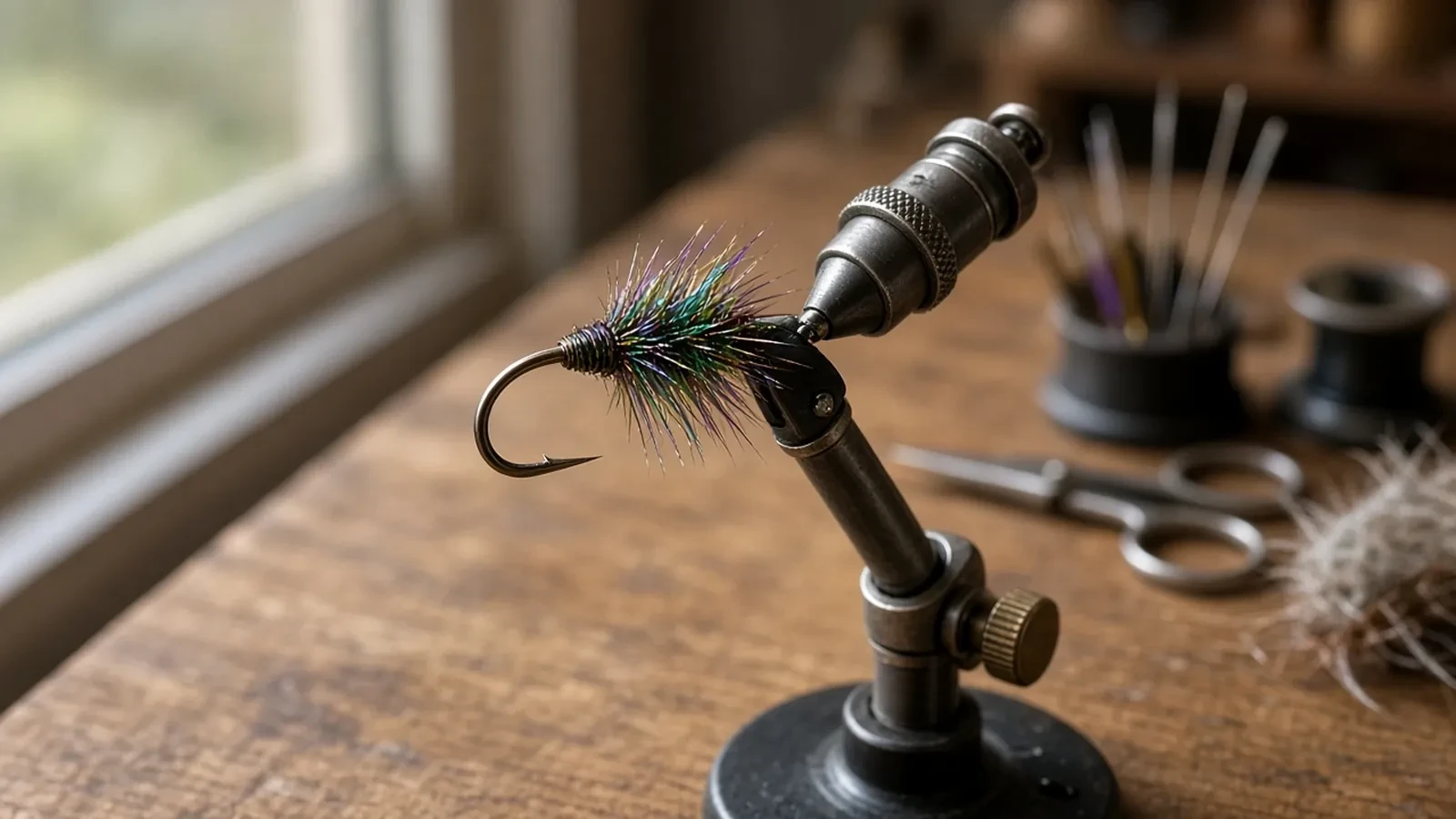
A fly tying workshop breaks when the bench has eight vises and eleven people are standing with a hook, or when someone who said maybe arrives after the material packs are counted and expects chenille that was already assigned. Hook counts, the vise each person gets, and the materials in the pack are set before the first thread wrap. The shop does not split another pack because a friend decided to come after the order closed. A maybe does not hold a vise.
You can create a fly tying workshop RSVP that fills the vises the bench will hold, records who needs a left-handed vise, and stops when those vises are full.
Ask what this bench will actually tie
Call the shop or the tier who is teaching before you send the link. Write down how many vises bolt to the bench, how many of those are left-handed, how long the session runs, which pattern you are tying, and what is in each pack. If the bench holds eight vises for two and a half hours, and each pack is eight size-10 hooks, a bead, marabou, chenille, wire, and one spool of thread for a woolly bugger, those numbers are your cap.
A vise is one tyer. Ask whether a friend who will not tie can sit in the room, and whether that person still takes a chair the shop counts. Pick one rule and write it on the page. If the session is only for people with a hook in the jaw, say that a guest without a pack stays off the bench and does not get hooks from someone else's pile.
Ask the price, whether scissors and bobbins are on the bench or must be brought, and the last time you can cut the pack count without paying for materials the shop will not take back. If they charge for a no-show after that day, print that rule on the page. Write the pattern name and the hook size in the first paragraph.
Set a capacity limit on tyers, not on everyone who was invited. When the last vise is taken, the form should say the bench is full. Cap the left-handed vises separately if the shop only has two. A right-handed tyer should not be able to claim the last left-handed vise.
The material line is the pack, not the catalog
The pack is the only material on the table. Extra colors, a different hook size, and feathers from someone's personal box are not part of this session unless the instructor said they will teach a second pattern. Put the pack contents on the page as a list. Each person confirms they will tie that fly with those materials. A request for a dry fly the instructor did not prep should not be a form field.
If you wanted both a beginner woolly bugger and a pattern for people who already tie, those are two sessions or two ends of the bench with two caps. Do not invite both into one pile of hooks and sort skill after the demo. The first twenty minutes are the demo. The bench does not pause to redo it for a late arrival.
Hooks, age, and a guest who needs their own vise
Hooks are sharp and the session is not a kids' craft table unless the shop set an age and you printed it. Ask the minimum age and write it next to the question. A common shop line is 14. A child who meets the age still takes a full vise and a full pack. They do not share a parent's vise and pull hooks from the parent's eight.
If you allow a guest, track that guest as a separate yes with their own vise, their own hand preference, and their own pack. One form that says "I'll bring someone" hides an extra tyer and shorts the hook count for a person who already has a seat. Say that on the page. Two people from the same household are two vises if both are tying. A partner who only wants to watch is not a vise, and they do not get a pack "just in case."
Collect an arrival window that matches the demo, not a loose evening. The window might be 6:15 to 6:25 for a 6:30 start. Write what happens after 6:25: the vise goes to a standby who is in the room, or it stays empty and the late person does not tie.
The moment the pack list is locked
The meeting point is the bench door, with the room number if the shop has more than one class that night. Put the host's phone on the page. A screenshot of the invite is not a vise number. The instructor matches names to packs and sets the two left-handed vises for the names that asked for them.
This is not a fishing trip. Do not collect waders, boat seats, or a launch ramp. The only thing that can run out is a vise and a pack.
Tie your RSVP deadline to the material order. Six days before the session is a practical lock if the shop builds packs by hand and will not split a bag of hooks for one late name. After that, a late yes is a call about a cancellation, not a promise of another vise. Keep standbys off the pack list and tell them they do not have hooks until you write back. A maybe does not hold a vise.
Export the list the morning you lock: attending or not, right or left hand, party size, arrival window, age check, and phone. A fly tying RSVP is finished when every vise has a named person, every pack matches the eight hooks on the page, and a late arrival knows they are not tying that night.