Encaustic Workshop RSVP Website: Wax Counts, a Griddle Cap, and a Fuse Line
An encaustic workshop RSVP has to lock a wax set and a griddle place before the first panel is warmed, because a maybe does not hold a prepared station or a safe fuse session.
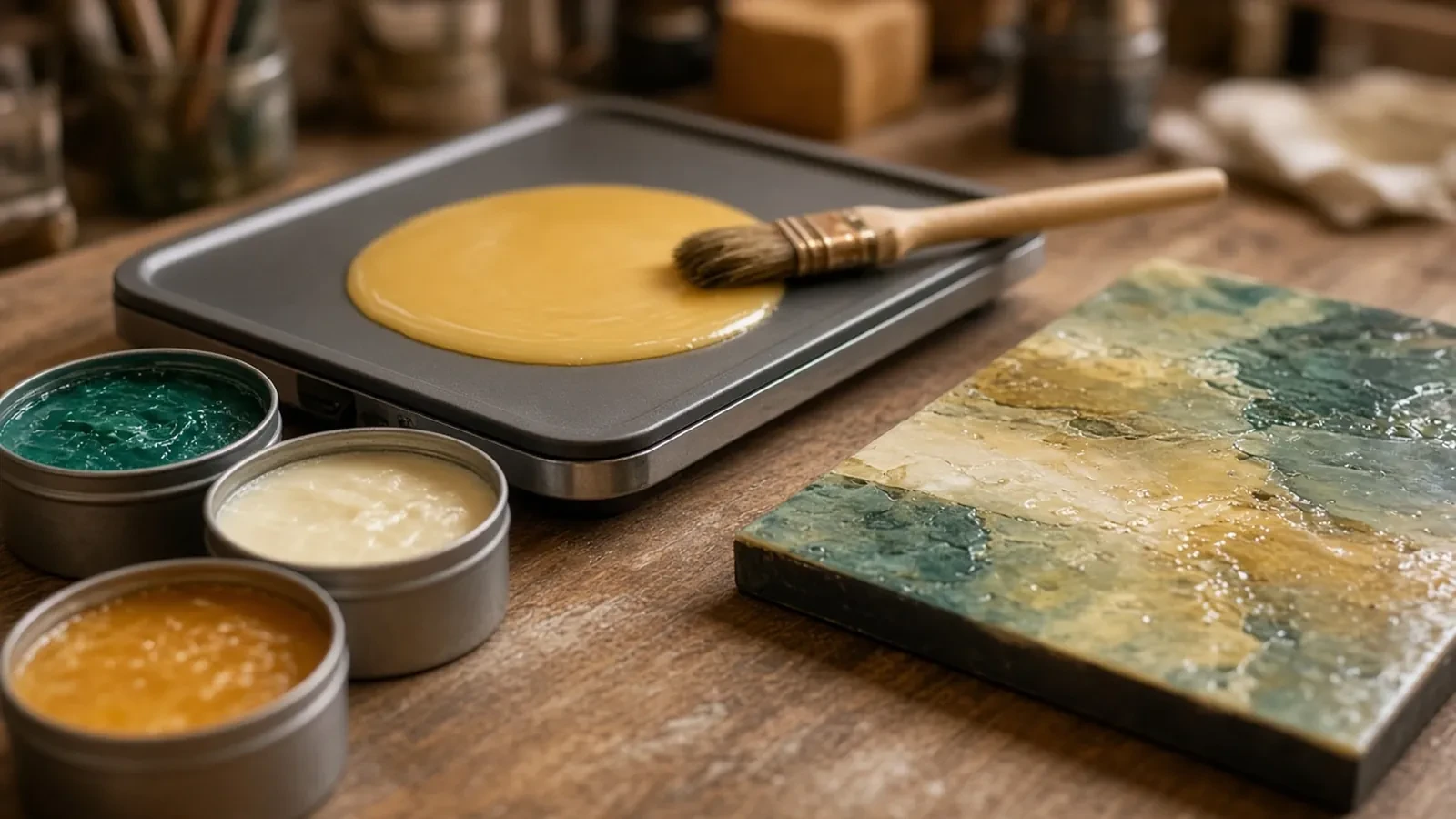
An encaustic workshop breaks when the host has twenty-four prepared wax sets, six griddles that can safely serve four stations, and thirty people answer yes after the supply order is closed. Wax colors, panels, brushes, heat tools, ventilation, tables, fire-safety space, and the number of people who can work safely in the room are set before the first panel is warmed. The host does not add a seventh griddle or a new set of wax because a friend decided to come after the list closed. This is a planned workshop with heated materials and a timed fuse session, not an open art table. A maybe does not hold a wax set.
You can create an encaustic workshop RSVP that counts wax sets, records arrival windows, and closes when the griddle cap is reached.
Count wax sets, artists, and prepared stations
Walk through the studio before sending the invitation. Write down how many panels are ready, how much wax each artist needs, how many brushes and heat tools can be cleaned between uses, and whether the ventilation system supports the planned number of warm stations. If each artist needs one panel and the host has twenty-four prepared panels, that is the material count: twenty-four artists, not a larger group hoping to share scraps or wait for a tool.
An encaustic workshop place is one named artist with a prepared panel, a work surface, and a supervised heat plan. A companion who wants to watch is not automatically an artist, but someone who will paint, fuse, or take a panel home needs a separate set and station. Ask which adults are making, which guests are only accompanying, and whether anyone needs help moving a warm panel. Pick one rule and write it on the page. Guests stay within the wax and stations you counted; they do not join because someone finishes early.
Ask the studio when the final artist count must be fixed for wax colors, panels, table spacing, instructor preparation, and the ventilation plan. If supplies must be ordered by Monday for a Saturday class, Monday is your lock. Write the finish too: the final panel has completed its supervised fuse, the heat tools are off, and the cleanup can begin before the host closes. A twenty-fifth artist “if there is extra wax†is not a plan.
Set a capacity limit for artists, not for every person who might stand near the demonstration table. When the twenty-fourth station is taken, the form should say the encaustic workshop is full. If ventilation and heat tools are already divided, a late guest is not an unplanned hot-work station.
The fuse line is the last planned session
Name the work you will complete and stop there. A clear fuse line is the final labeled panel receiving its last supervised pass, the heat tools being switched off, and the cooling instructions being given, not a workshop that keeps accepting new panels until there is no safe space around the griddles. A second heated session is a different production plan and needs its own staff, ventilation check, and materials.
Put that fuse line on the form as the point you will stop, not a vague “we can warm another panel if people arrive.†If the workshop ends when the final planned piece has cooled enough to move and the equipment is shut down, that is the cutoff. A guest who arrives after the cutoff may not receive a safe, supervised fuse. You need a yes to this wax count, this station, and this final session before you finalize the list.
Who needs a clear studio and heat plan
Art gatherings go wrong when ventilation, reach, and heat safety are treated as notes for later. A guest may need a wider route between tables, a seated work surface, a quieter corner away from the demonstration, or written instructions before using a heat tool. Ask whether a participant can work safely at the planned height and whether they need help carrying a panel. Do not assign a place that only looks available on paper if the route to the worktable or the supervised griddle does not work.
Collect accessibility needs on the RSVP so you can arrange clear paths, seated work, and an appropriate handoff for warm pieces before the first artist begins. Record who is making, who is accompanying, and who needs a different work setup. A wax set is assigned to a person, not to an uncertain headcount.
The moment the griddle cap is locked
The meeting point is the studio entrance, station assignment, and first demonstration time you named, not “come by anytime†with no heating schedule. Put the host’s phone on the page. A message in the group chat is not a material count. You match names to artists, stations, access notes, wax set, griddle cap, fuse line, and phone.
Tie the deadline to the supply order, instructor preparation, ventilation check, and griddle schedule, the day the workshop cannot safely add another panel. After that, a late yes is a call about a cancellation, not a promise of another wax set. If you want names ready when someone drops, keep them as standbys and tell them they do not have an artist place until you write back. A maybe does not hold a wax set.
Export the list the morning you lock: attending or not, artist count, wax and station assignment, access note, arrival plan, griddle cap, fuse line, and phone. An encaustic workshop RSVP is finished when every prepared set has a named artist, the final heated session is one you will actually supervise, and a late guest knows whether they are making, accompanying, or waiting for a cancellation.