
Croquet Outing RSVP Website: Mallet Counts, a Lawn Cap, and a Weather Cutoff
A croquet outing RSVP has to lock a mallet and a court before the lawn is marked, because a maybe does not hold a mallet.
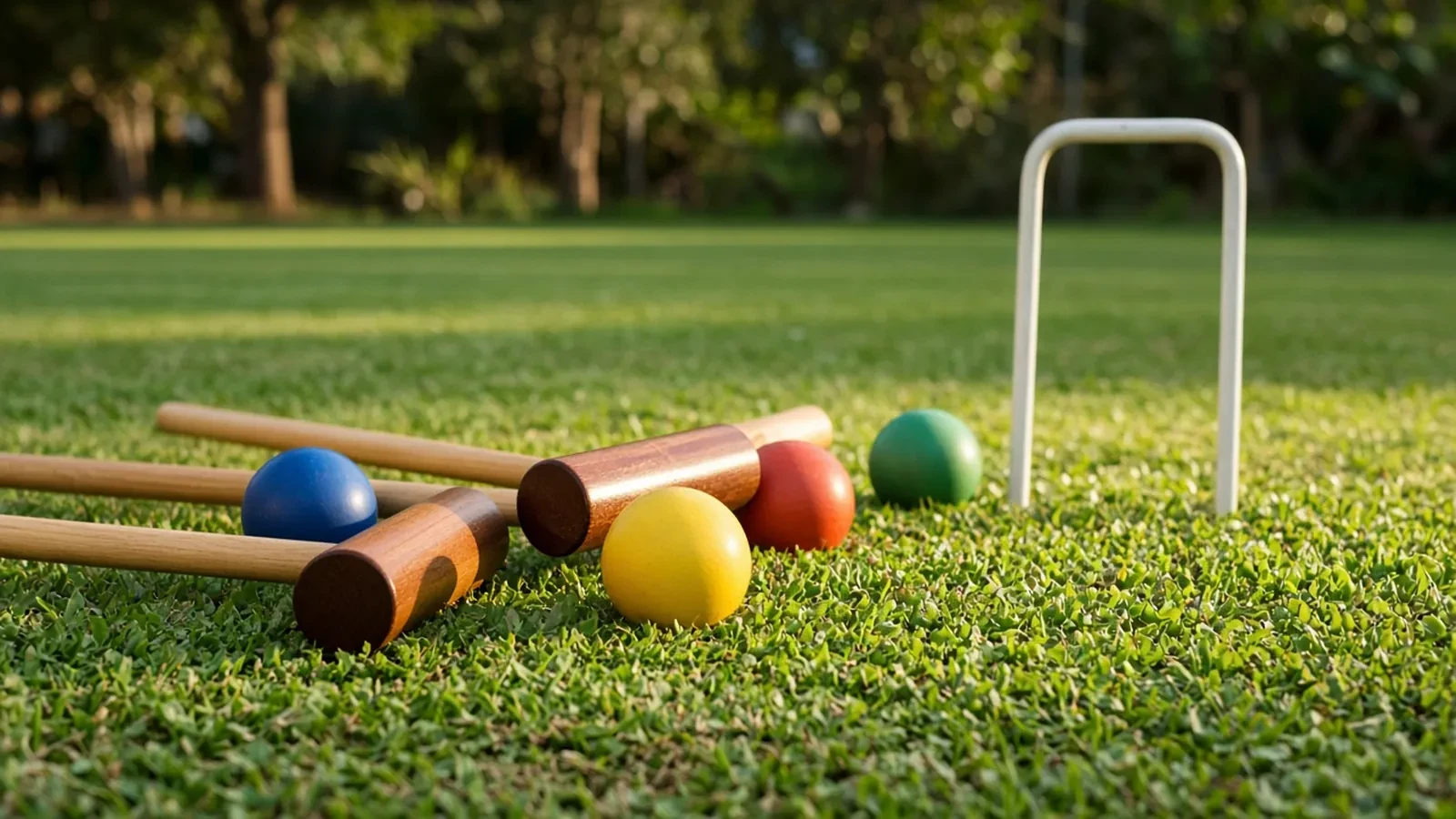
A croquet outing breaks when the lawn was set for two courts and twelve people arrive expecting a mallet, or when someone who said maybe shows up after a rain and expects to play on ground the club already closed. Mallets, the court each foursome is given, and the weather cutoff are set before anyone strikes a ball. The club does not stake another court because a neighbor decided to come after the set list closed. A maybe does not hold a mallet.
You can create a croquet outing RSVP that fills the courts you will actually mark, records who will play, and stops when those mallets are assigned.
Ask what the lawn will actually hold
Call the club, or walk the lawn, before you send the link. Write down how many courts fit, whether you are playing doubles or singles, and how many mallets are in the shed. Two courts of doubles is eight players, eight mallets, and eight balls. A ninth person does not "rotate in" unless you have written a rotation and a ninth mallet exists. If the shed has four full-length mallets and four shorter ones, those are the choices. Do not promise a size the shed does not have.
A mallet is one player. Ask whether a friend who will not play can sit off the court, and whether that person still counts toward the permit or the club's guest cap. Pick one rule and write it on the page. Spectators stay outside the boundary.
Ask the last time you can cut the count without paying for a lawn the club already reserved. If they charge for a no-show after that time, print the rule. Write the game you are playing: six-wicket doubles.
Set a capacity limit on players, not on everyone who was invited. When the last mallet is taken, the form should say the outing is full. If both courts are assigned, a late friend is not in this round.
The weather cutoff is a clock, not a look at the sky
Croquet is a lawn game. A soft court dents, and a wet hoop will not stay set. Ask the club what closes the grass: rain overnight, a groundskeeper's mark, lightning, or a temperature they will not staff. Put that rule on the page as a weather contingency with a decision time, not "we will see how it looks." A usable line is 6 p.m. the day before. At that hour you confirm, move to the backup hour the club offered, or cancel. People should not drive over to find a ribbon on the gate.
Write where the message goes: the same phone or email they used to reply. If the club's backup is a later day, and only if the lawn has dried, say that the mallet assignment does not automatically roll. A person who cannot make the backup is a no for that date, and the mallet can be offered to a standby.
Shoes are part of the same yes. Many clubs want flat soles and no cleats, no heels that punch the green. Say the rule you were given. A player who will not wear those shoes does not get a mallet. Write it next to the question so it is settled before the draw.
Plus-ones and a time to draw colors
Doubles hides extra people. "We are a pair" is two mallets, not one yes with a guest attached. Track a plus-one separately so each player has a name. A partner who picks up a mallet is a second player. If the court is already four, the answer is the standby list, not a fifth mallet shared between two people.
Collect an arrival window that matches the draw, not a vague afternoon. The window might be 1:40 to 1:50 for a 2:00 start, so colors and clips can be handed out before the first stroke. Write what happens if someone is later than that: the mallet goes to a standby who is already on the lawn, or that side plays short and the late person does not enter mid-turn.
The moment the mallet list is locked
The meeting point is the clubhouse door or the lawn gate you named, with a phone number for the person holding the reservation. A screenshot of the invite is not a color. You match names to the eight mallets before anyone walks onto the court.
Tie your deadline to the club's count and to the weather clock. A common lock is four days before the outing, with the 6 p.m. weather call still able to cancel a list that is otherwise full. After the lock, a late yes is a call about a cancellation, not a promise of another mallet. Standbys do not have a mallet until you write back. A maybe does not hold a mallet.
Export the list the morning you lock: attending or not, mallet note if the shed is short on sizes, party size, arrival window, and phone. A croquet RSVP is finished when every mallet has a named player, the lawn rule is clear enough to cancel without a debate in the parking lot, and a late car knows whether they are playing or going home.