Crochet Circle RSVP Website: Hook Counts, a Seat Cap, and a Round Line
A crochet circle RSVP has to lock a hook and a seat before the first round, because a maybe does not hold a hook.
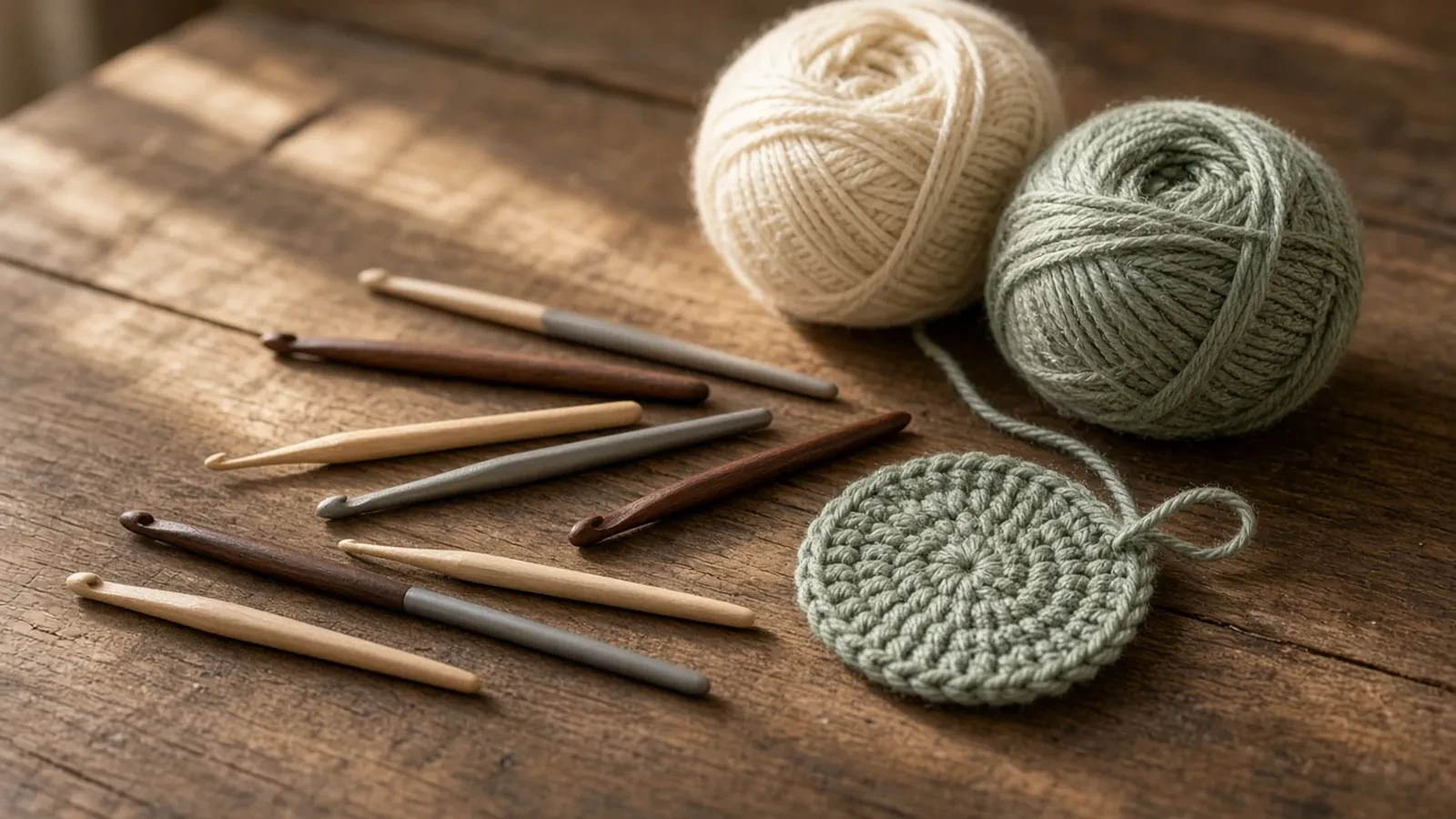
A crochet circle breaks when twelve people arrive for eight chairs and the yarn basket was portioned for the names that answered yes, or when two guests thought one shared seat meant two hooks at the table. Hooks, workstations, and the number of people you can keep comfortable are set before the first round. The host does not pull out a ninth chair because a neighbor decided to crochet after the list closed. This is a sit-down circle for crocheting with a hook, yarn, and a marked project, not a knitting group with two needles and not a general craft night. A maybe does not hold a hook.
You can create a crochet circle RSVP that fills the seats you will actually set, records who needs a hook or a table edge, and stops when those places are full.
Count the crocheters the table can hold
Walk the room before you send the link. Write down how many chairs fit around the table without elbows tangling in yarn, how many spare hooks and clip-on lights you have, and whether a spare seat is for a late replacement or a ninth crocheter. If the table can take eight people with their project bags beside them, that number is your cap: eight crocheters, not a crowd standing behind the chairs.
A crochet circle spot is one named person, one chair, and enough table space for the project they bring. They can chain, work single or double crochet, count stitches, and pause for help without another project landing in their lap. There is no pair of knitting needles, no loom, and no shared workstation that becomes somebody else's extra round. Ask whether a person who will only watch or learn needs a chair at the table, and whether that person still counts toward the room's limit. Pick one rule and write it on the page. Observers stay in the seats you named. They do not take a hook for "just one loop" or open a second project beside a full table.
Ask the last time you can change the supply bag or move the table without disrupting the room booking. If the library needs the final attendance count by Wednesday for a Saturday circle, that Wednesday is your lock. Write the finish too: one chair, one named crocheter, projects packed when the round you named is complete. A ninth person "if someone brings another folding chair" is not a plan.
Set a capacity limit on working seats, not on everyone invited to say hello. When the eighth seat is taken, the form should say the circle is full. If the table map is already set, a late crocheter is not at this workstation.
The round line is a finished project step
Name the work you will reach and stop there. A clear line is a named pattern, a round or row target, and a stop at "round six counted and ends woven for the sample," not an open craft table until every skein is used. Crocheting until the yarn runs out is a different session, and a beginner cannot plan a finish that keeps moving. Knitting with two needles is a different group. So is a general craft night with glue, paint, and several kinds of tools.
Put that round line on the form as the point you will stop, not a vague "we will work until late." If the circle ends when the named round is checked and the hooks are returned, that is the line. People who want to start a second blanket will still be counting stitches when the room has to close. You need a yes to this seat, this project step, and this end time before you lay out the yarn.
Who needs a place at the table
Circles go wrong when comfort is treated as an afterthought. A crocheter may need a chair with arms, a brighter lamp, room for a mobility device, or a table edge that is not blocked by a supply box. Ask whether a household is one crocheter with one seat or two people who each need a hook and a place to work, and do not assume a couple shares one chair. A guest who cannot comfortably reach the table does not get assigned a seat that looks available on paper.
Collect accessibility needs so you know who needs a clear route, a particular chair height, or extra light. Write what happens if someone misses the start: their seat goes to a named standby already on the list, or the circle keeps the chair open and the late guest does not move a project bag into a full table. A hook is assigned to a person, not to an uncertain headcount.
The moment the circle is locked
The meeting point is the room and table you named, not "the library" with no floor or seat marker. Put your phone on the page. A message in the group chat is not a workstation assignment. You match names to chairs and hook needs.
Tie the deadline to the room confirmation, the day the crocheter count cannot change. After that, a late yes is a call about a cancellation, not a promise of another seat. If you want names ready when a crocheter drops, keep them as standbys and tell them they do not have a place until you write back. A maybe does not hold a hook.
Export the list the morning you lock: attending or not, chair placement, accessibility note, project step, and phone. A crochet circle RSVP is finished when every working seat has a named crocheter, the round line is the step you will actually stop at, and a late guest knows whether they are crocheting or greeting from the side.