
Cornhole Tournament RSVP Website: Pairs, Boards, and a Finished Bracket
A cornhole tournament RSVP has to fill teams in pairs and match them to the boards you can run, because a maybe does not make a bracket you can finish.
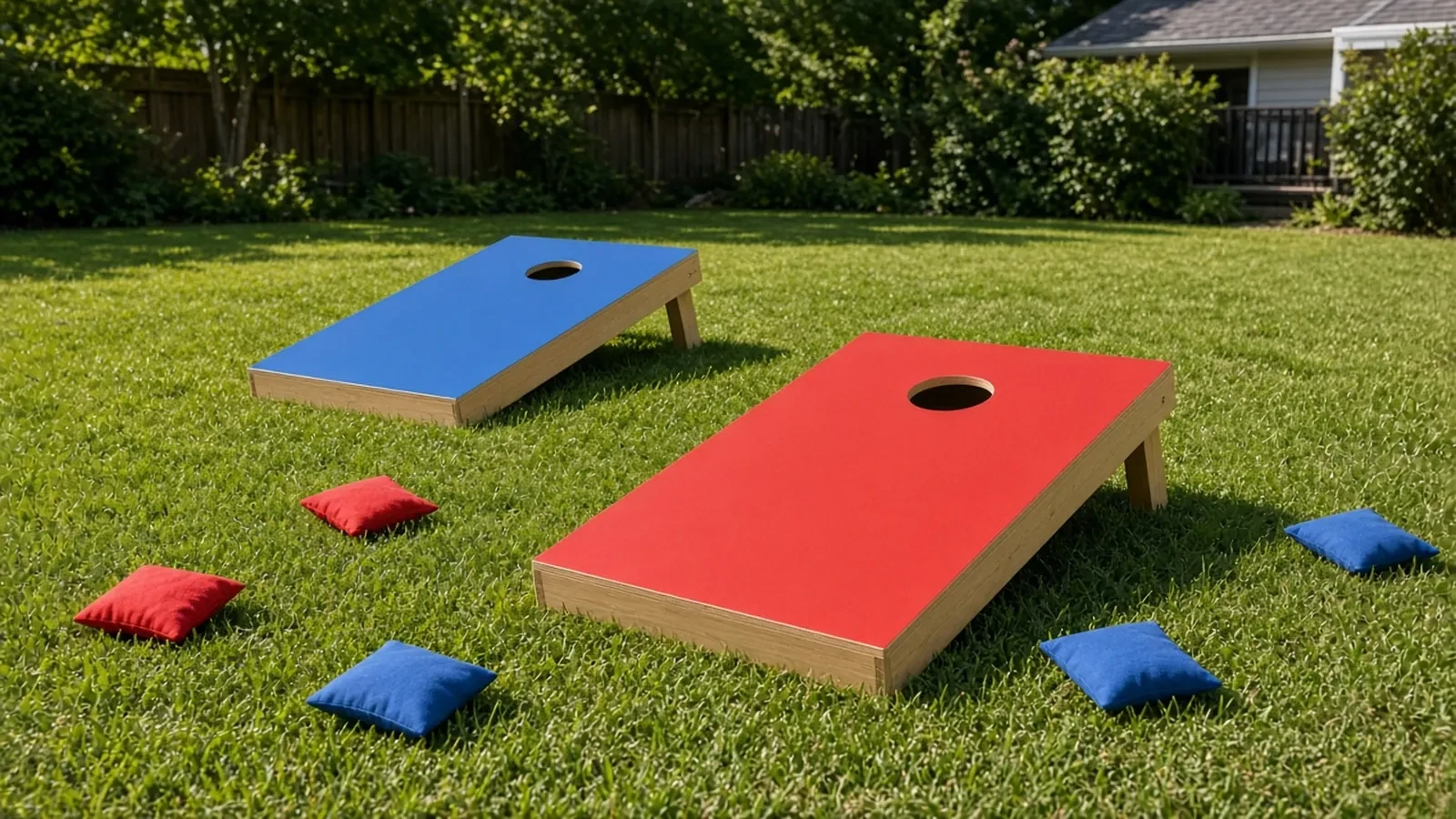
A cornhole tournament breaks when you have an odd number of players, more teams than boards, or a bracket you cannot finish before the lot closes. Each game needs two people on a team and one board. A spectator with a drink is not a partner. A maybe does not give you a fourth team or a second set of bags.
You can create a cornhole tournament RSVP that fills teams in pairs, counts boards against the games you can run at once, and stops when the bracket is full.
Boards, pairs, and how many games can run
Count the boards you actually have before you send the link. Borrowed boards, a park set, and a homemade set are not the same if the bags and the hole sizes do not match. Write down how many boards you can run at the same time, how far apart they need to sit so teams are not throwing across each other, and what time you must be off the space.
A team is two people. Set a capacity limit on teams, or on players if you are assigning partners yourself, and say which one you are using. When the last team spot is taken, the form should say the bracket is full. If you can add a team only by adding a board and a time slot you still have, do not leave the form open on hope.
One board runs one game at a time. If you have two boards and eight teams, you are not playing eight games at once. Sketch the rounds on paper before you promise a finish time. A team that shows up for a final you cannot reach is a scheduling problem you created on the RSVP, not a bad draw.
Partners, subs, and people who are only watching
Ask each player to name a partner or to say they need one. A plus-one tracked on its own line matters here because the partner is a player, not a guest who might sit out. If someone writes "bringing a friend," that friend needs a name before you print the bracket. An unnamed partner is an empty slot.
Ask for a role:
Playing, partner named is one team and counts as two players
Playing, need a partner goes on a list you pair before the first throw, and does not become a team until you assign someone
Watching only does not take a board, but still counts if the venue caps the whole gathering
Not attending is a no, not a maybe that holds a team name until round one
Keep subs off the bracket. A sub is a person who will play if you call because a partner canceled. Tell subs they do not have a team until you write back. If both people on a team drop, that is an open slot, not a team that still exists because the name was on a whiteboard.
Seeding without a fake ranking
If you want closer games early, ask whether a team has played together before and whether they want a casual flight or a tighter one. Do not invent a rating. Use what they tell you, and say on the page that the draw is for a backyard or a park night, not a sanctioned event, unless you really are running one with that organization's rules. If you are, follow their team-count and scoring sheet, and do not replace it with a note on your form.
A bracket with an odd number of teams needs a bye. Say that in plain language: one team waits during the first round, then plays. Do not hide the bye until people arrive. If you would rather have no bye, close registration at an even team count or hold the last unpaired players as a waiting pair.
Arrival, food, and when the draw locks
Warm-up throws take time, and so does explaining the scoring you are using. Ask for an arrival window so the first match is not waiting on a team that thought the start time was a suggestion. Put the first throw in clock time. After people settle in is not a start time.
If you are feeding people, that headcount is separate from the team count. A watcher who wants a plate and a player who is leaving after one match are different lines. Write the food cutoff next to the RSVP deadline if they are not the same hour.
If you are outside, say what happens if the boards cannot sit in the rain: move under a cover you already have, move to a named backup, or cancel. Name who decides and how you will tell teams. A rained-out board is not a team that still has to show up and guess.
Tie the deadline to the moment you need to print the bracket. After that, a late yes is a call about a team that dropped, not a promise. Export the list the day you lock: team name, two player names, sub or not, watching or playing, arrival window, eating or not, phone. A cornhole tournament RSVP is finished when every team is a pair, every board has a game it can actually run, and the first round can start without you rebuilding the draw in the parking lot.