
Cinnamon Roll Party RSVP Website: Dough Counts, a Pan Cap, and a Bake Line
A cinnamon roll party RSVP has to lock a dough share and a pan place before the oven is hot, because a maybe does not hold a counted roll or a turn in the bake.
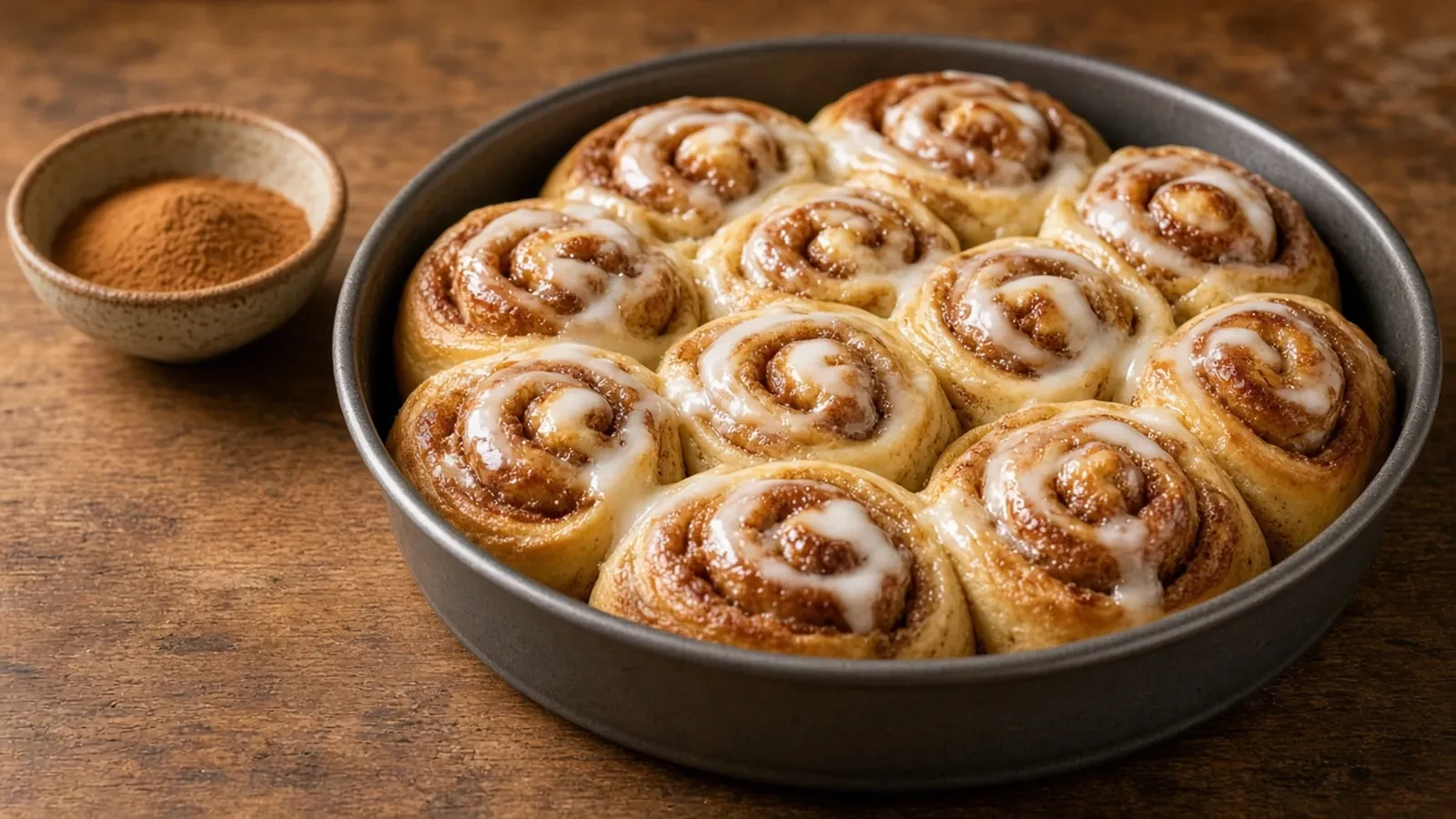
A cinnamon roll party breaks when the host mixed dough for two pans, set eight seats at the bench, and twenty people answer yes after the oven is already hot. Enriched dough, a pan, and a turn in the bake are decided before the first roll is cut. The host does not start a second batch or promise a pan that has no oven time left because a friend decided to come after the list closed. This is yeasted cinnamon rolls, filled, proofed, and baked, not fried donuts, not pretzels, not a plain loaf, and not a sourdough bake. A maybe does not hold a roll.
You can create a cinnamon roll party RSVP that counts dough, records dietary needs, and closes when the pan cap is reached.
Count dough, pans, and bake time
Count the dough before you send the invitation. A cinnamon roll starts as a weighed piece of enriched dough, not as a bag of flour on the counter. If one person fills, rolls, and cuts a share that fills part of a pan, and each share is portioned for that bake, twelve labeled pieces is the material count. Butter, milk, egg, sugar, and yeast are already worked in or waiting in measured bowls. A late guest does not get "whatever is left in the bowl," because the bowl was mixed for named hands and the dough has a rise you already timed. A dough that was proofed for the people on the list is not a spare seat.
Count the tools that touch the dough. A floured or buttered bench, rolling pins, a filling of butter, cinnamon, and sugar that is already measured, pans that hold a known number of rolls, and an oven that can take those pans without crowding are the limit. Two pans do not create ten stations. People can share a rolling pin only on a turn you already scheduled. Each maker still needs a named piece of dough that is not cut out of the next person's square. A guest with dough and no pan space stands there while the roll they meant to bake never happens, and a filled log that waits too long overproofs.
Dough portions by weight, and whether the dough is already mixed and risen
Pans and how many rolls each pan actually holds
Filling and icing measured for those pans, including butter and sugar
Oven space, and how long one bake really takes
Bench room so one rolling pin does not bump the next person's log
A cinnamon roll place is one named maker with a portion, a spot in a pan, and a bake. A guest who wants to watch the first roll is not a maker. Someone who expects to leave with a warm roll needs a place in the pan. Ask who is shaping, who is only eating, and whether a household is sharing one portion or each adult is rolling their own. Makers stay inside the dough you can mix, proof, and bake. They do not start another batch because the flour is still in the cupboard.
The pan cap and the bake line
Two pans and twelve portions is a cap only if the oven, the rise, and the bench agree. If the oven takes one pan at a time and each person needs a real turn to roll, cut, and see the bake through, the cap is the number of makers who can finish before the dough collapses, not the number of chairs in the kitchen. The smallest real constraint wins. Set a capacity limit for makers, not for every person who might stand near the counter and eat. When the last portion is claimed, the form should say the cinnamon roll party is full. If the dough is already rising and the oven is heating, a late guest is not an unplanned maker.
The bake line is the end of the party. Name it: the last pan is out of the oven, the icing is on or left in a bowl with a name, the bench is wiped, leftover dough is covered or thrown out, and the oven is off. A clear bake line stops the party from becoming another hour of hot racks and a bowl that has already fallen. A scrap of dough left on the bench is not a promise to a guest who arrives during cleanup. It is still a hot oven, and it is not a new seat.
Diet and seats change the pan
Wheat flour, milk, butter, egg, and a nut or cream-cheese icing are different parties even when the pan looks the same. A guest who cannot eat gluten, dairy, egg, or nuts needs that written down before you mix, not whispered over a hot oven. Collect dietary restrictions with severity on the RSVP so you know whether a note is a preference or a reason to keep a separate bowl, pin, and pan. If you can run one dairy-free or nut-free pan with its own icing, say how many rolls that pan holds. If every roll will be wheat, butter, egg, and a nut topping, say that in the invitation so someone can decline instead of discovering the filling after the dough is mixed. Do not assign a portion that looks open on paper if that dough is unsafe for the person holding it.
Use seating preferences on the RSVP when the party has two kinds of places: a bench where people roll dough, and a table where people sit to eat. A seat at the eating table is not a rolling pin. Ask who needs a maker's spot at the bench, who only needs a chair once the pans come out, and who cannot stand for the roll and the cut. If two people share one dough portion and one bench turn, write that down so you do not mix dough for both of them and then run out of oven time. A chair pulled up to watch is not a pan.
The moment the dough list is locked
Tie the deadline to the mix. If the dough has to rise overnight for a Saturday party, Friday evening is your lock. After that, a late yes is a call about a cancellation, not a promise of a pan. Standbys can wait, and you tell them they do not have a portion of dough until you write back. A maybe does not hold a proofed piece.
The meeting point is the kitchen door, the check-in time, and the bench you named, not "come by anytime and we will be baking." You match names to makers, dairy or a named substitute, nuts or none, seat type, the pan cap, the bake line, and a phone. Export the list the morning you lock: attending or not, portion, pan, dietary note, seat, and phone.
A cinnamon roll party RSVP is finished when every piece of dough has a named pan, the bake line is the last roll out of the oven rather than an open bag of flour, and a late guest knows whether they are rolling, eating from a finished pan, or waiting for a cancellation.