
Bookbinding Workshop RSVP Website: Signature Counts, a Press Seat, and a Glue Line
A bookbinding workshop RSVP has to lock a text block and a press seat before the paper is torn, because a maybe does not hold a book.
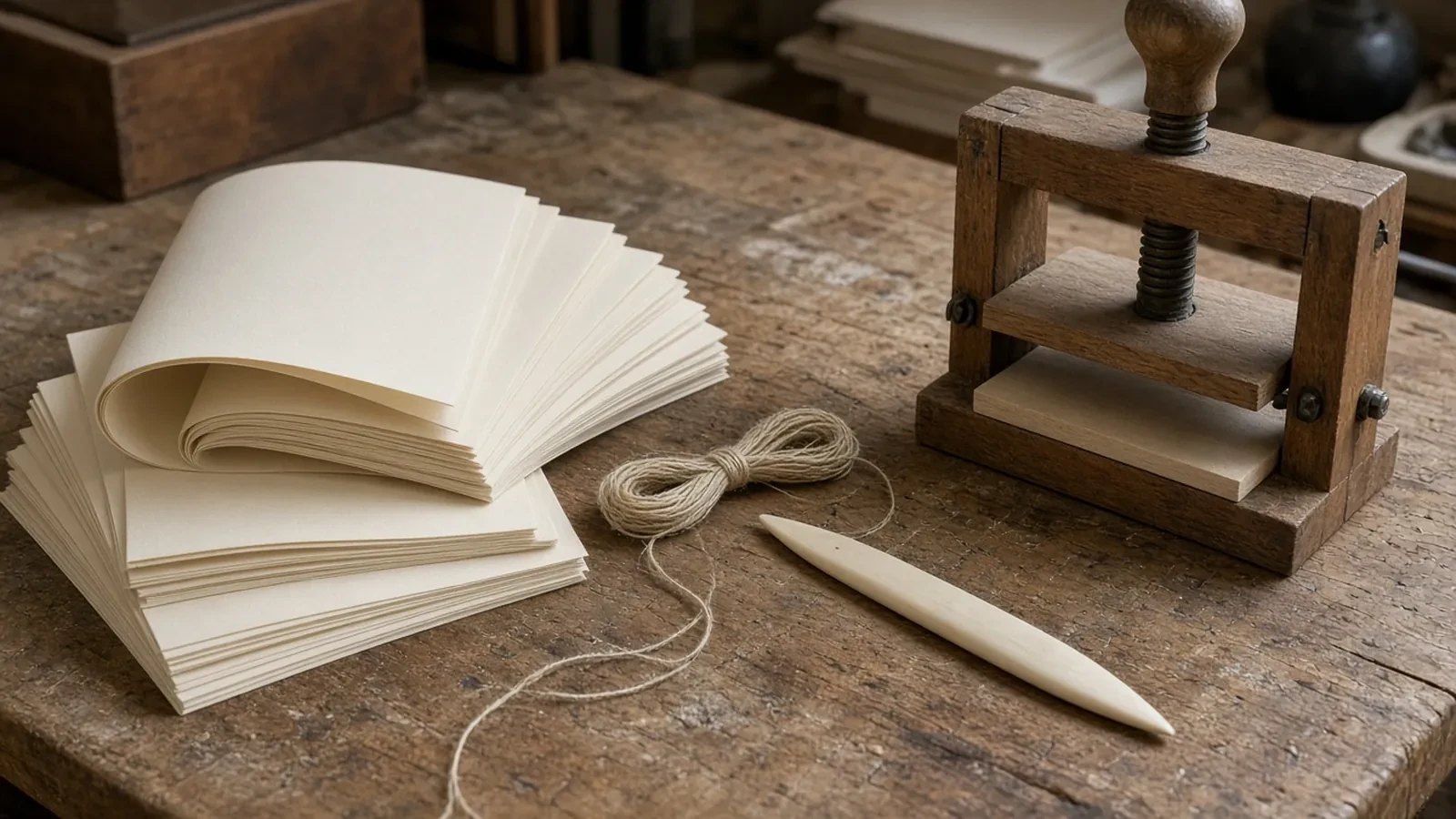
A bookbinding workshop breaks when the studio tore paper for ten books and fourteen people are at the presses, or when someone who said maybe arrives after the signatures are punched and expects a book that was never in the stack. Signatures, the number of presses, and the glue line you agreed to are set before the first sheet is torn. The studio does not tear another text block because a friend decided to come after the book count closed. A maybe does not hold a book.
You can create a bookbinding workshop RSVP that fills the books the studio will sew, records who can use the awl and the glue, and stops when those presses are full.
Ask what the studio will actually sew
Call the studio before you send the link. Write down the session you are buying, how many presses that session holds, what the book is, how many signatures are in the text block, how long the class runs, and whether the cover boards are already cut. Those numbers are your cap. Do not guess from the height of the paper shelf.
A book is one person and one sewn text block, not one couple sharing a journal and not a stack for the table. Ask whether a second book is a second press and a second fee, and whether a later session uses a different cap. Pick one session and write it on the page. If you are doing both a morning press and an afternoon press, those are two lists with two caps. Do not mix them and sort people out at the finishing press.
Ask the price, whether a waiver is signed before an awl is issued, and the last time you can cut the count without paying for paper, boards, and linen thread they already tore to your list. If they charge for a no-show after that time, print that rule on the page. A pamphlet of three signatures cannot become a case-bound book the same morning.
Set a capacity limit on people who will sew a book, not on everyone who was invited. When the last press in your session is taken, the form should say the workshop is full. A friend who might come still needs a text block and a press the instructor staffed. If the studio has already counted your group, they are not in this session.
The glue line is a yes or a no, not a vibe
Ask what each binder uses. This class might be a sewn pamphlet with no glue, or a case binding that needs PVA on the spine and the endpapers. Put that list on the page in plain words. Each person confirms they can use the awl, the needle, and the glue if the book calls for it, or they do not take a press.
If the studio will not run a no-glue book, say that. People who cannot work with PVA should not take a text block. You do not need a diagnosis. You need a yes or a no before the paper is torn. Write the age minimum next to the question. A request for a perfect-bound paperback the studio does not teach should not be on the form.
One press, one book, and a punch that is not repeated
Most studios put one binder at one press and keep the awl there. Ask whether a lower bench exists, and say so if every press is standing height. If the only way in is a step, say that. A guest does not pull up a second stool and share the signatures.
Track a plus one as a separate yes only if they have their own text block and their own press. One form that hides an extra binder will blow the studio's cap and the thread count. Say that on the page. Do not let one household claim two books on one stack of paper. Collect an arrival window that matches the punch demo, not a vague afternoon. The window might be 12:45 to 1:00 at the studio door. Write the clock time and what happens if someone is later than that: they miss the one punching sequence, and the instructor does not re-tear the paper for one person.
The moment the book list is locked
The meeting point is the studio door they assigned you, with the bench room name if there is more than one. Put the host's phone on the page for the person holding the reservation. A screenshot of the invite is not a book. The person at the desk matches names to the count you sent and to the awls checked out.
If you allow a guest, that person needs their own book line, their own glue-line answer, and their own arrival window. Track them as a separate yes. Children count only if the studio's age rule says they may use the awl. Write that rule next to the question. An adult who is only watching does not take a press.
Tie your RSVP deadline to the studio's final count, the day they tear your paper and cut your boards. After that, a late yes is a call about a cancellation, not a promise of another book. If you want names ready when someone drops, keep them as standbys and tell them they do not have a book until you write back. A maybe does not hold a book.
Export the list the morning you lock: attending or not, book type, glue line, party size, arrival window, and phone. A bookbinding RSVP is finished when every text block has a named person, the glue line matches what the studio will open, and a late car knows whether they are sewing or going home.