
Air Hockey Night RSVP Website: Puck Counts, a Table Cap, and a Match Line
An air hockey night RSVP has to lock a table and a player place before the first puck drops, because a maybe does not hold a scheduled match or a fair rotation slot.
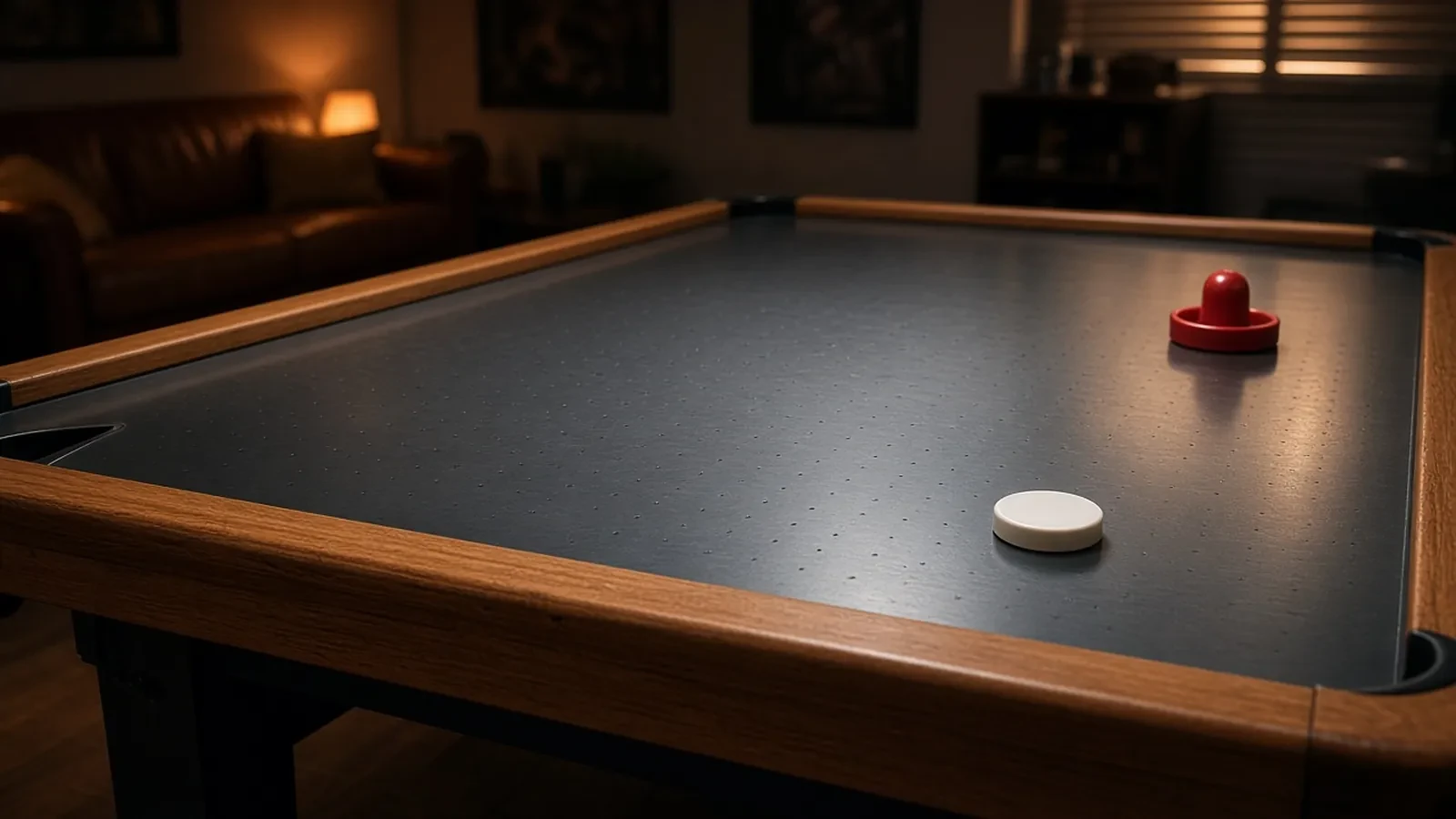
An air hockey night breaks when the host has three level tables, a rotation written for twelve players, and twenty people answer yes after the match cards are printed. Tables, pucks, strikers, score clips, floor clearance behind each end, and the number of matches that fit before the venue powers the tables down are set before the first puck drops. The host does not roll in a fourth table or turn a timed rotation into an open arcade because a friend decided to come after the list closed. This is a scheduled night on shared tables, not an unlimited drop-in. A maybe does not hold a match place.
You can create an air hockey night RSVP that counts players, separates spectators, and closes when the table cap is reached.
Count tables, pucks, and real playing ends
Walk the room before sending the invitation. A table that rocks, has a dead fan, or sits against a wall so one player has no backswing is not a playing table. Write down how many surfaces are actually level, how many unbroken pucks you can lose and still finish the card, and how many strikers have a full face. Air hockey pucks leave the table. If you own four pucks and two are cracked, you do not have a spare plan for three tables running at once.
Count the floor, not just the cabinets. Each end needs room for a player to lean and follow through without hitting a chair, a stroller, or someone holding a drink. If the only open space behind table three is the path to the restroom, that table is a collision, not a court. Measure it now. A night that looks fine on a floor plan fails when spectators stand in the mallet path.
Playable tables, and which ones are out because of level, airflow, or blocked ends
Spare pucks and strikers, including what you will do if one leaves the building
Matches that fit before the venue cutoff, using first-to-seven as the unit
Player places in the rotation, separate from people who only came to watch
Chairs and a snack count for spectators, which is not the same number as players
An air hockey player place is one named person with a defined turn on a named table. A friend who wants to watch the bracket is not a player. Someone who expects to hold a striker needs a place on the card. Ask who is playing, who is only accompanying, and whether a late guest will accept a spectator spot. Players stay inside the turns you scheduled. They do not pick up a mallet because a game ended two points early.
The table cap is the rotation you will actually run
Three tables do not mean an unlimited number of guests taking turns until midnight. Decide how many first-to-seven matches each table can finish in the hours you have, then turn that into a player cap. If each table can run four matches and you want every player in two matches, twelve players is the cap. A thirteenth name does not get a “quick game†written in the margin. That game steals the last scheduled match from someone who already answered yes.
Set a capacity limit for players, not for every person who might stand near the tables. When the twelfth player place is taken, the form should say the air hockey night is full for players. Spectators can still be a separate, smaller number if you have chairs off the ends. If the card is printed and the tables are assigned, a late guest is not an unplanned competitor.
The match line is the last game on that card. Name it: table two, match four, first player to seven, then strikers down and the score sheet closed. A clear match line is that final puck, the result recorded, and the table released so the venue can power the fans off. It is not a night that keeps adding games until someone misses a ride. An extra round is a different schedule. It needs its own table time, and you do not have it.
Spectators and arrival windows keep the ends clear
Air hockey nights get crowded for a boring reason: every player brings someone, and that someone stands behind the goal because that is where the action is. That is also where the striker finishes. Track plus-ones separately so a spectator is a yes to a chair off the lane, not a second mallet. Write the rule on the page. One spectator per player if you have the chairs, or no spectators once the side wall is full. A plus-one does not inherit a forfeit.
Use arrival time windows on the RSVP so table one is not dark for twenty minutes while the bracket waits on a single name. The early window is check-in and a practice rally. The start window is when match one begins whether or not the last player has parked. A player who misses the start window keeps only the later turns still printed under their name. They do not restart the card. Put the host’s phone on the page so a delay is a message to a person, not a guess in the group chat.
The moment the player list is locked
Ask the venue when the room, the table power, and the noise cutoff are fixed. If the building wants a final headcount on Thursday for a Saturday night, Thursday is your lock. After that, a late yes is a call about a cancellation, not a promise of a striker. If you want names ready when someone drops, keep them as standbys and tell them they do not have a table until you write back. A maybe does not hold a scheduled match.
The meeting point is the table row you named, the check-in time, and the first serve, not “come by whenever.†You match names to players, tables, match numbers, spectator status, the player cap, the match line, and a phone. Export the list the morning you lock: attending or not, player count, table assignment, plus-one or spectator only, arrival window, and phone.
An air hockey night RSVP is finished when every printed turn has a named player, the last match is one you will actually run before the tables power down, and a late guest knows whether they are playing, watching from a marked chair, or waiting for a cancellation.