
Tamale Making Party RSVP Website: Masa Counts, a Steamer Cap, and a Steam Line
A tamale making party RSVP has to lock a masa share and a steamer place before the dough is mixed, because a maybe does not hold a counted husk or a rack in a single steam.
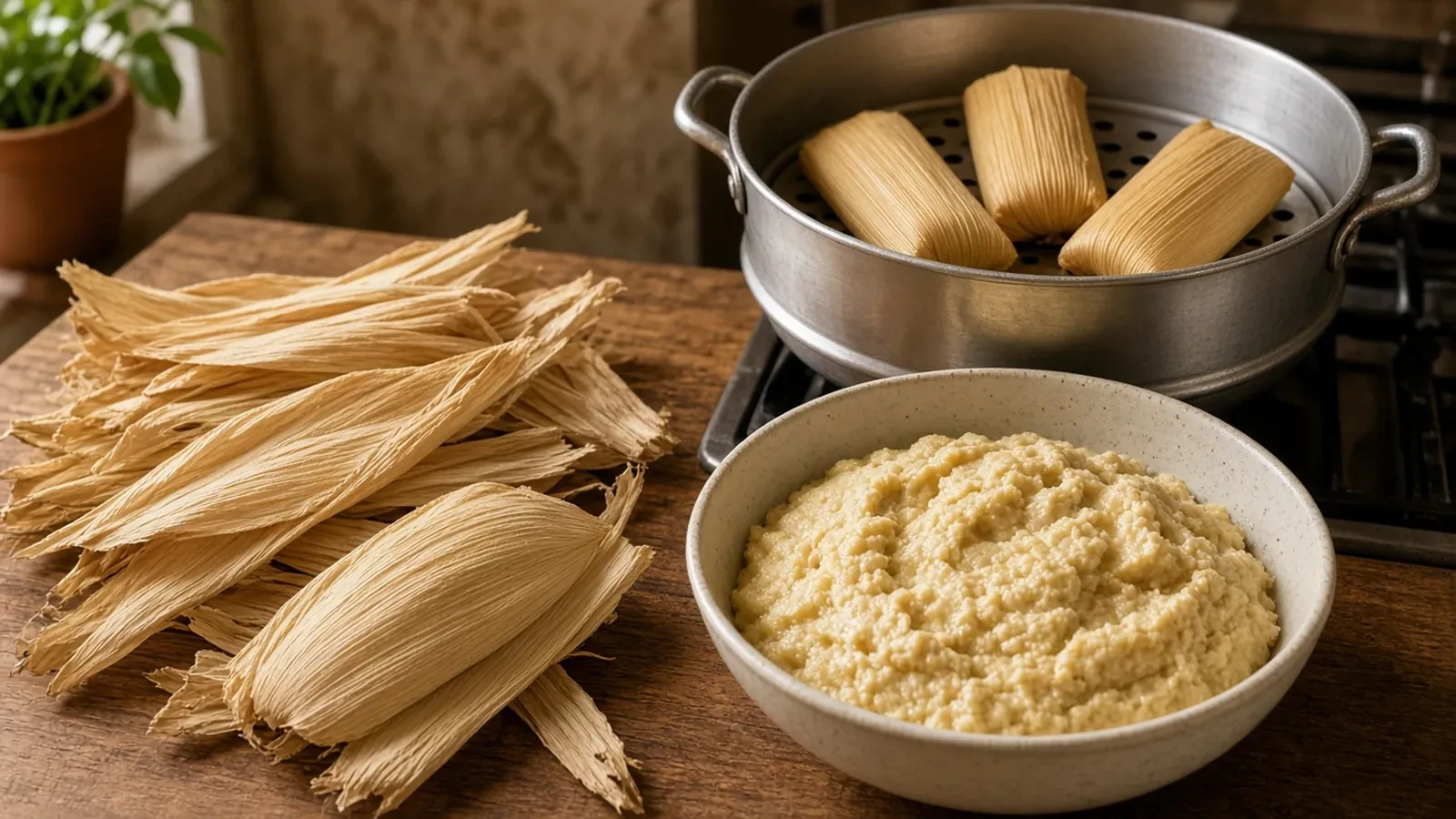
A tamale making party breaks when the host mixed masa for sixty tamales, set one steamer, and eighteen people answer yes after the husks are already soaked. Masa, fillings, husks, and rack space are decided before the dough is spread. The host does not start a second meat braise or promise a tamale that has no room in the pot because a friend decided to come after the list closed. This is filled masa in husks, not a dumpling fold and not a taco spread. A maybe does not hold a husk.
You can create a tamale making party RSVP that counts masa shares, separates households, and closes when the steamer cap is reached.
Count masa, husks, and fillings
Weigh the masa before you send the invitation. Masa harina, broth, and fat become a counted batch only after they are mixed to a spreadable dough. Soaked husks do not multiply because more people walked in. If one steamer run holds forty tamales and you can honestly do one run before people have to leave, forty is the cook. A guest who wants “a few extra if the masa looks like enough†is asking you to spend someone else’s portion.
Count the fillings as separate piles, not as one pot. A pork batch, a cheese batch, and a vegetable batch each need a spoon, a tray, and a note about who can eat them. Two steamers do not create an open kitchen. People can spread side by side, but each eater still needs a number of tamales with their name on the count, and each assembler still needs a place at the counter. A tamale with nowhere to steam becomes a cold packet on a plate and a guest who thinks the party failed.
Masa weight, and how many tamales that mix honestly makes
Husks soaked for that count, plus a few torn spares, not a second party
Fillings portioned by kind, with separate spoons
Steamer racks and burners that fit the pots you actually own
Counter length so spreaders are not standing in the only path to the sink
A tamale place is one named person with a portion count, and, if they are assembling, a station. A guest who wants to watch the first spread is not an assembler and is not an extra dozen mouths. Someone who expects to eat needs a place in the steam. Ask who is spreading, who is only eating, and whether a late guest will accept fewer tamales if a portion opens. Eaters stay inside the masa you can steam. They do not get another husk because the bowl still looks deep.
The steamer cap and the steam line
Eight assemblers and forty tamales is a cap only if the counter, the racks, and the clock agree. If the counter fits six people who can spread without blocking the stove, the cap for assemblers is six, even if ten people will eat. The smallest real constraint wins. Set a capacity limit for portions and stations, not for every person who might stand near the masa. When the last portion is claimed, the form should say the tamale making party is full. If the dough is mixed and the husks are drained, a late guest is not an unplanned batch.
The steam line is the end of cooking. Name it: the last rack goes into the pot at a clock time that still lets the tamales finish, rest, and be served before the evening ends. A clear steam line stops the party from becoming another round of filling while the first pot is already on. Masa left in the bowl is not a promise to a guest who arrives during the steam. It crusts, it throws off the count, and it is not a new seat.
Diet and households at one counter
Tamales hide the ingredient that matters. Lard in the masa, pork in one filling, cheese in another, and chile heat are not details you can sort at the table. Collect dietary restrictions with severity on the RSVP before you portion fillings. Ask what someone cannot eat, and whether that limit is an allergy or a preference. An allergy to pork or to dairy needs its own tray, its own spoon, and a rack that does not share drips with the other batch. A preference for mild chile can share a spoon if you say which tray is mild. Do not assign a portion that looks open on paper if the only tamales left are the ones that person cannot eat.
Use household RSVPs so one submission can name the people coming without turning “the family†into an unlimited number of mouths. Each person who eats is a portion. Each person who spreads is a station. A household of four is four portions, and it is two stations only if two of them are actually assembling. A plus who was never named is not already inside the masa. Put the host’s phone on the page so a delay is a message, not a guess at the door.
The moment the portion list is locked
Tie the deadline to the mix. If the masa and the filling have to be ready the morning of the party, the night before is your lock. After that, a late yes is a call about a cancellation, not a promise of a husk. Standbys can wait, and you tell them they do not have a portion until you write back. A maybe does not hold soaked husks or a rack.
The meeting point is the kitchen door, the check-in time, and the counter you named, not “come by anytime and we will be making tamales.†You match names to households, portion counts, filling choice, allergy notes, assembler or guest, the steamer cap, the steam line, and a phone. Export the list the morning you lock: attending or not, household, portions, filling, severity, station, and phone.
A tamale making party RSVP is finished when every tamale in the steamer has a named portion, the steam line is the last rack rather than an open bowl of masa, and a late guest knows whether they are spreading, eating a counted share, or waiting for a cancellation.