
School Dance RSVP Website: A Safer, Simpler Way to Manage Attendance
Plan a school dance RSVP website that works for students, parents and staff while keeping attendance, permissions, accessibility and pickup details clear.
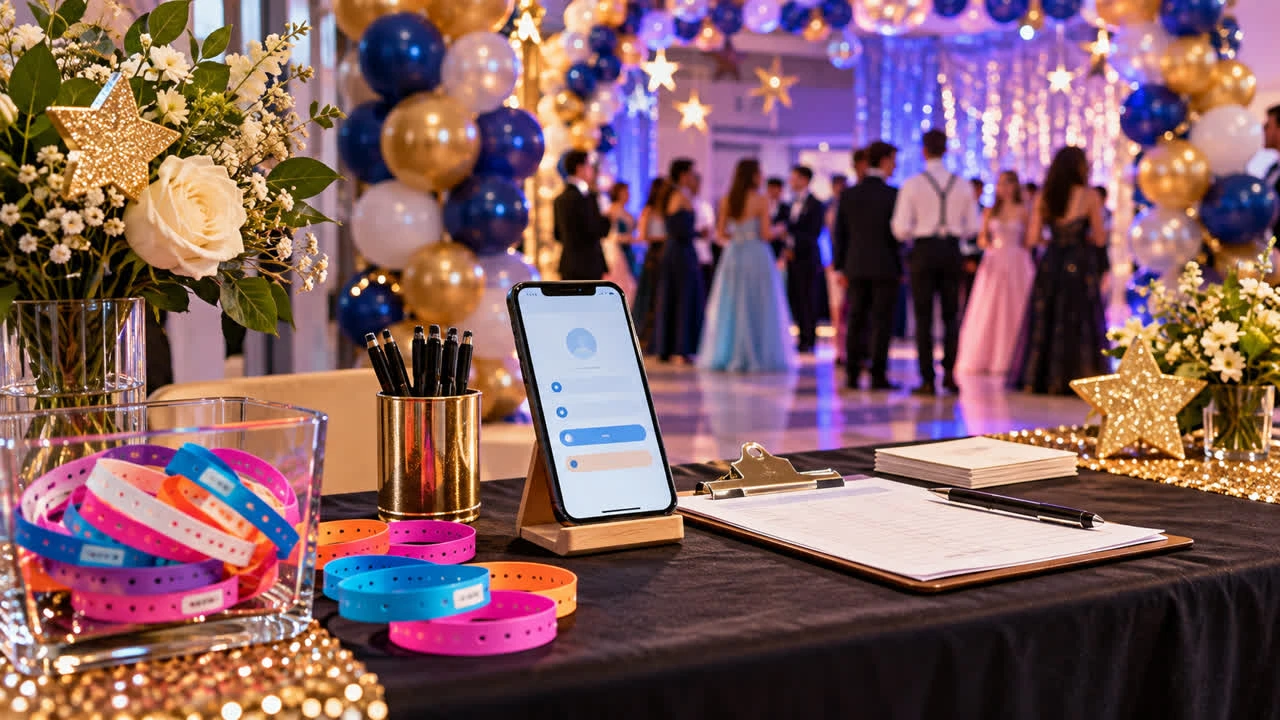
A school dance RSVP needs to do more than collect a headcount. Students want a quick response path, parents need practical details, and staff need a reliable list for check-in and supervision. A school dance RSVP website can bring those needs together without making the form feel like a permission packet.
Start by deciding who is responsible for each response. For younger students, a parent or guardian may need to submit the form. For older students, the student may complete the RSVP while the school still needs a guardian confirmation. The page should state that rule at the top so families do not submit duplicate or conflicting entries.
Put the safety-critical details first
Before a parent responds, they should be able to see the date, start and end time, location, age or grade eligibility, ticket or fee information, dress expectations and the pickup procedure. If entry closes at a particular time or students need an ID, say so plainly. Do not bury a policy that affects whether a family can attend below a long form.
Use one short section for arrival and departure. Explain whether students may leave independently, must be collected by an approved adult, or can use a school-arranged bus. If the event has different pickup windows, ask families to select one only when staff can actually manage those options.
Build a response flow for families
A useful flow begins with the student’s name, grade or year group, and attendance choice. If the student is attending, reveal the details needed for supervision and check-in. If not, let the family submit a decline without forcing them through unrelated questions. Conditional questions keep the form shorter and reduce incomplete responses.
Student identity: full name and grade, using the school’s preferred format.
Guardian contact: a current email or phone number for event updates.
Attendance: attending or not attending, with a clear deadline.
Pickup plan: approved adult pickup, independent departure where permitted, or another documented option.
Accessibility: a private space to describe accommodations staff should prepare.
Urgent update permission: the best channel if the schedule or venue changes.
Ask only for information the event team can access and protect. A general RSVP is not a substitute for the school’s formal medical, safeguarding or emergency procedures. If the school has required consent language or a separate permission form, link to the official process and keep the RSVP aligned with it.
Make guest rules unambiguous
Some dances are for enrolled students only; others allow a guest from another school with advance approval. State the rule with an example. If outside guests are allowed, collect the guest’s name only after the student is confirmed and explain how the guest will be checked in. If a guest requires a separate approval form, do not imply that the RSVP alone grants entry.
Fees also deserve a clear answer. Say whether the RSVP reserves a ticket, confirms an already-purchased ticket, or simply tells organizers to expect the student. If payment happens elsewhere, link to the official payment instructions instead of collecting payment details in a general form.
Design for a phone and a busy parent
Families may complete the RSVP from a phone while commuting or between activities. Use short labels, large tap targets and one question per line. Avoid a required essay box for routine responses. Provide a confirmation message that repeats the student name, event date and the next step, especially if a ticket or permission form is still needed.
Before sharing the page, test it with an attending response, a decline, an outside-guest response if applicable, and a pickup change. Make sure a parent can correct a typo without creating a duplicate entry. Ask a staff member unfamiliar with the setup to find the final attendance list; if the process needs explanation, simplify it.
Choose tools that support the school’s workflow
A school dance RSVP should be easy to share and easy for the event team to review. Look at the SnapRSVP event page examples for ways to present details before the form. When the questions are settled, build the page in the SnapRSVP event page creator and check the SnapRSVP pricing against your school or committee’s needs.
Keep the final list private and limit access to the staff or volunteers who need it. If check-in uses a printed list, print close to the event and agree on how late changes will be recorded. A clean RSVP system is helpful; it should never replace the school’s approved safeguarding controls.
Consider language access and family circumstances as part of the design. If the school routinely provides translated notices or an alternate response route, point families to it. Make the deadline and contact person easy to find, and avoid requiring a student to disclose a private family situation in a public comment box. A clear, respectful process improves both completion rates and trust.
School dance RSVP checklist
Identify whether the student, a guardian or both must respond.
Show timing, entry, fee, eligibility and pickup rules before the form.
Use conditional questions for attendance, guests and pickup.
Collect an actionable contact channel and no unnecessary sensitive data.
Test corrections, declines and late changes on a phone.
Restrict the final list to authorized staff and volunteers.
With the right boundaries, a school dance RSVP website makes attendance easier to coordinate without adding confusion for families. The best page is not the one with the most fields; it is the one that makes the safe next step obvious.