
Pho Night RSVP Website: Bowl Counts, a Pot Cap, and a Seat Line
A pho night RSVP has to lock a bowl and a table place before the first ladle, because a maybe does not hold a prepared portion in a planned serving window.
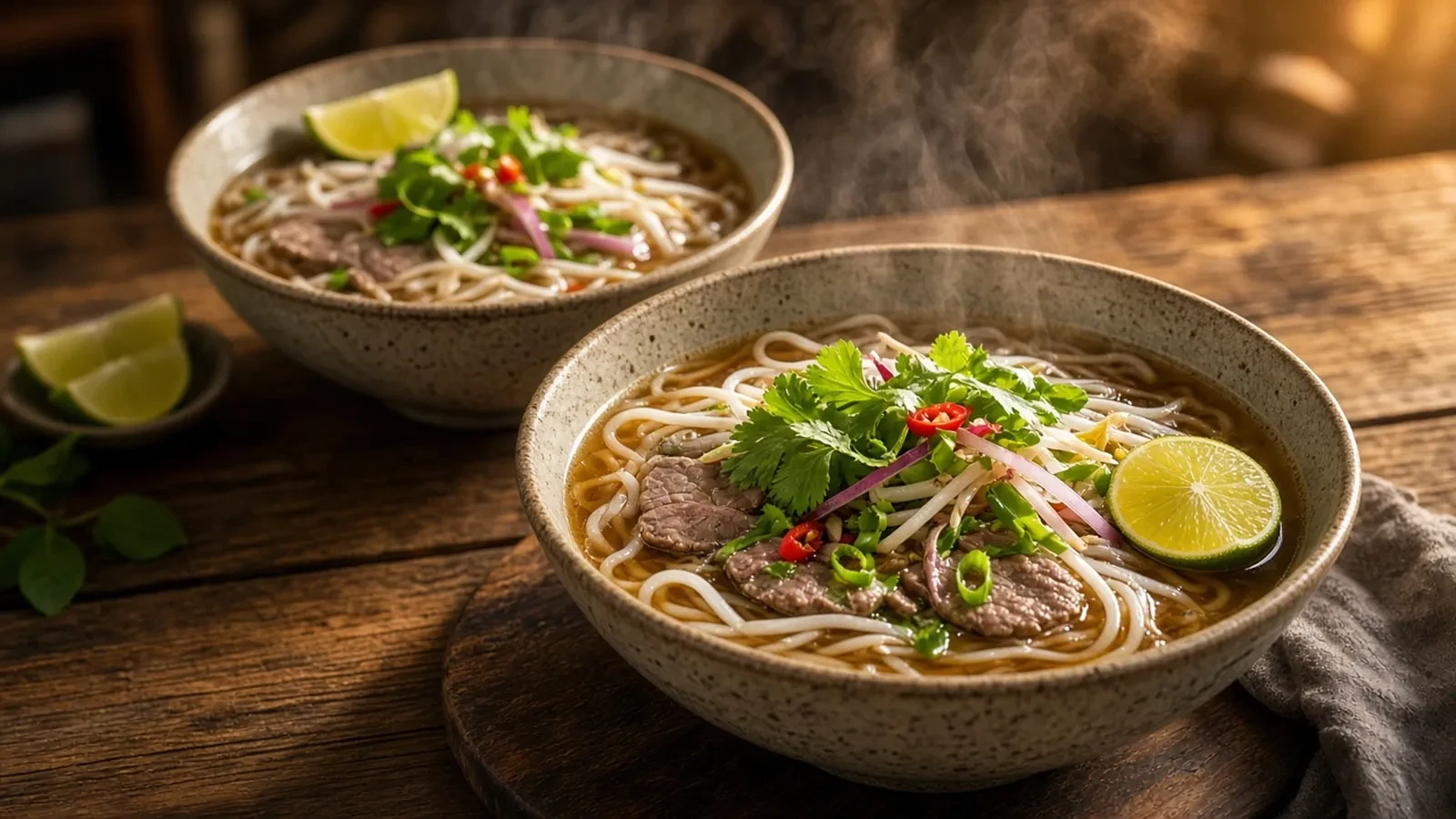
A pho night breaks when the host has broth for twenty bowls, six seats at the table, and twenty-eight people answer yes after the shopping and simmering plan is fixed. Broth, noodles, herbs, proteins, serving bowls, burners, seating, and the number of guests who can be served without crowding the kitchen are set before the first ladle. The host does not add another bowl because a friend decided to come after the ingredient order is closed. This is a planned meal with portions and a serving sequence, not a drop-in dinner. A maybe does not hold a seat or a bowl.
You can create a pho night RSVP that counts bowls, records dietary details, and closes when the pot cap is reached.
Count bowls, eaters, and table places
Walk through the kitchen and table plan before sending the invitation. Write down how many broth portions are ready, how many servings each pot can provide without diluting the recipe, how many bowls and seats are usable, and whether the host has a separate plan for guests who cannot eat a listed ingredient. If the menu supports twenty named bowls and the table seats twenty comfortably across the serving windows, that number is your dinner count: twenty eaters, not a crowd waiting beside the pot.
A pho night place is one named eater with a planned bowl, a seat or serving window, and a meal that matches the information they gave you. A guest can eat without taking another person’s portion or forcing a last-minute change to the broth. A companion who will only visit is not automatically an eater, but anyone expecting a bowl needs a separate count. Ask whether a household has one eater or two, and whether a child needs a smaller bowl that still consumes ingredients. Pick one rule and write it on the page. Guests stay within the bowls and seats you counted; they do not join because the pot appears to have a little left.
Ask the cook when the final eater count must be fixed for broth, noodles, herbs, proteins, tableware, and serving order. If the market run must happen by Wednesday for a Saturday dinner, Wednesday is your lock. Write the finish too: the final planned bowl is served, leftovers are labeled, and the kitchen can be cleaned before the host closes. A twenty-first eater “if there is enough broth†is not a plan.
Set a capacity limit for eaters, not for every person who might stop by to say hello. When the twentieth bowl is claimed, the form should say pho night is full. If portions, seats, and serving windows are already divided, a late guest is not an unplanned bowl.
The seat line is the last planned serving
Name the work you will complete and stop there. A clear seat line is the final planned bowl served at the last table window, the final guest seated, and “cleanup after the last serving,†not a meal that keeps accepting people while the broth cools and the kitchen remains crowded. Another sitting is a different meal plan and needs its own ingredients and timing.
Put that seat line on the form as the point you will stop, not a vague “we can squeeze in one more.†If dinner ends when the named servings are complete and the kitchen can be closed, that is the cutoff. A guest who arrives after the line is not promised a bowl. You need a yes to this bowl count, this seat plan, and this final serving before you finalize the list.
Who needs a clear menu and arrival plan
Shared meals go wrong when food information is treated as a note for later. A guest may need a broth without a particular ingredient, a lower-sodium option, a seat with a clear path, or a quieter serving window. Ask what must be separated, what can be omitted, and whether the host can safely provide it with the kitchen and ingredients available. Do not assign a bowl that only looks available if the meal cannot match the stated need.
Collect dietary restrictions with severity so you can distinguish a preference from an allergy or a strict avoidance before buying ingredients and assigning bowls. Record who is eating, who is visiting, and who needs a separate preparation plan. A bowl is assigned to a person, not to an uncertain headcount.
The moment the pot cap is locked
The meeting point is the address, serving window, table assignment, and final bowl time you named, not “come by anytime†around a hot pot. Put the host’s phone on the page. A message in the group chat is not an ingredient count. You match names to eaters, bowls, seats, arrival windows, dietary notes, pot cap, and seat line.
Tie the deadline to the market run, broth preparation, ingredient separation, and table plan, the day the meal cannot safely add another eater. After that, a late yes is a call about a cancellation, not a promise of another bowl. If you want names ready when someone drops, keep them as standbys and tell them they do not have a dinner place until you write back. A maybe does not hold a bowl.
Export the list the morning you lock: attending or not, eater count, bowl and seat assignment, arrival window, dietary note, pot cap, seat line, and phone. A pho night RSVP is finished when every planned bowl has a named eater, the last serving is one you will actually prepare, and a late guest knows whether they are eating, visiting, or waiting for a cancellation.