
Pasta-Making Class RSVP Website: Station Seats, Dough Counts, and a Dietary Line
A pasta-making class RSVP has to lock a station and a dough portion before the instructor weighs the flour, because a maybe does not hold a station.
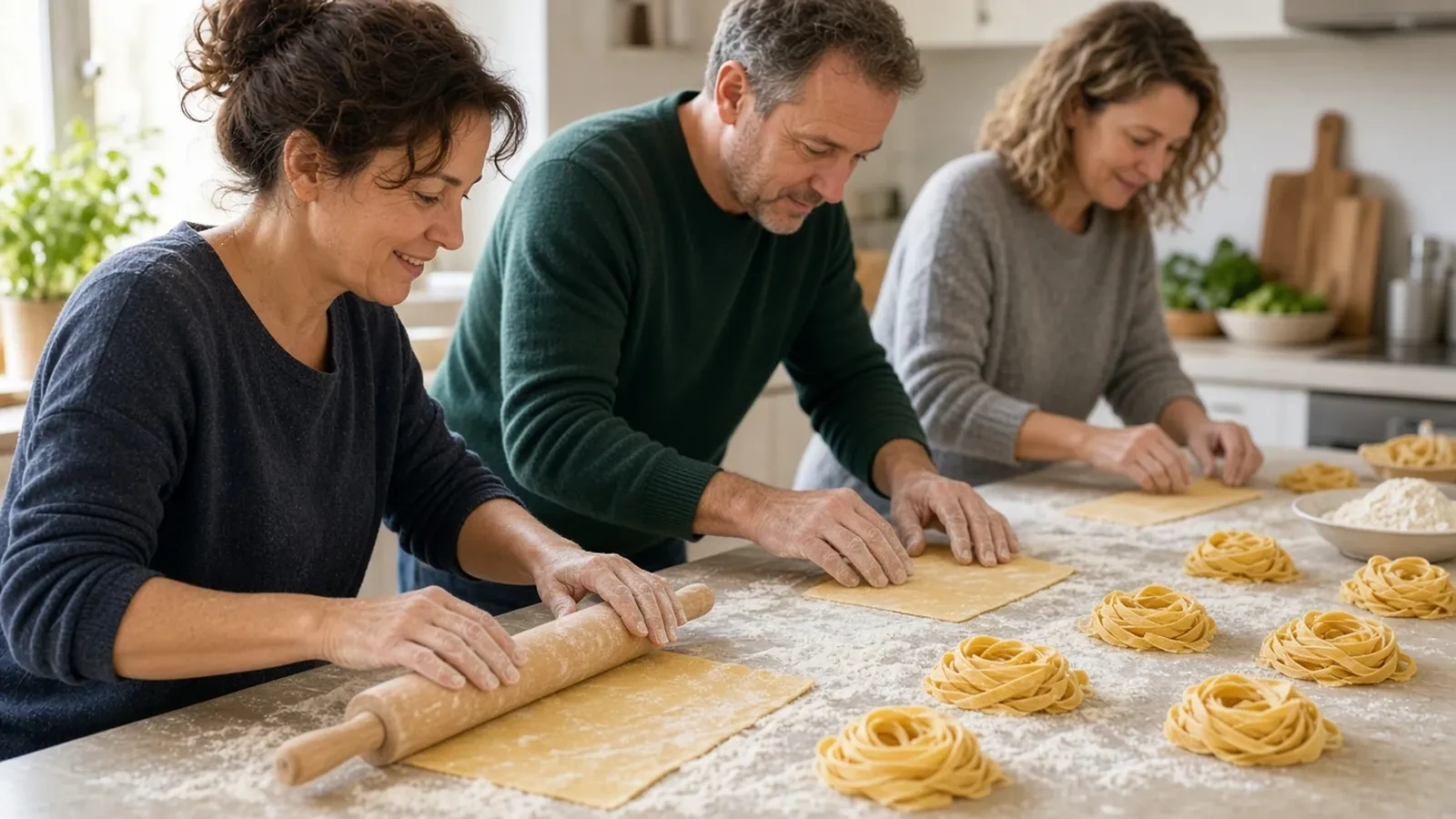
A pasta-making class breaks when the instructor portioned dough for ten and thirteen people walk in, or when someone who cannot eat eggs is handed a standard batch with no other plan. Flour, eggs, and bench space are set before the first mix. A counter does not grow because a couple decided to both roll. A maybe does not hold a station.
You can create a pasta-making class RSVP that fills the stations the kitchen can run, splits dough needs before the flour is weighed, and stops when the class is full.
Ask the instructor what this class holds
Call before you send the link. Write down how many stations the kitchen can run, whether each person gets a board or two people share, how long the class runs, and what time you must be in the room before the dough is portioned. Those answers are your cap. Do not guess from a photo of a floured counter.
Ask whether the price is per person and what is included: flour, eggs, a sauce, a boxed portion to take home, and wine or water. Ask the last time you can change the headcount without paying for empty boards. If the studio charges for a no-show after that time, print that rule on the page.
Set a capacity limit on people who will make pasta, not on everyone who was invited. When the last station is taken, the form should say the class is full. A partner who might come still needs a board, a rolling pin, and a share of dough. If there is no board, they are not in the class.
Eggs, gluten, and a dough plan
Fresh pasta is usually wheat flour and egg. That is the class, not a side note. Ask the instructor which dough this booking uses, and whether they can mix a no-egg or gluten-free batch for part of the group without remaking the whole counter. Many cannot. Write that limit on the page so people do not assume a custom dough exists.
Collect a dietary line with severity, not a checkbox that says "allergy." Egg in the dough, gluten in the flour, dairy in a sauce, and nuts on a finished plate are different problems. Ask whether a shared bench is enough to make the station unsafe, or whether a separate board at the end of the counter solves it. If the instructor cannot separate a severe allergy from the rest of the flour, say that before someone books a seat they cannot use.
Ask each person to pick a dough path:
Standard dough means wheat and egg, if that is what the instructor is making
Alternate dough means only the swap the instructor already agreed to, named on the page
Not attending is a no, not a maybe that holds flour until the scale is already out
Standing, reach, and what people take home
Most pasta counters are stood at, not sat at. Ask about access needs before you confirm a station: a stool that fits the bench, a lower work surface, or a seat for someone who cannot stand for the length of the class. If the kitchen has no stool that fits, say so. A class schedule is not a chair.
Ask whether the studio provides aprons and whether people should tie hair back and take off rings. If everyone takes a box home, say how soon it needs a fridge and whether the sauce is in the same box. Ask who has rolled pasta before and who has not, so the instructor knows where to stand. Do not promise a photo, a cutter set, or a recipe card the studio did not include.
The moment the dough is weighed
The meeting point is the studio door, with the suite number and whether you enter through a restaurant. Put the instructor's check-in time on the page. Late students do not get a second batch after the flour is portioned.
If you allow a guest, that person needs their own station and their own dough line. Track them as a separate yes. One form that hides an extra pair of hands will blow the egg count and the bench map. Say that on the page.
If the studio has more than one table height or a single machine for extruding, ask people for a station preference only where the instructor can honor it: a lower bench, a spot near the machine, or no preference. A preference the kitchen cannot meet should not be a question. If every station is the same, skip the question and say the benches are identical.
Tie your RSVP deadline to the instructor's shopping cutoff. After that, a late yes is a call about a cancellation, not a promise of more dough. If you want names ready when someone drops, keep them as standbys and tell them they do not have a station until you write back. A maybe does not hold a station.
Export the list the day you lock: attending or not, standard or alternate dough, each dietary line and how severe it is, access note, phone, and any station limit the instructor agreed to. A pasta-making class RSVP is finished when every board has a person, the dough order matches what those people can eat, and the instructor can weigh flour without rebuilding your list at the counter.