Pancake Breakfast RSVP Website: Griddle Turns, a Batter Count, and a Dietary Line
A pancake breakfast RSVP has to lock a griddle turn and a batter line before you mix, because a maybe does not hold a plate.
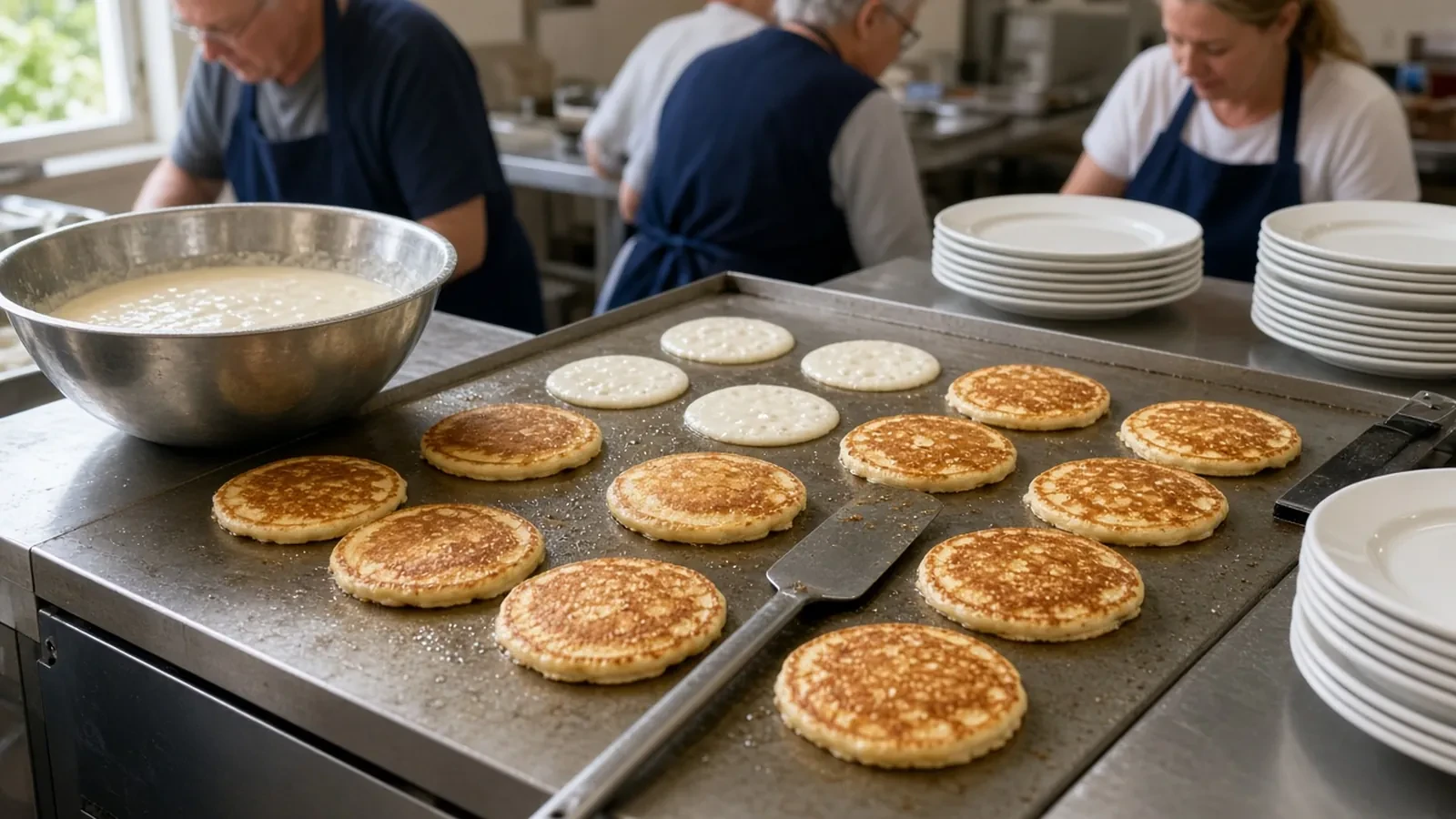
A pancake breakfast breaks when the griddle can feed forty people in a turn and sixty are in the line, or when the gluten-free batter was mixed for eight and the plain pitcher is still half full. Turns, the batter each person will eat, and the plates you can serve before the hall booking ends are set before you heat the griddle. You do not water down a pitcher because a friend decided to come after the mix was bought. A maybe does not hold a plate.
You can create a pancake breakfast RSVP that fills each griddle turn, records which batter that plate uses, and counts every eater in a household instead of one name at the door.
The griddle is a turn, not an open door
Walk the kitchen before you send the link. Write down how many pancakes fit on the griddle, how many minutes a batch takes, how many plates that batch feeds, and when the hall or the firehouse makes you stop. Those numbers are your cap. A common case is two turns, 8:00 and 9:15, because one griddle cannot feed both groups at once. Each turn has its own cap. Do not tell both groups to come at 8:00 and hope the line moves.
A plate is one person. Seconds, if you offer them, come from batter you held back, not from a maybe. If you planned two pancakes per plate, the batter total is plates times two, plus a small burn batch you name. Do not let that burn batch become six extra guests. Syrup, butter, and fruit on a side table are not a second cap. The cap is plates the griddle can finish before the end time.
Set a capacity limit on plates in each turn. When the last plate in the 8:00 turn is taken, that turn closes even if the 9:15 turn still has room. A friend who might come still needs a plate in a turn you can cook. If the hall already counted your group against the room, they are not an extra table.
Batter and a side are separate counts
Put the batters you will actually mix on the form. Plain is one pitcher. A gluten-free or dairy-free pitcher is a second count with its own cap, because it uses a separate mix and often a separate corner of the griddle. If you are not mixing that pitcher, say that. People who cannot eat the plain batter should not take a plain plate. Cap the alternate at the boxes you will open, not at the number of people who ask.
Collect dietary restrictions with severity for what is in the batter and on the plate. Milk and butter are dairy. A gluten-free mix is only safe if it never hits the plain griddle. Ask whether the restriction is a preference or a reaction that means the plate cannot touch the other batter. Bacon or sausage is a third count if you are cooking it. Cap the meat at the pans you have. A vegetarian plate is the pancake without the meat, and you should say that so nobody assumes a second entree.
A household is not one plate
Families come to a breakfast together, and one parent's yes is not four plates. Use a household RSVP so each eater has a name, a turn, and a batter. A toddler who will share a parent's plate is the exception you write on that row. Everyone else counts. If you allow a guest outside the household, they need their own line under the turn cap. One note that says "and the cousins" will blow the 8:00 griddle.
Write the arrival time for each turn, not a vague morning. People in the 9:15 turn who arrive at 8:00 take chairs the first turn needs. Say where they wait if they are early, or tell them not to come in yet. A late plate in a turn that already started does not get a fresh batch after the pitcher is empty.
The morning the mix is locked
Put the hall name, the door to use, and the end time on the page. If the lot holds a fixed number of cars, say that number. People who can walk from the neighborhood should know the lot is not part of the yes. Say whether coffee is included and whether you are charging at the door. The RSVP holds the plate. It is not the cash box.
Tie your RSVP deadline to the day you buy the mix, the eggs, and the meat. After that, a late yes is a call about a cancellation, not a promise of another plate. If you want names ready when someone drops, keep them as standbys and tell them they do not have a turn until you write back. A maybe does not hold a plate.
Export the list the day you shop: attending or not, turn, batter, meat or no meat, allergen and how serious it is, household names, and a phone. A pancake breakfast RSVP is finished when every turn has a plate count the griddle can cook, every alternate batter matches a pitcher you will mix, and a late car knows which seating is already closed.