
Oyster Roast RSVP Website: Bushels, Shucking Seats, and Who Eats Shellfish
An oyster roast RSVP has to split oyster eaters from everyone else before the seller packs the bushels, because a maybe does not feed a table or a shellfish allergy.
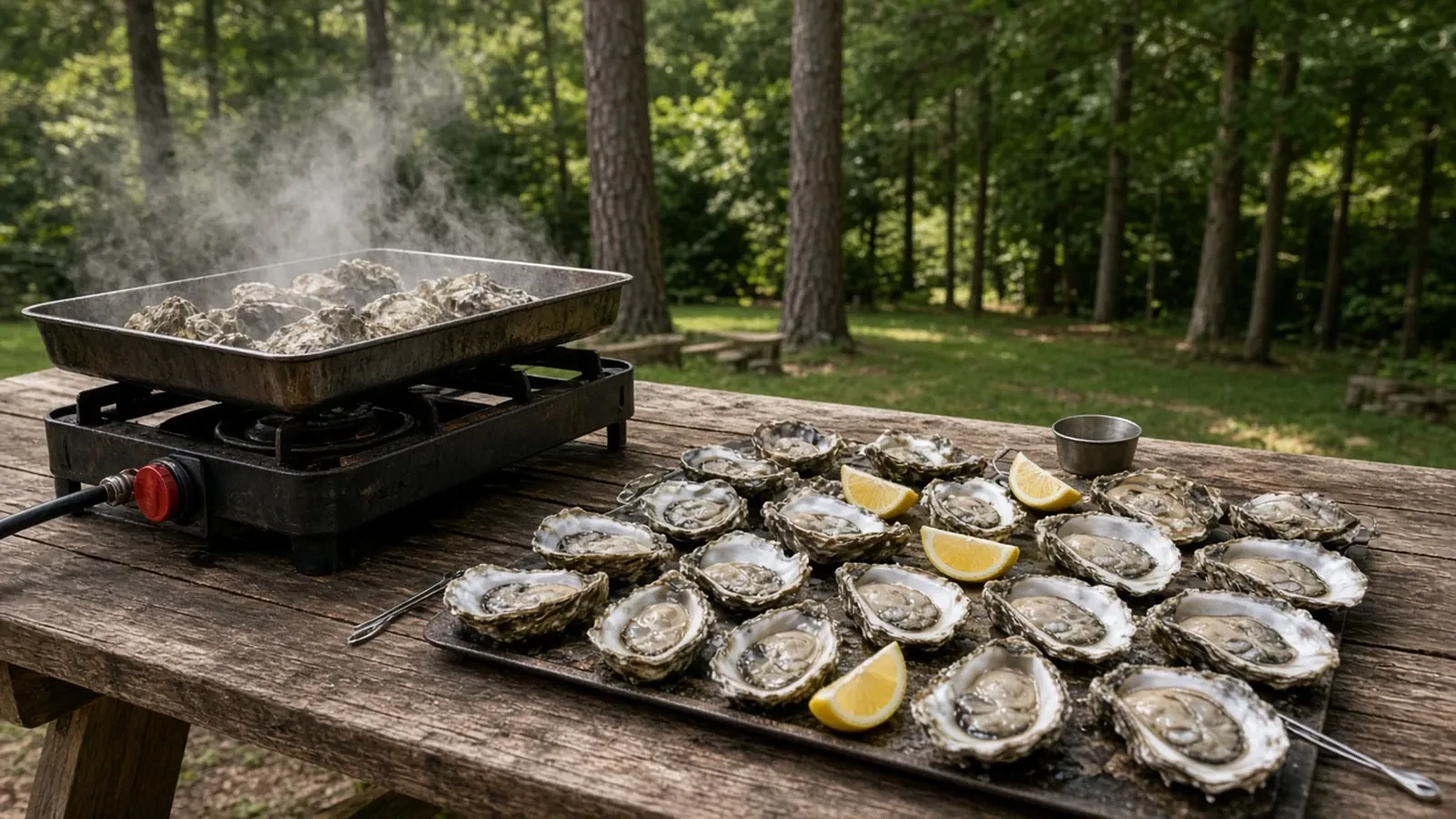
An oyster roast breaks when the sack you ordered does not match the people who will actually eat, or when the tables you rented cannot hold the crowd that treated a maybe as a yes. Oysters are bought by the bushel, sack, or box from a seller who needs a number before a cutoff. The seller does not add a bushel because someone might try one. A late yes does not create more shellfish, and a guest with a shellfish allergy should not discover the menu by sitting down at a table covered in shells.
You can create an oyster roast RSVP that separates people who will eat oysters from people who need another plate, and stops when the yard, the tables, or the roast you paid for is full.
Bushels follow a locked headcount
Call the seller before you send the link. Ask how they want a headcount turned into bushels or boxes, when they need the final number, and whether they are delivering shucked, in the shell, raw, roasted, or some of each. Write their rule on your host notes. Do not copy a serving guess from another roast. A bushel is their unit, and only they can tell you what it feeds for the way you are cooking.
Split the guest list into three numbers before you place the order: people who will eat oysters, people who will not and need a different plate, and people who are not coming. A guest who might try one is not a bushel. Ask them to pick eat or not. You can still set aside a small extra after the list locks if you want the curious to taste one. That extra is a number you chose. It is not an open maybe on the form.
Set a capacity limit on bodies in the space, not only on oyster eaters. The limit might be chairs, rented tables, a fire pit, or the occupancy you were given for a rented hall. When that number is full, the form should say the roast is full. A person who does not eat shellfish still takes a seat and a plate.
Who eats oysters and who must not
Shellfish is not a mild preference for someone who will get sick. Ask, plainly, who eats oysters, who needs a plate with no shellfish, and who has an allergy that means shells should not be on their table at all. Use a dietary question that records severity, not a single checkbox that lumps a dislike with a reaction. If someone in a household cannot be in the same room as cooking shellfish, you need that before you decide the roast happens in a small kitchen.
Ask each household to answer once for everyone who is coming, with names, not a headcount of plus a few. A household RSVP is how you see that two adults will eat oysters, one child will eat sausage and bread, and one person is not coming. A vague we will be there does not tell the seller what to pack.
Ask what the non-oyster plate is, and order that to the count of people who said no, plus the eaters if you want them to have sides too. Write the menu on the page so a guest who does not eat shellfish can see there is food for them before they decline.
Shucking, shells, and seats
If guests are shucking, ask who has done it before and who should not be handed a knife. Keep children off that station unless you have an adult whose only job is that table. Ask the seller for gloves or plan to buy them to the locked headcount. Ask where shells go: a lined can, a compost rule the host already confirmed, or a haul-away the seller included. Do not leave a pile of shells as a problem you solve after the last guest leaves.
Ask the seller how they want oysters held before they are cooked or served, and what they want you to do with leftovers. Put that in your host notes. Do not invent a holding time from memory.
The order cutoff
Tie your RSVP deadline to the seller's cutoff, which is often earlier than the day you care about seating. After that cutoff, a late yes gets whatever plate you already planned, not a new bushel. If the yard is full, a late yes is a no unless someone drops. Say that on the page.
Ask for a parking note if the roast is at a house with a short driveway. A car count is not the same as a people count, but a street that cannot hold the cars will strand guests who already have a plate waiting. Export the list the day you order: names, oyster or other plate, allergy severity, household, knife station or not, table seat. An oyster roast RSVP is finished when the seller has a number they can pack, every non-eater has a real plate, and every chair you promised exists.