
Mochi Making Party RSVP Website: Rice Counts, a Mortar Cap, and a Pound Line
A mochi making party RSVP has to lock a rice portion and a mortar before the first pound, because a maybe does not hold a rice portion.
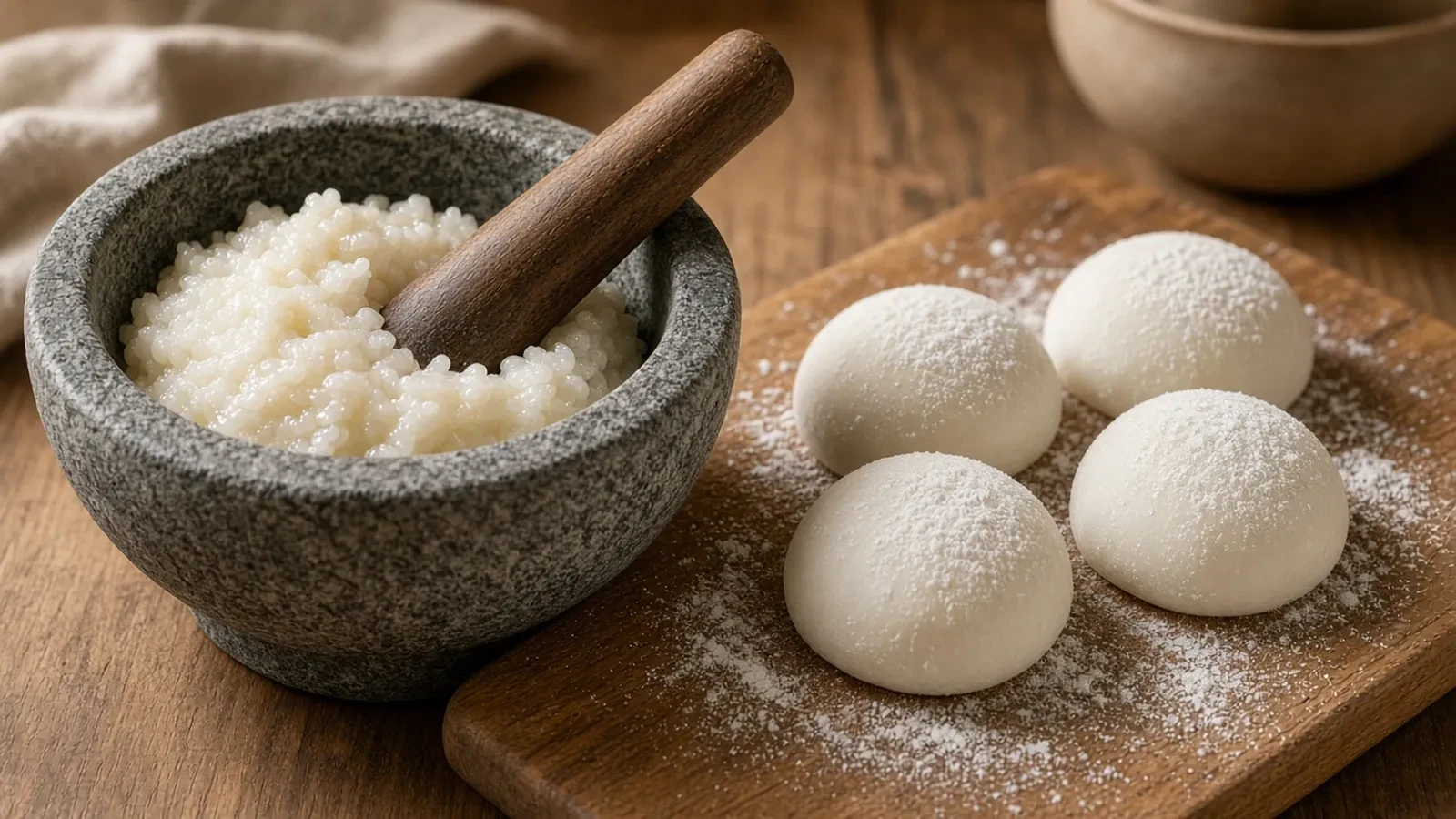
A mochi making party breaks when ten people arrive for six pounding stations and the sweet rice was soaked for the names that answered yes, or when a late guest expects a fresh batch after the steamers are full. Rice portions, mortars or pounding stations, and the number of people you can keep clear of the work area are set before the first pound. The host does not add a seventh station because a neighbor decided to make mochi after the list closed. This is Japanese-style mochi made from prepared glutinous rice and a pounding or shaping process, not dumpling folding and not gelato or ice cream making. A maybe does not hold a rice portion.
You can create a mochi making party RSVP that fills the stations you will actually set, records who is pounding and who is shaping, and stops when those places are full.
Count the rice portions the stations can handle
Walk the kitchen before you send the link. Write down how many mortars, mallets, steamers, and clear shaping areas can operate without hands crossing, how many rice portions are soaked, and whether a spare portion is a replacement for a failed batch or a seventh maker. If six stations can each take one portion and one named team, that number is your cap: six teams, not a crowd sharing one hot steamer.
A mochi station is one named team, one rice portion, and one safe place to pound or shape. The rice is steamed, turned into the mortar, pounded with a mallet, and shaped with the filling or coating you named. There is no dumpling wrapper, no ice-cream churn, and no shared sticky mass that becomes someone else's extra batch. Ask whether a person who will only watch needs a chair away from the mallet and hot equipment, and whether that person still counts toward the kitchen limit. Pick one rule and write it on the page. Observers stay behind the marked line. They do not reach toward the mortar for "one pound" or start another batch beside a full station.
Ask the last time you can change the rice order or prep schedule without wasting soaked grain. If the kitchen needs the final portion count by Tuesday for a Saturday party, that Tuesday is your lock. Write the finish too: one named portion, one team, and the station washed when the pound sequence you named is complete. A seventh portion "if the steamer has room" is not a plan.
Set a capacity limit on active stations, not on everyone invited to watch the shaping. When the sixth station is taken, the form should say the party is full. If the rice is already soaked and the hot equipment is assigned, a late maker is not at this batch.
The pound line is a batch finish
Name the batch you will finish and stop there. A clear line is one rice portion, a number of coordinated pounds, and a stop at "the named texture reached, pieces shaped, and the mortar cleared," not an open mallet until the rice feels different to every person. Pounding until the kitchen closes is a different class, and you will not keep a safe rhythm while adding unplanned portions. Dumpling making, with wrappers and fillings folded closed, is a different party. So is gelato or ice cream making, with a chilled base and a churn.
Put that pound line on the form as the point you will stop, not a vague "we will keep going until it is smooth." If the party ends when the named batch is shaped and the station is cleaned, that is the line. People who want to pound another portion will still be near the mallet when the next group needs the counter. You need a yes to this station, this rice portion, and this pound line before you turn on the steamer.
Who can eat the shared batch
Parties go wrong when fillings and coatings are a surprise. Mochi may include sweet bean paste, sesame, peanut, fruit, or other ingredients, and sticky rice is not the same as ordinary rice. Ask whether a household is one maker with one portion or two people who each need their own share, and do not assume a couple splits one piece. A guest who cannot eat a filling does not get assigned a portion without a safe alternative.
Collect dietary restrictions with severity so you know who needs a filling omitted, who has a serious allergy, and who can only use a named coating. Label shared ingredients and tell guests what the kitchen can and cannot separate. Write what happens if someone misses the start: their portion goes to a standby only before steaming begins, or it stays out of the active batch and the late guest does not interrupt a pounding sequence.
The moment the rice is locked
The meeting point is the kitchen, station number, and safety line you named, not "the house" with no hot-equipment plan. Put your phone on the page. A message in the group chat is not a rice assignment. You match names to portions and stations.
Tie the deadline to the grocery and prep schedule, the day the portion count cannot change. After that, a late yes is a call about a cancellation, not a promise of another bowl of rice. If you want names ready when a maker drops, keep them as standbys and tell them they do not have a portion until you write back. A maybe does not hold a rice portion.
Export the list the morning you lock: attending or not, station, household count, filling note, safety note, and phone. A mochi making party RSVP is finished when every portion has a named maker or team, the pound line is the batch you will actually stop at, and a late guest knows whether they are shaping or watching from the marked edge.