
How to Follow Up on Wedding RSVPs Without Being Annoying
A practical follow-up schedule for wedding hosts — who to contact, what to say, and when to stop chasing.
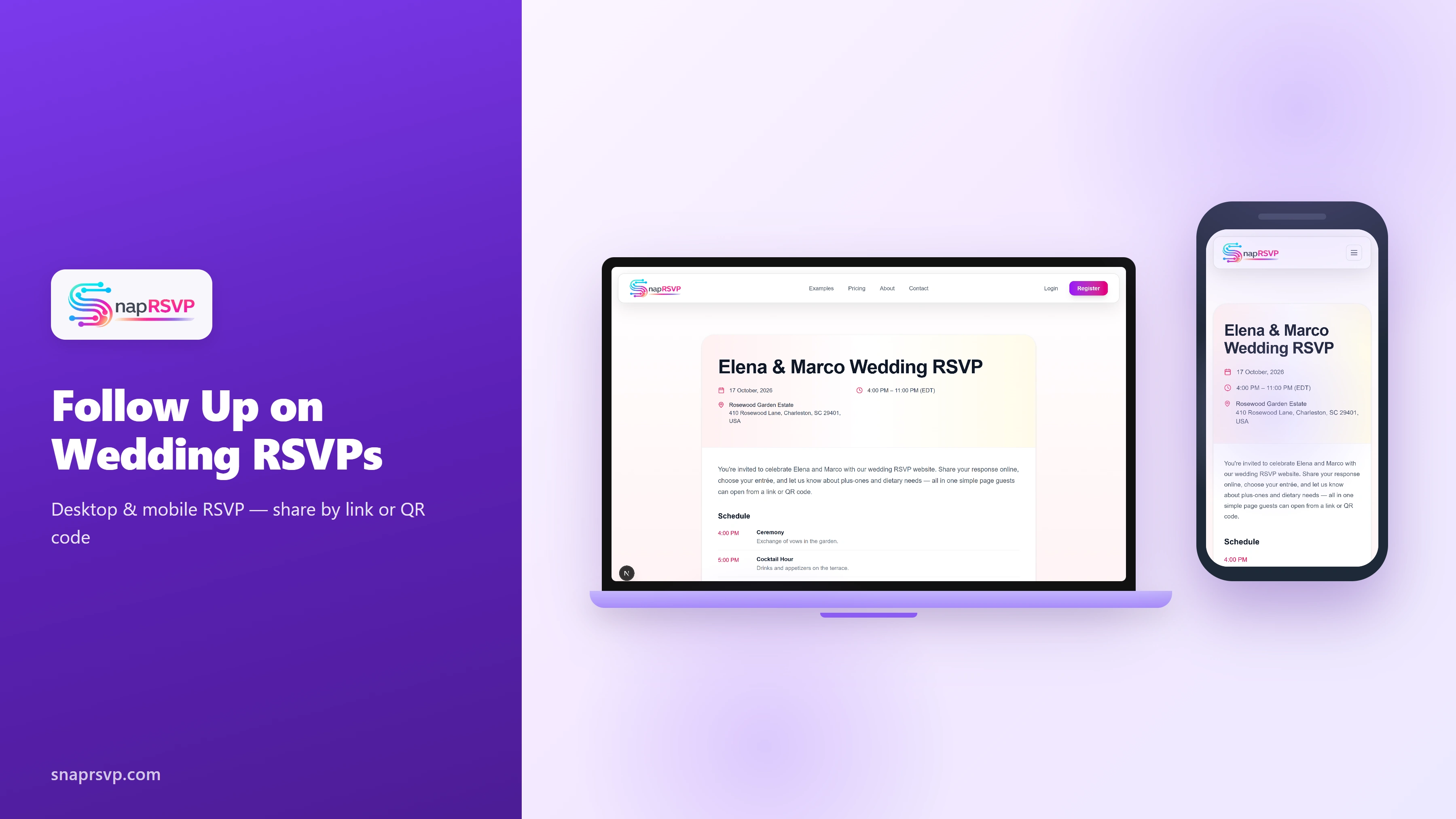
A practical follow-up schedule for wedding hosts — who to contact, what to say, and when to stop chasing.
Follow up with a plan, not panic
Wedding RSVP follow-up feels awkward when outreach starts late and without structure. The best approach is to schedule reminders before your deadline, segment non-responders, and keep each message short, warm, and easy to act on.
Start by identifying exactly who is still pending. A targeted list prevents accidental reminders to guests who already replied, which helps preserve goodwill and avoids the impression that your process is disorganized.
Use timing that supports guest decision-making
Send your first reminder about one week before the RSVP deadline and a second, smaller follow-up two or three days before close. This cadence gives guests enough time to confirm travel and childcare without feeling chased.
Avoid daily pings. Repetition without new information can feel pushy and reduce response quality. One clear message with deadline context usually performs better than multiple emotional nudges across different channels.
Write reminders that are brief and gracious
Effective reminder wording includes your names, the event date, the RSVP deadline, and the direct link. Keep tone appreciative: guests are more likely to respond when asked politely rather than pressured with guilt-heavy language.
If you need examples, /blog/wedding-rsvp-reminder-text-message-wording offers proven scripts. You can adapt those lines for text or email while keeping your voice personal and aligned with your event style.
Escalate thoughtfully for priority guests
After two reminders, move to personal outreach for immediate family, wedding party members, and VIP guests whose attendance affects key logistics. Ask parents or close relatives to nudge their own circles when that social connection helps.
For everyone else, accept that some non-responses become declines. A realistic closeout policy protects your planning timeline and prevents unlimited follow-up loops that add stress without improving final numbers.
Turn responses into final planning actions
Once your response window closes, freeze the list and convert data into action: seating drafts, meal counts, transportation estimates, and communication updates for vendors. This step turns follow-up effort into measurable planning progress.
Keep a small contingency buffer for late changes if contracts allow. Structured follow-up gives you cleaner numbers earlier, which improves negotiation and decision quality with caterers, venues, and coordinators.
Use a workflow that keeps reminders easy
Polite RSVP follow-up is easier when your guest data lives in one place and your pending list is always current. Good tools reduce emotional friction and help couples communicate with confidence during a busy planning season.
SnapRSVP provides a clear RSVP dashboard and shareable links that make reminder outreach simple and organized. If you want a calmer follow-up process for your wedding, set up your page with SnapRSVP at /create.