
House Concert RSVP Website: Living-Room Seats, Quiet Rules, and a Hard Cap
A house concert RSVP has to assign real chairs in a living room, because a quiet listening show falls apart when extra guests treat it like a drop-in party.
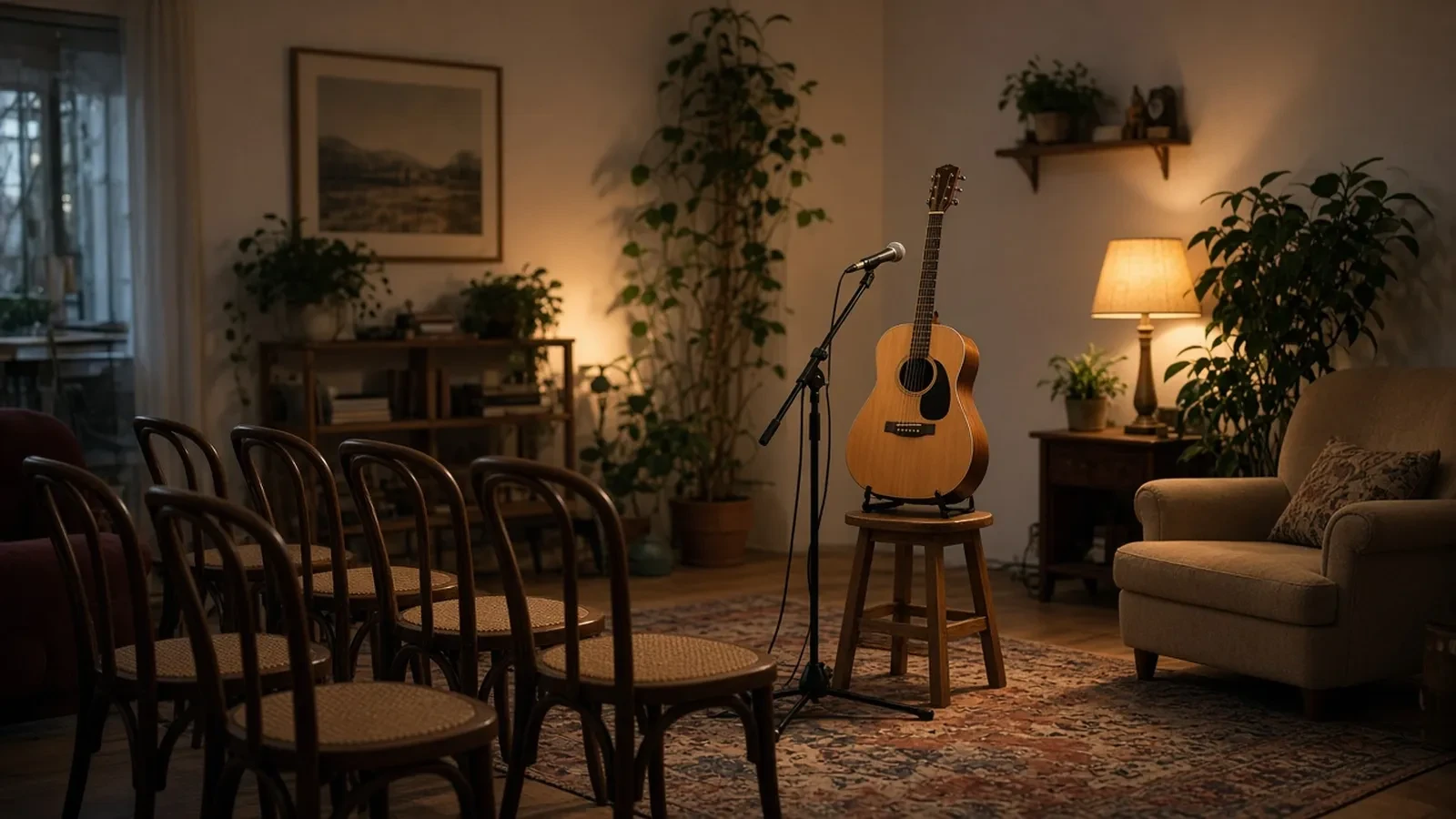
A house concert RSVP fails when you invite a living room the way you would invite a bar. There is no standing pit, no second show, and no lobby. There is a chair count, a performer who needs quiet, and neighbors who did not agree to a hallway full of strangers. If you cannot name the person in each seat, you do not have a show. You have a crowded room with a guitar in the corner.
You can create a house concert RSVP that takes a yes only while a seat remains, then sends the address after the reply is in. A public note that says to come if you want is how friends of friends you cannot seat end up on the porch at start time.
The cap is the furniture, not the square footage
Count chairs you will actually set out, then subtract the ones you still need for a path. The performer needs a seat or a stable spot that is not someone’s lap. The bathroom path has to stay open, including during the second set when people have had water. A sofa that looks like it holds four often holds three once coats and a guitar case are in the room. Write the number while the furniture is already in show position, not while you are imagining a rearrange you have not tried.
That number is the guest cap. Do not add a few standees in the back unless you have a marked spot that does not block the kitchen door or the performer’s view of the room. Standing guests talk. Seated guests, if you have set the rule, listen. If you want a listening room, the night is seats. Read the capacity-limit guide and turn the form off when the last chair is claimed. A waitlist fits this show, because one cancellation the afternoon before is a real seat you can offer to the next name. It is not a reason to have overbooked the sofa.
Say it is a listening room before anyone treats it like a party
A house concert is not a cocktail party that happens to include a song. If people want to talk over drinks the whole night, they should use a cocktail party RSVP, not the front row of your living room. Put the quiet rule on the first screen. Phones away. No videos unless the performer has already said yes. Conversation waits for the break. Applause is welcome. A running commentary is not.
Ask guests to confirm they can be there at the start, not sometime during the first set. Seating a latecomer means a door, a dark room, and a chair scrape in the middle of a quiet song. If you will seat people only between songs, say that. If you will not seat anyone who misses the start, say that too. A maybe should not hold a chair overnight. An empty held chair is a person you turned away.
Decide whether children are invited, and write the age line in plain language. A listening room is often a poor fit for toddlers, not because kids are unwelcome in your life, but because the show cannot absorb a meltdown in the second row. If kids are welcome, say up to what age they need their own seat versus a lap, and count the lap only if you are truly giving up that space. Do not promise a pile of floor cushions you do not own.
Hold the address until the yes is real
The venue is your home. The street address, any door note, and which side of the house to walk along do not belong on a public flyer. Collect the reply first. Then put the address, the parking line, and the start time in the confirmation. The confirmation email is the right place for those details, because people who said no do not need your floor plan. Ask guests not to forward the address. A forwarded yes is how a household that reserved two chairs arrives as seven.
Ask how they are getting there, in one question: driving, or not. You are not building a transit study. You are stopping eight cars from boxing in a neighbor’s driveway. If the block is tight, say where to park, which driveways are off limits, and that a rideshare should stop at the corner rather than in the middle of the street. Include an arrival time that is earlier than the downbeat. Fifteen minutes to settle is not lateness. Walking in at the first song is.
If you want a suggested contribution, print the amount so nobody arrives assuming the night is a free party with wine included. Say what the money is for: the performer, a tip jar at the break, or a cover you already agreed on. Say whether drinks are provided, brought by guests, or not part of the night. A listening room with a surprise bar in the kitchen stops being a listening room. If you serve anything, name it. Water on a side table, or coffee at the break. If you are not feeding people, tell them to eat before they come.
Two sets, one break, and a hard end
Publish the shape of the night, not just the start. A common house concert is two sets with a short break, and then the room goes back to being a house. Write the start, the rough length, and the time you expect people to head out. Guests with a babysitter or a scheduled ride need the end more than they need your opinion of the songs. Neighbors need it too. A show you described as ninety minutes should not become a kitchen party until midnight unless you said so and the people who came to listen wanted that.
Use the break on purpose. That is when the bathroom line, late seating, and the tip jar should happen. Say on the RSVP that the break is the time to talk, so people do not treat the songs as intermission. If the performer is selling records, one line is enough so guests know to bring cash or a phone payment. Do not turn the form into a store. You are holding chairs.
Shoes, scent, and coats sound fussy until twenty pairs of boots are in the hallway the performer has to walk through. One sentence each is enough. Shoes off at the mat if that is the house rule. Skip strong cologne in a small room. Coats go in the room you name. If a pet will be nearby, ask whether anyone in the party is allergic to that animal, and plan for the pet to be elsewhere if the answer is yes. You do not need a medical form. You need to know whether the dog is spending the night next door.
Close the list when every chair has a name
Stop accepting replies when the chairs are full, even if the performer would love a fuller room and your cousin has not answered. Call your cousin. Do not leave the link open. The day before, write each name next to a chair in the order you will actually seat them, with a note for anyone who needs an aisle or a sturdier seat. If someone cancels, offer that one chair to the first waitlist name and send the address only after they say yes.
A house concert RSVP is finished when every chair has a name, the people coming know not to talk over the songs, and nobody you turned away has your door details. The encore can be spontaneous. The seating cannot.