
Gingerbread House Party RSVP Website: Kit Counts, a Table Cap, and an Icing Line
A gingerbread house party RSVP has to lock a kit and a table seat before the walls are packed, because a maybe does not hold a kit.
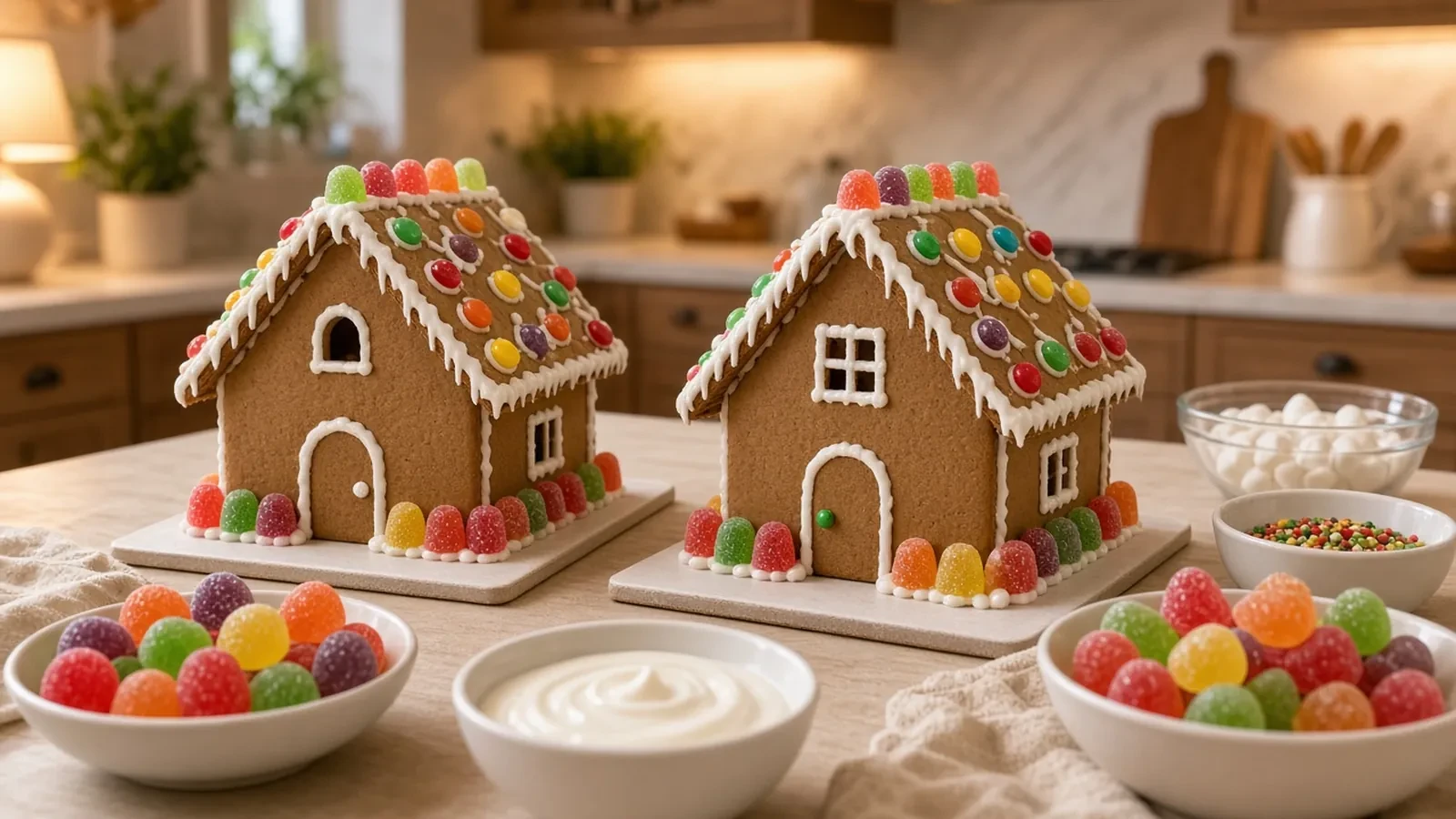
A gingerbread house party breaks when the bakery packed fourteen kits and twenty people are at the tables, or when someone who said maybe arrives after the walls are iced and expects a house that was never in the stack. Kits, the number of seats, and the icing you agreed to are set before the first wall goes up. The host does not order another kit because a friend decided to come after the bakery cutoff. A maybe does not hold a kit.
You can create a gingerbread house party RSVP that fills the kits you will order, records who can sit at a build, and stops when those tables are full.
Ask what the bakery will actually pack
Call the bakery before you send the link, or count the kits if you are baking the panels yourself. Write down how many houses you can finish, how many seats each table holds, whether the kit is four walls and two roof panels on a board, how long the build runs, and whether the candy is portioned per kit. Those numbers are your cap. Do not guess from the size of the icing bowl.
A kit is one house and one building seat, not one couple each making a roof and not a house for every child in the car. Ask whether a second house is a second kit and a second seat, and whether a later table uses a different cap. Pick one sitting and write it on the page. If you are doing both an early table and a late table, those are two lists with two caps. Do not mix them and sort people out at the candy tray.
Ask the price if a bakery is packing the kits, and the last time you can cut the count without paying for panels they already baked to your list. If you are baking them, that cutoff is the day you mix the dough. If a no-show still costs a kit after that time, print that rule on the page. A house packed with nut brittle cannot be rebuilt nut-free once the candy cups are filled.
Set a capacity limit on people who will build, not on everyone who was invited. When the last seat in your sitting is taken, the form should say the party is full. A friend who might come still needs a kit and a seat you ordered candy for. If the bakery has already counted your group, they are not in this sitting.
The icing line is a yes or a no, not a vibe
Ask what the icing is. Royal icing made with raw egg white is not the same as meringue powder, and a nut-filled candy cup is not the same as a plain gumdrop cup. Put that list on the page in plain words. Each person confirms they can build with that icing and that candy, or they do not take a kit.
If you will not run a nut-free or egg-free table, say that. People who cannot eat what is in the kit should not take a house if anyone at the table will eat the build. You do not need a diagnosis. You need a yes or a no before the kits are packed. A request for a candy you did not buy should not be on the form.
One seat, one house, and candy that is already cupped
Most tables give one builder one board. A parent who is only watching does not need a second kit. A parent and a child who will both have their hands on the walls need a rule you write down: one shared kit and two names, or two kits. Do not leave that for the doorway.
Count a household as the seats and kits you actually have, not as one yes that hides four builders. One form that hides extra hands will blow the candy cups. Say that on the page. Collect the ingredients they cannot eat against the icing and the candy you printed, not a note that says no sweets. If the house is for display and nobody eats it, say that too, and still name the egg and the nuts. Write an arrival window, maybe 2:45 to 3:00 at the table. Someone later than that misses the one demo for standing a wall, and you do not rebake a panel for one car.
The moment the kit list is locked
The meeting point is the room you assigned, with the table name if there is more than one. Put the host's phone on the page. A screenshot of the invite is not a kit. The person at the door matches names to the count you sent and to the boards set out.
If you allow a guest, that person needs their own kit line, their own icing answer, and their own arrival window. Track them as a separate yes. Children count if they are building. Write the age rule next to the question if the bakery or your kitchen set one. An adult who is only watching does not take a board.
Tie your RSVP deadline to the bakery's final count, or to the day you bake the panels. After that, a late yes is a call about a cancellation, not a promise of another house. If you want names ready when someone drops, keep them as standbys and tell them they do not have a kit until you write back. A maybe does not hold a kit.
Export the list the morning you lock: attending or not, kit or shared kit, icing line, party size, arrival window, and phone. A gingerbread house RSVP is finished when every kit has a named builder, the icing matches what you will mix, and a late car knows whether they are building or going home.