
Fundraiser RSVP Online: Track Gala & Charity Dinner Attendance
Charity fundraiser RSVPs with meal choice, sponsor tables, and silent auction headcount.
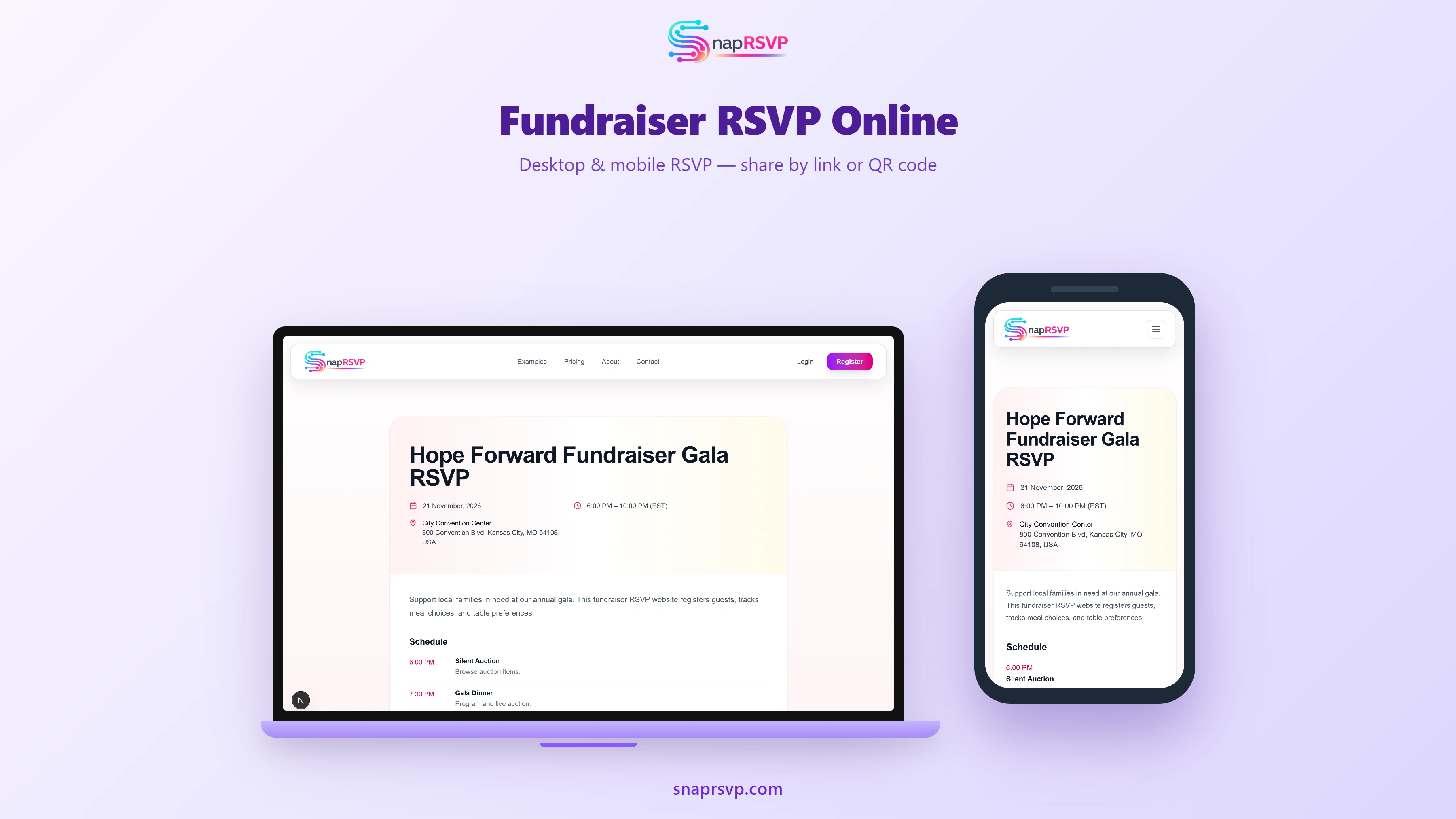
Charity fundraiser RSVPs with meal choice, sponsor tables, and silent auction headcount.
Start with attendance goals tied to fundraising outcomes
Fundraisers are different from social parties because every seat can map to ticket revenue, paddle raises, or sponsor visibility. Before you share the RSVP link, decide which attendance numbers your team needs by week: total expected guests and sponsor table fill rate.
When you define those targets early, your RSVP page becomes an operations tool instead of a passive form. Nonprofits can then coordinate catering minimums, volunteer shifts, and auction pacing with real numbers rather than hopeful estimates from email threads.
For fundraiser attendance tracking, "Start with attendance goals tied to fundraising outcomes" works best when hosts keep a tracker and close items before reminders.
Build an RSVP form for sponsors, guests, and mission moments
For a gala or charity dinner, collect more than yes or no. Ask whether the guest is part of a sponsor table, whether they are a host committee invite, and whether they need invoice confirmation. These fields prevent check-in confusion on event night.
Keep mission storytelling present but short: one sentence about the impact of attendance is enough. If you also collect dietary needs and accessibility requests, route those responses to operations immediately so your hospitality experience reflects the values your fundraiser promotes.
Use deadlines and reminder waves to protect budget decisions
Set a public RSVP deadline that lands before your final venue commitment date, not on it. A practical timeline is first reminder two weeks out, second reminder one week out, and a targeted personal follow-up to key guests three days before close.
Segment reminders by relationship strength. Board members, major donors, and sponsor leads should get personalized messages, while general guests can receive concise email or text nudges. This balanced approach lifts response rates without sounding transactional or pushy.
Coordinate ticketing, seating, and check-in without extra spreadsheets
Many teams split RSVP and payment tools, which is fine as long as your fields align. Use the same guest naming convention across systems and decide one source of truth for final attendance so volunteers are not reconciling duplicates at the door.
If you are comparing workflows, our guide on RSVP platforms versus invitation tools at /blog/rsvp-website-vs-evite can help you choose a cleaner setup. The best system is the one your volunteers can run calmly under event-day pressure.
Turn responses into donor-friendly event execution
As the list firms up, convert RSVP data into action lists: table captain check-ins, meal counts, ADA seating notes, and registration desk packets by last name. This is where strong RSVP structure directly improves the guest experience and fundraising confidence.
After the event, tag attendance against campaign records so stewardship starts quickly. A reliable RSVP trail helps your team thank sponsors, re-engage no-shows thoughtfully, and report true participation numbers to leadership without rebuilding history from memory.
Close with a system you can reuse next campaign
Every fundraiser teaches you which questions mattered and which fields created friction. Keep those learnings in a reusable template so your next breakfast, gala, or community night launches faster with clearer expectations for staff and volunteers.
SnapRSVP gives nonprofit teams a focused RSVP page they can share in minutes, with structured responses that are easy to track from invite through check-in. If you want a cleaner attendance workflow for your next campaign, start with SnapRSVP at /create.