
Foosball Night RSVP Website: Table Counts, a Player Cap, and a Match Line
A foosball night RSVP has to lock a table and a player place before the first match, because a maybe does not hold a scheduled game or a fair rotation slot.
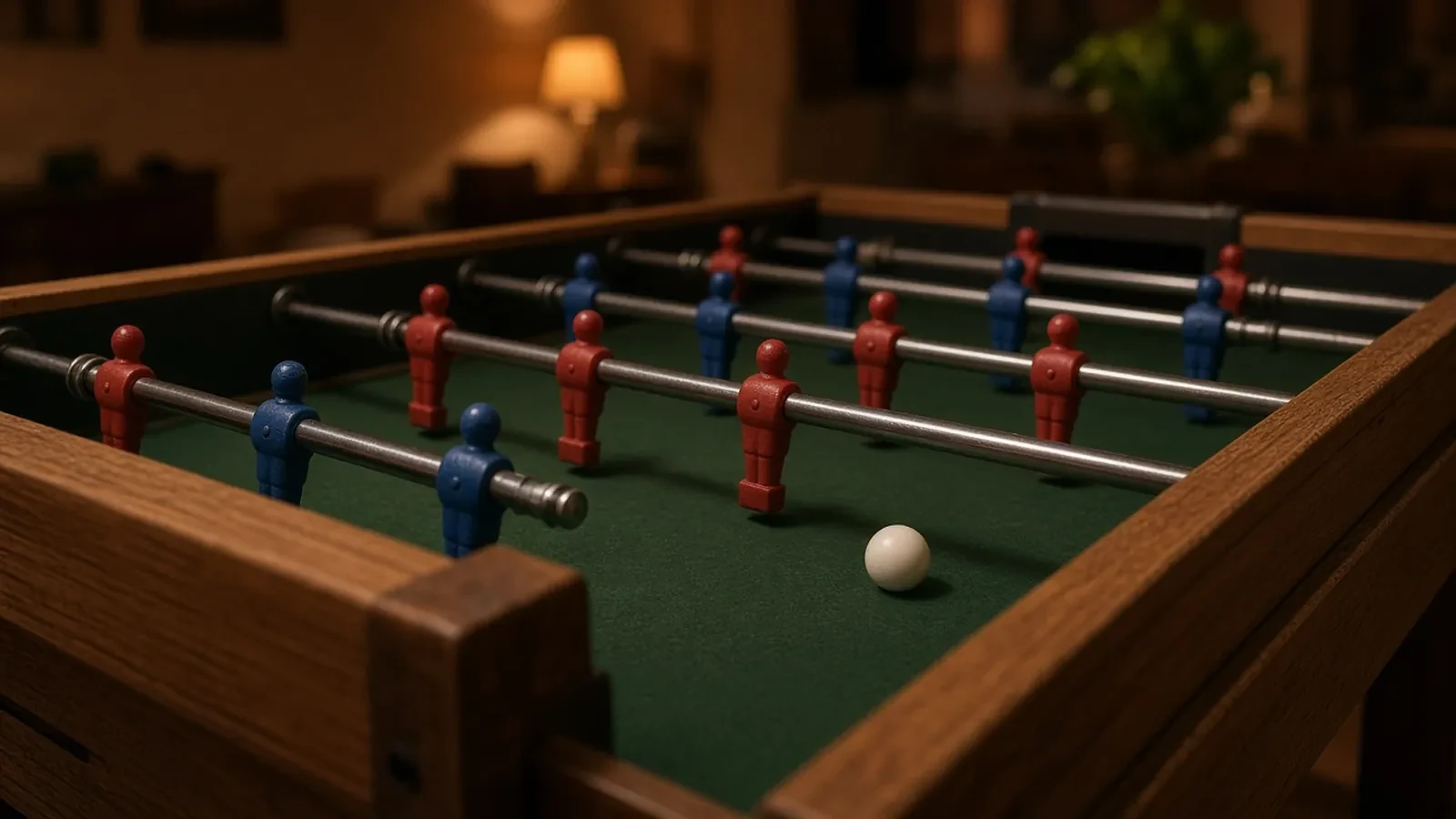
A foosball night breaks when the host has four working tables, a bracket for sixteen players, and twenty-eight people answer yes after the match schedule is printed. Tables, balls, teams, scorekeeping, room space, a rotation plan, and the number of players who can actually get games in are set before the first serve. The host does not produce a fifth table or turn a planned tournament into an unstructured crowd because a friend decided to come after the list closed. This is a scheduled game night with limited playing time, not an unlimited drop-in. A maybe does not hold a match place.
You can create a foosball night RSVP that counts players, separates spectators, and closes when the player cap is reached.
Count tables, players, and scheduled turns
Walk through the game room before sending the invitation. Write down how many tables are level and playable, how many balls and spare handles are ready, how many matches fit in the available hours, and how many people can wait without blocking the playing lanes. If four tables can support sixteen scheduled players in the planned rotation, that is the player count: sixteen players, not a larger group hoping every guest will squeeze into a quick game.
A foosball night player place is one named participant with a defined turn in the rotation. A friend who wants to watch is not automatically a player, but someone who expects to play needs a player place and a fair schedule. Ask which adults are playing, which guests are only accompanying, and whether a late guest accepts a spectator place. Pick one rule and write it on the page. Players stay within the table and turn count you planned; they do not join because one match ends early.
Ask the venue when the final player count must be fixed for table setup, bracket printing, team assignments, and the snack order. If the schedule must be printed by Thursday for a Saturday night, Thursday is your lock. Write the finish too: the final scheduled match has ended, scores are recorded, and tables can be cleared before the host closes. A seventeenth player “if there is time†is not a plan.
Set a capacity limit for players, not for every person who might stand near the tables. When the sixteenth player place is taken, the form should say foosball night is full for players. If tables and match turns are already assigned, a late guest is not an unplanned competitor.
The match line is the last planned game
Name the games you will complete and stop there. A clear match line is the final scheduled match reaching its agreed score, the result being recorded, and the table being released, not a night that keeps adding games until players miss their rides home. An extra round is a different schedule and needs its own table time, teams, and scorekeeper.
Put that match line on the form as the point you will stop, not a vague “we can fit in another game if people arrive.†If the night ends when the last planned match is scored and cleanup starts, that is the cutoff. A guest who arrives after the cutoff may watch but may not receive a scheduled game. You need a yes to this table count, this player cap, and this final match before you finalize the list.
Make the rotation fair before doors open
Game nights go wrong when fairness is treated as a note for later. A player may need a seated waiting place, a clear route around the tables, a quieter corner, or help reading the score sheet. Ask whether the room layout works for every person who is playing and whether a teammate or helper needs to be listed. Do not assign a turn that looks available on paper if the route to the table or the waiting area does not work.
Record the player, teammate preference, spectator status, and any room need before publishing the rotation. If you allow partners to arrive together, write whether that counts as one team request or two player places. A table is assigned to a match, not to an uncertain headcount.
The moment the player cap is locked
The meeting point is the game room entrance, check-in time, table assignment, and first serve you named, not “come by anytime†with no rotation. Put the host’s phone on the page. A message in the group chat is not a player list. You match names to players, teams, table turns, spectator status, player cap, match line, and phone.
Tie the deadline to the bracket, table setup, score sheets, and venue schedule, the day the night cannot fairly add another player. After that, a late yes is a call about a cancellation, not a promise of a match. If you want names ready when someone drops, keep them as standbys and tell them they do not have a player place until you write back. A maybe does not hold a scheduled game.
Export the list the morning you lock: attending or not, player count, team and table assignment, spectator status, room note, player cap, match line, and phone. A foosball night RSVP is finished when every planned turn has a named player, the final match is one you will actually run, and a late guest knows whether they are playing, watching, or waiting for a cancellation.