
Donut Making Party RSVP Website: Dough Counts, a Fryer Cap, and a Glaze Line
A donut making party RSVP has to lock a dough portion and a fryer place before the first proof, because a maybe does not hold a dough portion.
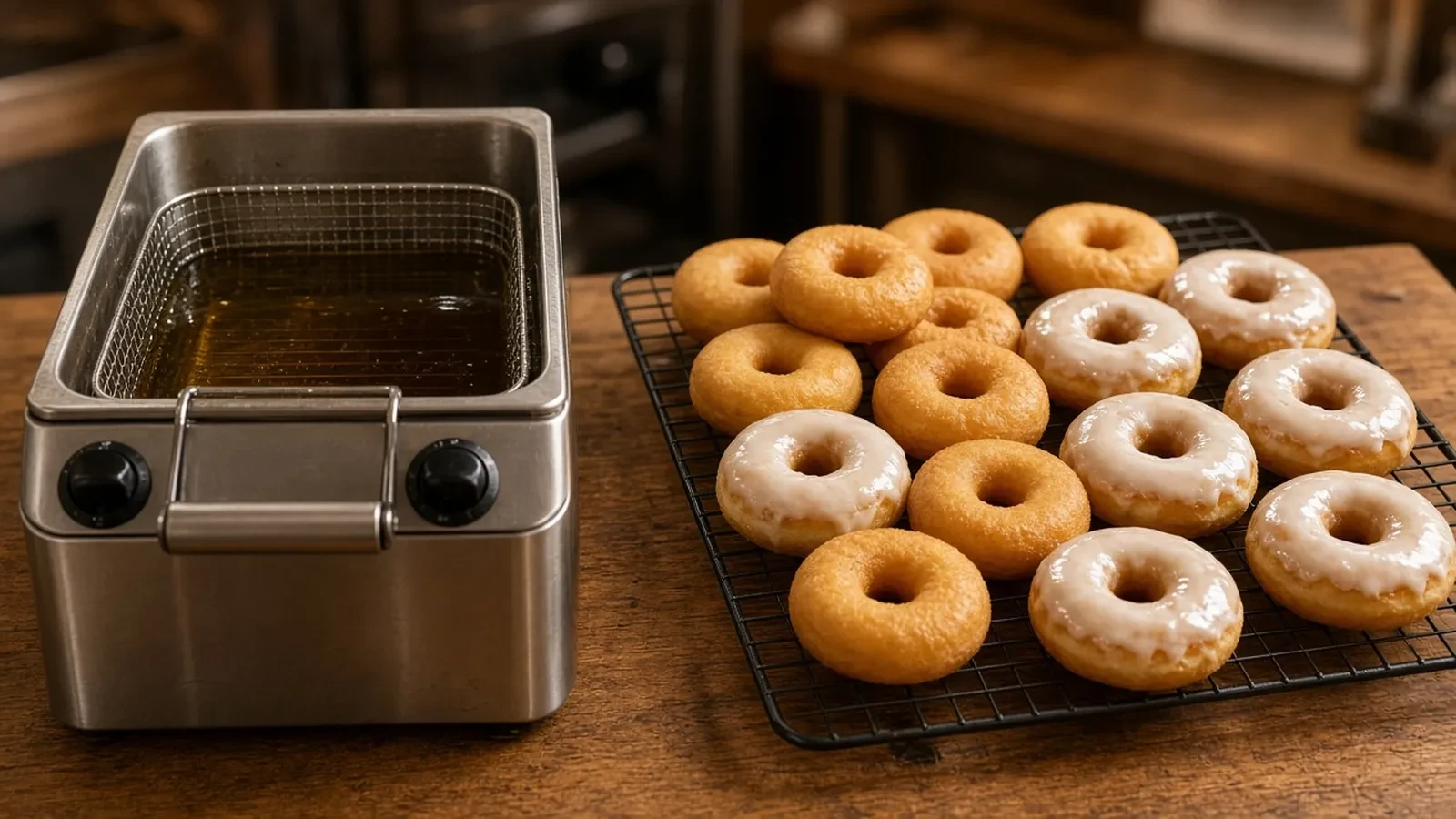
A donut making party breaks when twelve people arrive for two fryers and the dough was portioned for the names that answered yes, or when three guests think one station means three hands in hot oil. Dough portions, fryer space, cooling racks, and the number of people you can supervise are set before the first proof. The host does not find a third fryer because a neighbor decided to make donuts after the list closed. This is a hands-on party for mixing, shaping, frying, and glazing donuts, not a pretzel workshop, not gelato or ice cream making, and not an open dessert buffet. A maybe does not hold a dough portion.
You can create a donut making party RSVP that counts the portions and station places you will actually prepare, captures food needs, and closes when the fryer plan is full.
Count the dough portions and stations
Walk the kitchen before you send the link. Write down how many people can stand at the prep counter without reaching across a hot pan, how many mixing bowls, thermometers, cooling racks, and aprons you have, and whether a spare dough portion is for a late replacement or a ninth maker. If two fryers can safely serve eight people in assigned turns, that number is your cap: eight makers, not a crowd waiting beside the oil.
A donut-making spot is one named person, one dough portion, and one place in the prep or decorating rotation. They can mix, cut, lower dough only when instructed, move finished donuts to a rack, and glaze without another person's hands entering the station. There is no shared portion that becomes somebody else's extra batch, no unsupervised fryer turn, and no promise that a guest can arrive and use a countertop that is already full. Ask whether a person who will only decorate or watch still needs a place in the kitchen, and whether that person counts toward the room's safety limit. Pick one rule and write it on the page. Observers stay in the places you named. They do not step to the oil for "just one donut" when the station is full.
Ask the supplier or kitchen when the final count must be fixed for ingredients, gloves, oil, and packaging. If the host needs the number by Thursday for a Saturday party, Thursday is your lock. Write the finish too: each named maker has a portion, the fryers are shut down after the final batch, and boxes are labeled before the kitchen closes. A ninth person "if we stretch the dough" is not a plan.
Set a capacity limit on active makers, not on everyone invited to eat a donut. When the eighth station place is taken, the form should say the party is full. If the fryer schedule and dough tubs are already assigned, a late maker is not at the counter.
The glaze line is the final batch and box
Name the work you will reach and stop there. A clear line is a final frying window, a last glaze choice, and a stop at "the final batch is racked, glazed, and boxed," not a kitchen that keeps heating oil until every topping is gone. A second flavor experiment is a different session, and a beginner cannot plan around a finish that moves with every request. Pretzels require a different dough and shaping plan. Gelato and ice cream do not use this fryer rotation.
Put that glaze line on the form as the point you will stop, not a vague "we will make sweets until late." If the party ends when the final batch is cooled and the boxes are labeled, that is the line. People who want another filled donut will still be at the fryer when the host has to turn it off. You need a yes to this portion, this station turn, and this end time before you measure the yeast.
Who needs a safe and workable food place
Parties go wrong when food needs are treated as a note for later. A maker may need a stool, a clear route, a lower prep surface, or a helper who handles the fryer while they shape dough. Ask whether a household is one maker with one portion or two people who each need a turn, and do not assume a couple shares one apron or one station. A guest who cannot safely reach the counter does not get assigned a place that only looks available.
Collect dietary restrictions with severity so you know whether a need changes ingredients, requires separate oil, or is a preference that can be handled at the topping table. Write what happens if someone misses the start: their portion goes to a named standby, or it is held for the named maker and not silently reassigned. A dough portion is assigned to a person, not to an uncertain headcount.
The moment the kitchen is locked
The meeting point is the kitchen and station map you named, not "the house" with no door, counter, or fryer schedule. Put the host's phone on the page. A message in the group chat is not a food-safety assignment. You match names to dough, station turns, and food notes.
Tie the deadline to the ingredient order and oil plan, the day the maker count cannot change. After that, a late yes is a call about a cancellation, not a promise of another fryer turn. If you want names ready when a maker drops, keep them as standbys and tell them they do not have a portion until you write back. A maybe does not hold a dough portion.
Export the list the morning you lock: attending or not, station turn, dough portion, dietary note, glaze choice, and phone. A donut making party RSVP is finished when every active place has a named maker, the glaze line is the batch you will actually stop at, and a late guest knows whether they are shaping, decorating, or waiting outside the kitchen.