
Churro Party RSVP Website: Batter Counts, a Press Cap, and a Sugar Line
A churro party RSVP has to lock a batter share and a press place before the oil is heated, because a maybe does not hold a counted pipe of dough or a turn at the sugar.
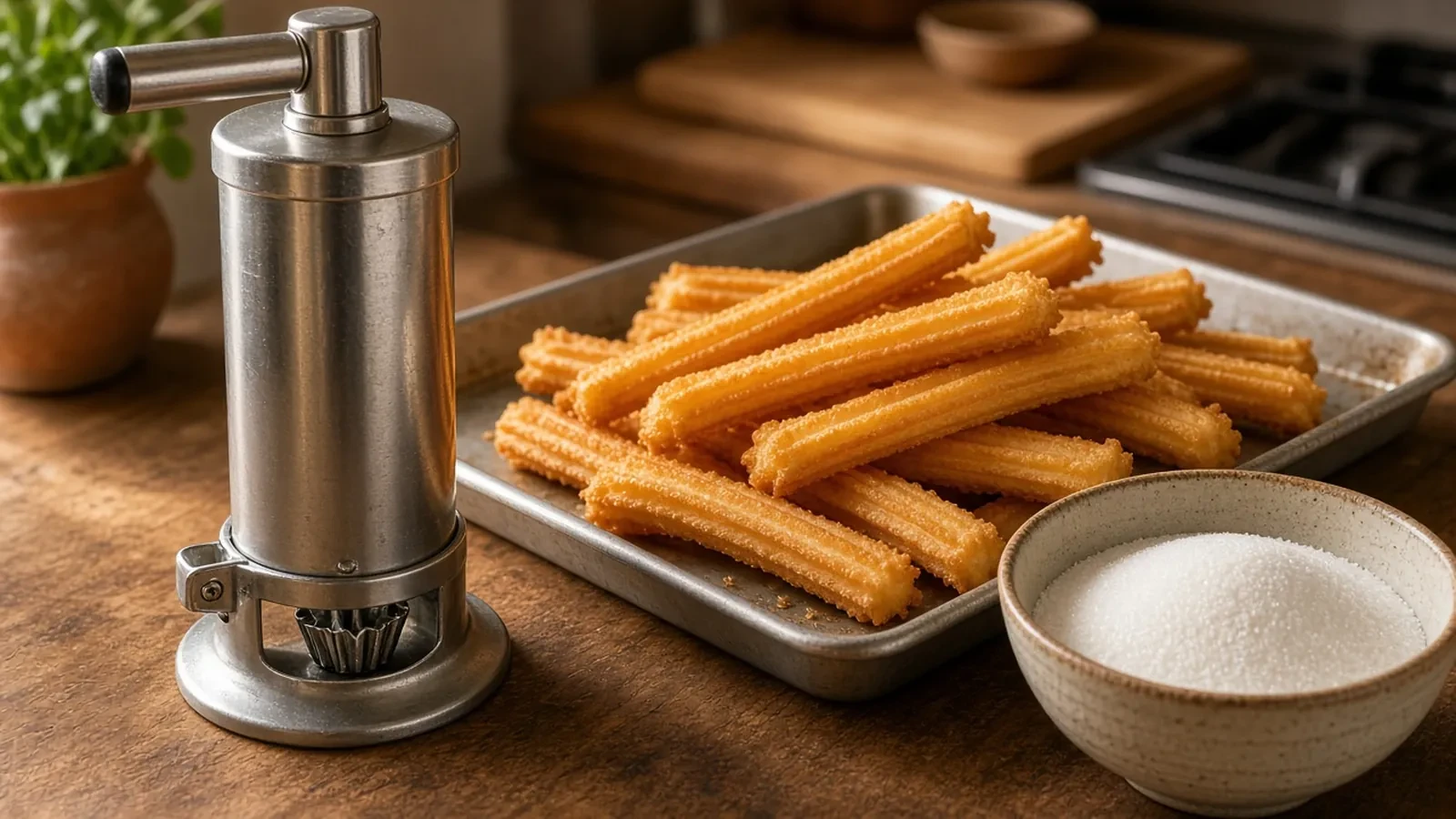
A churro party breaks when the host mixed batter for thirty pipes, set one fryer, and twelve people answer yes after the oil is already hot. Batter, star tips, and a turn at the sugar are decided before the first ribbon hits the pot. The host does not mix a second bowl or promise a churro that has no room in the oil because a friend decided to come after the list closed. This is extruded dough fried and rolled in cinnamon sugar, not a yeast donut, not a crepe, and not a pretzel. A maybe does not hold a pipe of batter.
You can create a churro party RSVP that counts batter shares, tracks plus-ones, and closes when the press cap is reached.
Count batter, tips, and fryer turns
Count the batter before you send the invitation. Churro batter becomes a pastry only after it is pressed through a star tip into hot oil and rolled in sugar while it is still crisp. A bowl that looks deep is not a spare seat. Batter thickens as it sits, and a torn ribbon is not a second serving you can hand to a walk-in during the last fry. If one person eats two churros and the pot fries four at a time, the honest count is the pipes you can finish before the oil is tired, not the number of people who like cinnamon. A guest who wants “a few extra if the bowl looks full†is asking you to spend someone else’s share.
Count the tools that touch the fry. Presses or piping bags, star tips, a pot with a steady temperature, a spider or tongs, and a sugar tray that is not sitting on the burner are the limit. Two tips do not create ten fryers. People can take turns at one press, but each eater still needs a number of churros with their name on the count, and each person at the pot still needs a clear stance that is not the only path through the kitchen. A churro with nowhere to fry becomes a raw ribbon on a board and a guest who thinks the party failed.
Batter volume, and how many churros that mix honestly makes
Presses, bags, and star tips you can clean between turns
Oil depth and how many batches it can take before it needs a rest
Sugar, cinnamon, and a tray that stays off the flame
A landing rack so hot churros are not stacked into a soggy pile
A churro place is one named person with a share of the batter, and, if they are pressing, a turn at the pot. A guest who wants to watch the first fry is not a presser and is not an extra plate. Someone who expects to eat needs a place in the count. Ask who is pressing, who is only eating, and whether a late guest will accept fewer churros if a share opens. Eaters stay inside the batter you can fry. They do not get another pipe because the bowl still looks deep.
The press cap and the sugar line
Four pressers and thirty churros is a cap only if the pot, the tips, and the clock agree. If only two people can stand at the fryer without crossing arms over hot oil, the press cap is two, even if eight people will eat. The smallest real constraint wins. Set a capacity limit for shares and press turns, not for every person who might stand near the sugar. When the last share is claimed, the form should say the churro party is full. If the batter is mixed and the oil is at temperature, a late guest is not an unplanned batch.
The sugar line is the end of cooking. Name it: the last churro comes out at a clock time that still lets it drain, get rolled, and cool enough to eat before the party has to end. A clear sugar line stops the night from becoming another bowl of batter while the first tray is already gone. Batter left in the bag is not a promise to a guest who arrives during the sugar roll. It sets, it throws off the count, and it is not a new seat.
Diet notes and plus-ones at a hot pot
Churros look simple and still hide the limit. Wheat in the batter, egg, butter or milk in some recipes, and cinnamon sugar on every piece are not details you can sort after the fry. Collect dietary restrictions with severity on the RSVP before you mix. Ask what someone cannot eat, and whether that limit is an allergy or a preference. An allergy to egg or to dairy needs a recipe you can actually make, or an honest no. A preference for less sugar can share the tray if you leave a few pieces plain and say so. Do not assign a share that looks open on paper if the only churros in the pot are the ones that person cannot eat. One shared fryer cannot unfry an allergen. If you cannot offer a separate batch, say that on the page.
Use plus-ones tracked separately so a guest is not a silent extra mouth at the sugar tray or a surprise body at the fryer. A plus-one who eats is a share. A plus-one who wants a turn at the press is a station, and only if the press cap still has room. “I might bring someone†is not a counted pipe of batter. Name the person, count the share, and stop when the pot is full. Put the host’s phone on the page so a delay is a message, not a guess at the door.
The moment the share list is locked
Tie the deadline to the mix. If the batter has to be ready an hour before guests arrive, the afternoon is your lock. After that, a late yes is a call about a cancellation, not a promise of a tip. Standbys can wait, and you tell them they do not have a share until you write back. A maybe does not hold hot oil or a place at the sugar.
The meeting point is the kitchen door, the check-in time, and the side of the counter you named, not “come by anytime and we will be frying.†You match names to eaters, shares, plus-ones, allergy notes, presser or guest, the press cap, the sugar line, and a phone. Export the list the morning you lock: attending or not, share, plus-one, severity, press turn, and phone.
A churro party RSVP is finished when every churro in the sugar has a named share, the sugar line is the last roll rather than an open bowl of batter, and a late guest knows whether they are pressing, eating a counted share, or waiting for a cancellation.