
Butter Churning Party RSVP Website: Cream Counts, a Churn Cap, and a Finish Line
A butter churning party RSVP has to lock a cream share and a churn place before the cream is poured, because a maybe does not hold a prepared jar or a supervised finish.
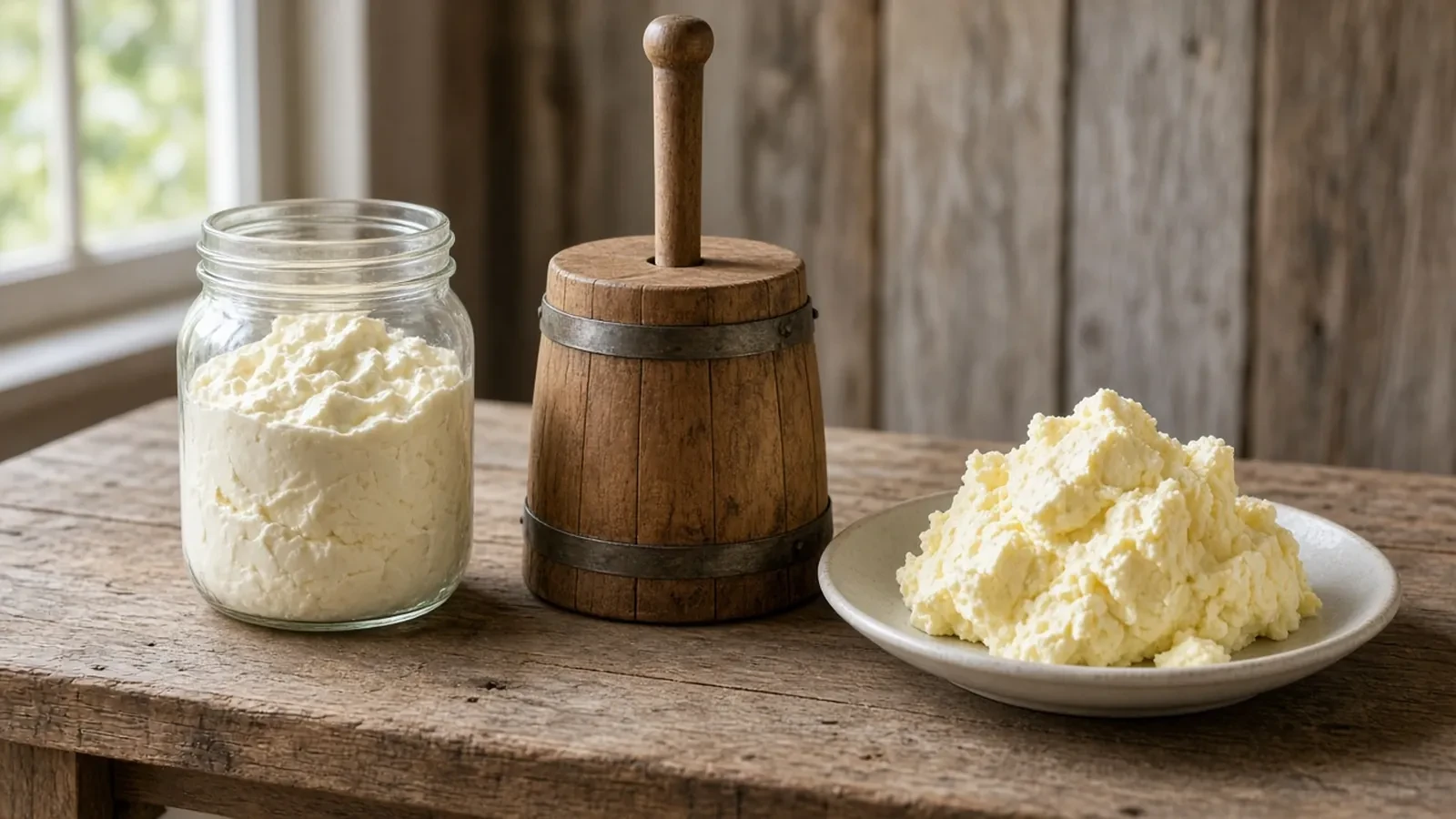
A butter churning party breaks when the host has eight quarts of cold cream, eight jars that will actually fit in the sink, and fourteen people answer yes after the cream is already in the refrigerator. Cream, jars, dashers, cheesecloth, salt, cold wash water, and fridge space for the finished blocks are set before anyone pours. The host does not buy a ninth quart the morning of the party or hand a guest a jar of half-and-half because a friend decided to come after the list closed. This is a timed batch with a finish, not an open tasting. A maybe does not hold a jar.
You can create a butter churning party RSVP that counts cream shares, records who is actually churning, and closes when the churn cap is reached.
Count cream, jars, and the sink you really have
Walk the kitchen before sending the invitation. Heavy cream is the ingredient, ordered by the quart and kept cold. Half-and-half will not become butter in a jar, and a quart left in a warm car on the way over is a wasted station. Write down how many quarts are in the fridge, how many jars are the right size, and how many of those jars can be washed, shaken, and drained without a line blocking the stove.
A jar station is one quart poured no more than about a third full, one lid that seals, and one person or household who will stay until the cream breaks. Overfill the jar and it will not move. Split one quart across two hopeful guests and neither jar finishes. If you are using a small dash churn instead of jars, count the churn, not the number of people who want a turn at the handle. One churn working one batch is one station until that batch is washed and packed.
Quarts of cold heavy cream, and the hour they must be in your fridge
Jars or churns that seal, plus spare lids
Cheesecloth or a fine strainer, salt, and a bowl for buttermilk
Cold water for washing, and a clear sink for the whole finish
Fridge or cooler space for every finished block, labeled with a name
A butter churning place is one named churner with a cream share and a station. A guest who wants to spread a sample on bread at the end is not automatically a churner. Ask who will shake or crank, who is only tasting, and whether two people from the same household are sharing one jar. Pick one rule and write it on the page. Churners stay inside the quarts you bought. They do not start a jar because someone else looks tired.
The churn cap is the cream you already own
Eight quarts and eight jars means eight stations, not eight households plus whoever they feel like bringing. If a household shares one jar, that household is one cream share and one place in the cap, even if two adults take turns shaking. A second jar for that household is a second share, and you only have eight. Count shares, not the number of people who might touch the lid.
Set a capacity limit for churn stations, not for every person who might stand in the kitchen. When the eighth jar is claimed, the form should say the butter churning party is full for churners. Tasters can be a short extra list only if you planned bread and chairs for them. If the cream is portioned and the jars are labeled, a late guest is not an unplanned quart.
The finish line is the wash, not the moment the cream first looks grainy. Name it: the butter is pressed, the rinse water runs clear, the block is salted or left plain as the guest asked, and it is wrapped and back in the fridge. A clear finish line stops the party from turning into an hour of half-broken jars while new people walk in. An extra quart is a different batch. It needs more cream, more cold water, and more time, and you did not buy them.
Diet and households change the count
Butter is a dairy project. A guest with a milk allergy is not in the same position as a guest who prefers unsalted. Collect dietary restrictions with severity before you pour, and read the difference. A preference for cultured butter or flaky salt can be a note on that person’s block. A severe milk allergy means that guest should not churn, not taste, and should not stand over an open jar while cream splashes. Do not promise a dairy-free butter at a cream party. Offer a clear decline, or a spectator seat at the table after the jars are closed, and say so on the page.
Use household RSVPs when couples or families will share a jar. One response should name who is churning, who is only tasting, and whether the household wants one block or is asking for two shares. Two names on one household reply are not two quarts unless you assigned two stations. Buttermilk can be sent home only if you have clean bottles and a plan; it is not a surprise second product you owe every guest.
The moment the cream list is locked
Tie the deadline to the grocery order and the chill time. If the cream has to be in the fridge by Thursday night for a Saturday afternoon, Thursday is your lock. Write the end of the party too: the last block is wrapped, the sink is clear, and people are not still shaking jars when you need the kitchen back. After the lock, a late yes is a call about a cancellation, not a promise of cream. Standbys can wait, and you tell them they do not have a jar until you write back. A maybe does not hold a chilled quart.
The meeting point is the kitchen you named, the start time, and the first pour, not “come by when you can.†Put the host’s phone on the page. You match names to churners, jar numbers, household shares, allergy notes, the churn cap, the finish line, and a phone. Export the list the morning you lock: attending or not, cream shares, who churns and who only tastes, salted or plain, allergy severity, and phone.
A butter churning party RSVP is finished when every quart has a named station, the finish is the clear-water wash rather than an open-ended shake, and a late guest knows whether they are churning, tasting from a finished block, or waiting for a cancellation.